
- Sustainability Strategy and Goals
- Progress vs. Target Tracker
- Key Sustainability Innovations and Technologies
- Measurable Impacts
- Challenges and Areas for Improvement
- Future Plans and Long-Term Goals
- Comparisons to Industry Competitors
- Automotive Sustainability Metrics
- What to Watch: 12 to 18 Month Indicators
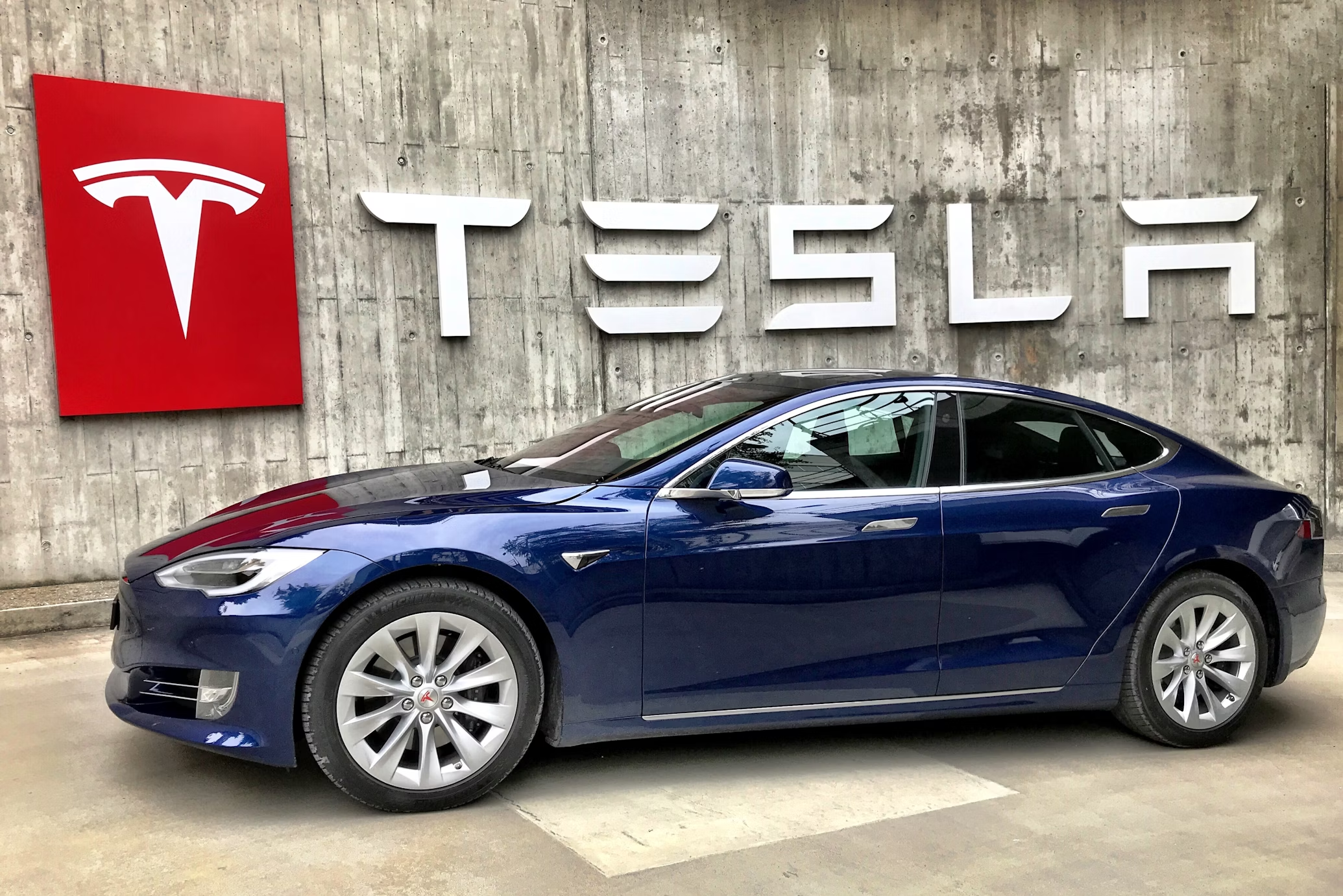
Tesla is the world’s largest pure-play electric vehicle and clean energy company, generating $97.7 billion in revenue in fiscal year 2024 across electric vehicles, energy storage, solar, and services in over 50 countries. Its sustainability model differs fundamentally from every other company in this series: Tesla’s primary environmental contribution is not the decarbonization of its own operations but the displacement of fossil fuel combustion through its products. The company’s most current public disclosure is the 2024 Tesla Impact Report, supplemented by the Earth Day 2025 update. Tesla has not issued a formal corporate net-zero target year, distinguishing it from all peers covered in this series.
The 2024 Impact Report reports that Tesla customers avoided releasing 32 million MTCO₂e in 2024 alone, spanning EV fleet use, solar panel generation, and energy storage deployments. Against this headline, significant challenges persist: Scope 3 supply chain emissions represent 84% of Tesla’s total footprint, a DRC cobalt forced labor lawsuit was filed in August 2025, Giga Berlin faces ongoing community water conflict in a drought-prone region, and the company holds no collective bargaining agreement with its workforce anywhere in the world.
Source
https://www.tesla.com/impact
https://www.tesla.com/ns_videos/2024-tesla-impact-report-highlights.pdf
Sustainability Strategy and Goals
Tesla’s sustainability strategy is organized around its mission: to accelerate the world’s transition to sustainable energy. Unlike most companies in this series, Tesla does not structure its sustainability program around a single formal net-zero year or SBTi-certified pathway. Instead, it uses an “avoided emissions” accounting framework, measuring the CO₂e that would have been emitted if Tesla customers had used internal combustion engine (ICE) vehicles, natural gas power plants, or grid electricity in place of Tesla products.
The strategy covers four domains: product lifecycle decarbonization, clean energy product deployment, manufacturing efficiency and renewable energy, and circular battery economy. The company’s Lead the Charge 2024 Leaderboard score rose 21% year over year, placing Tesla third globally among automakers on fossil-free and environmentally sustainable supply chains, the largest single-year improvement recorded in the rankings.
Net Zero and Carbon Emissions
Tesla’s Scope 1 emissions declined 35% and Scope 2 emissions declined 41% from the 2020 baseline to FY2024, reflecting expanded on-site solar generation and improved manufacturing energy intensity. Total company emissions are dominated by Scope 3 at 84% of the overall footprint, primarily from battery and vehicle manufacturing supply chains. Tesla does not publish a formal net-zero target year.
- Scope 1 emissions (2024): 1.56 million MTCO₂e, down 35% from 2.4 million MTCO₂e in 2020
- Scope 2 emissions (2024): 1.06 million MTCO₂e, down 41% from 1.8 million MTCO₂e in 2020
- Scope 3 emissions: 84% of total footprint; largest sources are steel, aluminum, and battery raw material supply chains
- Tesla became the first automaker to publish disaggregated Scope 3 emissions for steel, aluminum, and battery supply chains separately, earning a Lead the Charge commendation in 2024
- Customer-avoided emissions (2024): 32 million MTCO₂e, up from cumulative figures growing year over year as fleet size expands
- Per-vehicle avoided emissions (US average): approximately 52 MTCO₂e over vehicle lifetime; global average approximately 35 MTCO₂e
- Carbon credit revenue (2024): $2.76 billion, a 54% increase from $1.79 billion in 2023; cumulative total since 2017: over $10.4 billion
Water Stewardship
Tesla’s water strategy focuses on reducing water intensity per vehicle produced across its Gigafactory network. Giga Berlin achieved the most significant milestones in 2024 and 2025: zero process wastewater discharged to the municipal sewer system for a full year, and a voluntary return of 377,000 cubic meters of annual water rights to local authorities. At the same time, Giga Berlin’s groundwater dependency in one of Germany’s driest regions remains the focal point of ongoing community activism and a legal risk for the factory’s planned expansion.
- Giga Berlin water intensity (2024): 2.16 m³ per vehicle produced, compared to an industry average of 3.5 m³
- Giga Berlin total water use (2024): approximately 456,953 m³, less than one-third of the water allotment granted by the local water board
- Zero process wastewater discharge to municipal sewer at Giga Berlin: achieved for a full year as of late 2025
- 377,000 m³ of annual water rights returned voluntarily to local Brandenburg authorities
- Giga Berlin expansion plans submitted to include facilities partially within a designated water protection zone, creating legal complications with the Brandenburg state environmental agency
- Water use per vehicle across all facilities (2024): 2.5 m³, down from 3.1 m³ in 2020, a 19% reduction
- Target: recycle 90% of process wastewater at Giga Berlin in 2025
- Community protests in Grünheide (January 2025): water forest occupation by activists over Giga Berlin’s water use and global South mining impacts
Regenerative Agriculture
Tesla has no agricultural supply chain and holds no formal regenerative agriculture commitment. Its analogous contribution lies in sustainable land management tied to Gigafactory siting: Giga Berlin replanted more than two million trees as compensatory reforestation measures under German environmental permitting requirements.
- More than two million trees replanted around Giga Berlin as statutory environmental compensation under German permitting
- No agricultural sourcing or regenerative farming commitment in the Tesla supply chain
- First Movers Coalition membership for steel and aluminum: Tesla committed to purchase a proportion of low-carbon steel and aluminum by 2030, indirectly reducing land-use and mining intensity in upstream material supply
Deforestation and Biodiversity
Tesla’s deforestation-related commitments are limited to its Responsible Sourcing Policy for critical minerals and its membership in the Initiative for Responsible Mining Assurance (IRMA). The company has not published a deforestation-free supply chain policy covering agricultural commodities embedded in its operations or logistics. Its biodiversity impact is most material in Giga Berlin’s forested Brandenburg location and in the DRC, Indonesia, and other mining geographies where cobalt, nickel, and lithium are extracted.
- IRMA membership commits Tesla to independent third-party auditing of mining sites it directly sources from
- Giga Berlin: two million trees replanted under compensatory reforestation; facility sited adjacent to a designated water protection zone
- Nickel sourced from Indonesia linked to community pollution allegations, including groundwater contamination in communities near extraction sites
- DRC cobalt supply chain: lawsuit filed August 2025 by International Rights Advocates (IRAdvocates) alleging Tesla sourced cobalt from suppliers implicated in forced labor, corruption, and environmental destruction
- No published deforestation-free sourcing policy for leather, natural rubber, or other land-linked materials used in vehicle interiors as of 2024
Packaging and Circular Economy
Tesla’s circular economy strategy centers on battery material recovery, second-life battery repurposing, and closed-loop recycling of scrap battery cells during manufacturing. The company achieved a 136% year-over-year increase in battery material recycling volume in 2024, with enough material recovered to build over 21,000 Model Y RWD vehicles. Zero scrapped lithium-ion batteries from Tesla operations go to landfill.
- Battery material recycled (2024): equivalent to 21,000+ Model Y RWD vehicles, up 136% from 2023
- Battery cell material recovery rate at manufacturing: 92% for nickel, copper, and cobalt in new recycling processes
- 100% of scrapped lithium-ion battery packs from Tesla operations are recycled; zero go to landfill
- Second-life batteries: degraded battery packs repurposed for stationary home energy storage in conjunction with Tesla Solar; extends useful life before full recycling
- Dry electrode manufacturing technology at Gigafactory Texas: reduces battery production energy intensity by 29% and eliminates the need for toxic NMP solvent used in conventional wet electrode processes
- Renewable energy use in manufacturing (2024): 82%, up from 65% in 2020
- 100% renewable manufacturing energy target: 2026
Human Rights and Responsible Sourcing
Tesla’s responsible sourcing framework includes direct sourcing agreements with mining companies for lithium, cobalt, and nickel, bypassing multiple middlemen to enable greater traceability and social monitoring. In 2021, Tesla directly sourced over 95% of lithium hydroxide, over 50% of cobalt, and over 30% of nickel for its high-energy density cells. In 2025, Tesla scored 48% in the human rights and responsible sourcing category of the global sustainable supply chain rankings, slightly below Ford’s 49%, with Indigenous Peoples’ rights identified as a specific gap.
- Direct sourcing from mining companies: over 95% of lithium hydroxide, 50%+ cobalt, and 30%+ nickel for NCA and NCM cells sourced directly, enabling traceability
- IRMA membership enables third-party auditing standards at directly sourced mine sites
- Human rights and responsible sourcing score (2026 global ranking): 48%; below Ford (49%); Indigenous Peoples’ rights flagged as a specific underdeveloped area
- DRC cobalt lawsuit (August 2025): IRAdvocates filed against Tesla alleging greenwashing and forced labor in cobalt supply chain; case active as of March 2026
- Lead the Charge 2024: Tesla improved Scope 3 emissions disclosure and workers’ rights disclosures, but remains the only Western automaker with no collective bargaining agreement with any of its workers globally, and has no formal living wage commitment
- Anti-union actions documented in Sweden, Germany, and the US; ongoing labor-rights concerns per Lead the Charge and Business and Human Rights Resource Centre
Nutrition and Health
Tesla is an automotive and clean energy technology company with no food or beverage product portfolio and no nutrition commitments. Its health-related sustainability contributions center on air quality improvement from EV displacement of ICE vehicles and reduced community exposure to combustion pollutants.
- No nutrition or food-related sustainability commitments
- EVs eliminate tailpipe particulate and NOₓ emissions in urban environments; every Tesla replacing an ICE vehicle reduces local air quality burden in densely populated areas
- Battery recycling program eliminates landfill disposal of hazardous battery materials containing lead, cadmium, and heavy metals
Community and Social Impact
Tesla’s community sustainability programs center on Gigafactory job creation, local reforestation requirements, and the broader systemic impact of displacing fossil fuel infrastructure through energy products. The company’s community relationships are complicated by an active site expansion conflict at Giga Berlin and ongoing labor disputes with unionized workers in Sweden, Germany, and the US.
- Giga Berlin employs approximately 11,000 workers as of 2024
- Two million trees planted as community environmental compensation under Giga Berlin permitting conditions
- Giga Scotland 1 GWh Megapack deal (2025): supports UK Net Zero 2050 goal and Clean Power 2035 ambition by providing grid-scale storage enabling higher renewable penetration
- Carbon credit ecosystem: $2.76 billion in 2024 credit revenue supports automakers in meeting EU emission targets, effectively enabling industry-wide EV transition compliance for Stellantis, Toyota, Ford, Mazda, and Subaru
- No disclosed community benefit agreement for Giga Berlin expansion; local community opposition remains active as of early 2025
Governance and Transparency
Tesla publishes an annual Impact Report aligned with GRI standards and produces an Earth Day update each April. The company does not hold SBTi-approved targets, has not published a formal net-zero year, and does not report fully against all 15 GHG Protocol Scope 3 categories. The Lead the Charge 2024 report acknowledged Tesla’s improvement in Scope 3 disclosure as the most significant governance advance, specifically its disaggregated emissions data for steel, aluminum, and batteries, the first such disclosure by any automaker.
- Annual Impact Report: aligned with GRI; published annually
- No SBTi-approved targets and no formal net-zero commitment year as of 2024 Impact Report
- First automaker to disaggregate Scope 3 emissions by material category (steel, aluminum, batteries)
- First Movers Coalition member for steel and aluminum low-carbon purchasing commitments by 2030
- Tesla Model 3 awarded Green NCAP Life Cycle Assessment Award 2024 for lowest environmental impact across full vehicle lifetime
- Carbon credit revenue of $2.76 billion in 2024 represented approximately 30% of Q4 net income and is expected to decline as competitor EV fleets scale
Technology and Innovation
Tesla’s sustainability innovations in 2024 and 2025 span dry electrode manufacturing, zero-process-wastewater factory operations, 4680 tabless battery cell design, and record energy storage deployment.
- Dry electrode manufacturing at Gigafactory Texas: eliminates toxic NMP solvent; reduces battery production energy intensity by 29%
- 4680 tabless battery cell: higher energy density, cobalt-free LFP-adjacent chemistry pathway, enabling vehicles with lower Scope 3 mining emissions per kWh
- Energy storage deployment (2024): 31.4 GWh of Megapack and Powerwall deployed, up 114% from 14.7 GWh in 2023; 50%+ further growth targeted in 2025
- Giga Berlin zero-wastewater milestone: closed-loop water system recycling process water indefinitely without municipal discharge
- Battery material recovery: 136% year-over-year increase in recycling volume, with 92% nickel, copper, and cobalt recovery rate
- Tesla Solar: rooftop and customer solar systems generated enough renewable electricity in 2024 to cover all Tesla facility energy needs on a net basis
Global Partnerships and Advocacy
Tesla’s primary sustainability partnerships span responsible mining (IRMA), low-carbon materials procurement (First Movers Coalition for steel and aluminum), energy grid integration (UK National Grid, US utilities), and ocean-scale supply chain engagement. Tesla holds no equivalent to Apple’s Supplier Clean Energy Program or Walmart’s Project Gigaton in terms of a structured multi-supplier decarbonization engagement framework.
- IRMA membership: third-party mine auditing for directly sourced minerals
- First Movers Coalition (FMC): member for steel and aluminum, committing to purchase low-carbon variants by 2030
- UK Megapack deal (2025): 1 GWh contract in Scotland directly supporting UK Clean Power 2035 grid decarbonization
- Carbon credit pooling agreements: Stellantis, Toyota, Ford, Mazda, and Subaru purchased Tesla credits in 2024 to comply with EU emission targets, with Tesla and Mercedes pooling to avoid a combined $15.6 billion regulatory fine
Source
https://www.tesla.com/impact
https://www.tesla.com/ns_videos/2024-tesla-impact-report-highlights.pdf
https://leadthecharge.org/scorecards/tesla/
Progress vs. Target Tracker
Source
https://www.tesla.com/ns_videos/2024-tesla-impact-report-highlights.pdf
https://leadthecharge.org/scorecards/tesla/
https://carboncredits.com/teslas-carbon-credit-revenue-soars-to-2-76-billion-amid-profit-drop/
Key Sustainability Innovations and Technologies
Tesla’s most significant sustainability innovations in 2024 and 2025 cover battery manufacturing, grid-scale energy storage, water-closed-loop factory operations, and end-of-life material recovery.
Dry Electrode Manufacturing
Tesla’s dry electrode technology, deployed at Gigafactory Texas, eliminates the toxic N-methyl-2-pyrrolidone (NMP) solvent used in conventional wet electrode battery manufacturing. Conventional cathode coating requires large volumes of NMP, which must be recovered, treated, and disposed of as hazardous waste. The dry process eliminates this entirely while reducing battery production energy intensity by 29%. The 4680 tabless battery cell manufactured using this process also carries a higher energy density and a reduced cobalt-content trajectory, directly lowering the embedded mining emissions per kWh of battery produced.
Record Energy Storage Deployment
Tesla deployed 31.4 GWh of Megapack and Powerwall energy storage in 2024, a 114% year-over-year increase from 14.7 GWh in 2023 and the highest annual energy storage deployment by any single company in history. Each gigawatt-hour of grid-scale Megapack storage enables grid operators to absorb and dispatch more renewable energy, directly displacing natural gas peaker plants. Tesla has committed to at least 50% further growth in storage deployments in 2025. A 1 GWh Megapack deal in Scotland, signed in late 2025, is a direct enabler of the UK’s Clean Power 2035 national grid target.
Giga Berlin Zero-Process-Wastewater System
Giga Berlin completed one full year without any process wastewater discharged to the municipal sewer system in 2025, the first major automotive factory in Europe to achieve this milestone at production scale. The facility also returned 377,000 m³ of annual water rights to local authorities, and operates at 2.16 m³ water per vehicle, 38% below the industry average of 3.5 m³. The closed-loop water system continuously treats and recycles process water within the facility without external discharge.
Battery Material Recovery at Scale
Tesla’s battery recycling program achieved a 136% year-over-year increase in material recovery volume in 2024, with enough recovered material to build over 21,000 Model Y RWD vehicles. The recovery program achieves 92% extraction rates for nickel, copper, and cobalt from end-of-life battery cells. Tesla licenses zero scrapped battery packs to landfill from its own operations globally. Second-life repurposing of degraded packs into Tesla Solar home energy systems extends battery value before full material recycling occurs.
Source
https://www.tesla.com/ns_videos/2024-tesla-impact-report-highlights.pdf
https://www.tesla.com/learn/earth-day-2025-were-committed-building-sustainable-future
https://www.utilitydive.com/news/tesla-battery-storage-powerwall-megapack-earnings/738751/
Measurable Impacts
Tesla’s 2024 Impact Report and Earth Day 2025 update provide the following multi-year performance data.
- Customer-avoided emissions (2024): 32 million MTCO₂e, across EV fleet, solar, and energy storage
- Per-vehicle avoided emissions (US lifetime average): approximately 52 MTCO₂e
- Per-vehicle avoided emissions (global average): approximately 35 MTCO₂e
- Carbon credit revenue (2024): $2.76 billion, up 54% from $1.79 billion in 2023; cumulative since 2017: over $10.4 billion
- Scope 1 emissions (2024): 1.56 million MTCO₂e, down 35% from 2.4 million MTCO₂e (2020)
- Scope 2 emissions (2024): 1.06 million MTCO₂e, down 41% from 1.8 million MTCO₂e (2020)
- Scope 3 share of total footprint: 84%
- Renewable energy use in manufacturing (2024): 82%, up from 65% (2020)
- Water use per vehicle (2024): 2.5 m³, down 19% from 3.1 m³ (2020)
- Giga Berlin water intensity (2024): 2.16 m³ per vehicle, versus 3.5 m³ industry average
- Battery material recovery volume (2024): equivalent to 21,000+ Model Y RWD vehicles, up 136% from 2023
- Battery cell material recovery rate: 92% for nickel, copper, cobalt
- Energy storage deployed (2024): 31.4 GWh, up 114% from 14.7 GWh in 2023
- Lead the Charge ranking (2024): 3rd globally among automakers on fossil-free and environmentally sustainable supply chains; 21% overall score improvement, largest single-year gain in rankings
- Green NCAP LCA Award 2024: Tesla Model 3 recognized for lowest lifecycle environmental impact among EVs tested
- Sustainalytics ESG risk score: lower risk than BYD among pure-play EV manufacturers
Source
https://www.tesla.com/ns_videos/2024-tesla-impact-report-highlights.pdf
https://www.tesla.com/learn/earth-day-2025-were-committed-building-sustainable-future
https://www.utilitydive.com/news/tesla-battery-storage-powerwall-megapack-earnings/738751/
Challenges and Areas for Improvement
Tesla faces four material challenges that constrain the credibility of its sustainability positioning, particularly in light of the DRC cobalt lawsuit and ongoing labor governance gaps.
DRC Cobalt Lawsuit and Supply Chain Integrity
In August 2025, International Rights Advocates (IRAdvocates) filed a lawsuit against Tesla in the US, alleging that the company sources cobalt from suppliers in the Democratic Republic of Congo implicated in forced labor, corruption, and environmental destruction, while simultaneously marketing itself as an environmentally conscious and socially responsible company. The lawsuit frames Tesla’s sustainability communications as consumer deception. Combined with IRMA membership and direct-sourcing strategy, which covers approximately 50% of cobalt used in NCA and NCM cells, the remaining 50% sourced through intermediaries is the credibility gap that the lawsuit targets. Tesla’s shift toward LFP batteries in its standard-range vehicles reduces cobalt dependency over time but does not eliminate it in high-range products.
No Net-Zero Target and Incomplete Governance Framework
Tesla is the only company in this series without a published net-zero target year. It is also the only Western automaker without a collective bargaining agreement with its workforce globally, holds no published living wage commitment, and has not adopted SBTi-approved emissions targets. The Lead the Charge 2024 report identified Tesla’s Indigenous Peoples’ rights score at 26%, its lowest-performing category, with no improvement from the prior year despite being flagged in the previous report. These governance gaps collectively expose Tesla to divestment risk from ESG-screened institutional investors who require formal net-zero commitments and verified labor rights standards.
Carbon Credit Revenue Dependency Risk
Tesla’s carbon credit revenue reached $2.76 billion in 2024, representing approximately 30% of Q4 net income and a significant proportion of full-year profitability. As European and US automakers accelerate fleet electrification to meet domestic regulations, the demand for Tesla’s credits will decline. In 2025, Tesla’s first-ever annual revenue decline was accompanied by a 28% year-over-year drop in carbon credit revenue. This creates a financial sustainability risk distinct from environmental performance: if credit revenue declines faster than vehicle margin recovery, Tesla’s profitability profile changes materially.
Giga Berlin Water Conflict and Expansion Risk
Giga Berlin’s planned expansion into an area partially designated as a water protection zone was blocked by the Brandenburg state environmental agency in 2023, requiring Tesla to revise and resubmit expansion plans. Community activists maintained a forest occupation in January 2025, opposing both the water draw from a drought-vulnerable aquifer and the global mining practices behind Tesla’s battery supply chain. The factory currently draws 63.5 million cubic feet of water annually from a region with recurring drought conditions and mandatory water rationing for local households. Zero process wastewater discharge is a genuine operational achievement, but it does not resolve the freshwater draw conflict at the source.
Source
https://www.business-humanrights.org/en/latest-news/usa-tesla-sued-over-alleged-forced-labour-and-greenwashing-in-cobalt-supply-chain/
https://leadthecharge.org/scorecards/tesla/
https://carboncredits.com/tesla-reports-first-ever-annual-revenue-drop-in-2025-carbon-credit-sales-also-dip-28/
Future Plans and Long-Term Goals
Tesla’s forward roadmap through 2026 and beyond centers on manufacturing decarbonization, energy storage scaling, battery circularity, and supply chain accountability improvements.
- Achieve 100% renewable energy in all manufacturing operations by 2026
- Continue scaling dry electrode manufacturing at Gigafactory Texas, with a trajectory toward all new cell production facilities using the technology
- Scale energy storage deployments by at least 50% in 2025 above 2024’s 31.4 GWh, targeting a market where demand is described as effectively unlimited by CEO Elon Musk
- Achieve 90% process wastewater recycling at Giga Berlin in 2025 (ongoing)
- Expand battery material recovery volume, building on the 136% year-over-year increase achieved in 2024
- Complete First Movers Coalition low-carbon steel and aluminum procurement commitments by 2030
- Respond substantively to the DRC cobalt lawsuit and publish an updated cobalt supply chain human rights remediation plan; no timeline has been stated
- Continue transitioning standard-range vehicles to LFP battery chemistry, reducing cobalt dependency across the fleet
Compared to BYD, Tesla’s ESG risk rating is lower and its sustainability disclosure is more mature, reflecting a longer operational history in Western disclosure frameworks. Compared to BMW and Volkswagen, Tesla leads on Scope 3 disaggregation but trails on supply chain labor rights governance, circular economy design standards, and deforestation commitments.
Source
https://www.tesla.com/ns_videos/2024-tesla-impact-report-highlights.pdf
https://www.utilitydive.com/news/tesla-battery-storage-powerwall-megapack-earnings/738751/
Comparisons to Industry Competitors
Tesla is benchmarked here against BYD (its closest global EV peer by volume) and BMW (a comparable premium automaker with comprehensive published ESG data).
Automotive Sustainability Metrics
| Metric | Tesla | BYD | BMW Group |
|---|---|---|---|
| Total GHG emissions (latest year) | Scope 1: 1.56 MTCO₂e; Scope 2: 1.06 MTCO₂e; Scope 3: 84% of total (2024) | Total GHG rising with production scale; primary source is manufacturing and supply chain; no equivalent avoided emissions framework | Scope 1 and 2: reduced 78.5% from 2019 to 2023 at own sites; net-zero target 2050 |
| Scope 3 disclosure | Disaggregated by material (steel, aluminum, batteries); first automaker globally to do this | Limited disaggregated Scope 3 disclosure; ESG risk rating lower than Tesla per Sustainalytics | Full Scope 3 reported; 40% reduction in supply chain emissions intensity per vehicle targeted by 2030 |
| Net zero / carbon neutral target | No formal target year published | 2050 commitment for carbon neutrality | 2050 net zero; 2030 interim milestones per SBTi |
| Renewable energy in manufacturing | 82% (2024); 100% target by 2026 | Growing solar integration at factories; no equivalent published percentage | 100% renewable electricity at all BMW Group plants achieved in 2020 |
| Battery recycling | 92% recovery rate; 100% zero-to-landfill; 136% YoY volume growth in 2024 | Building recycling infrastructure; no equivalent published recovery rate at this granularity | Closed-loop battery recycling in Germany; BMW Recycling and Disassembly Center operational |
| Supply chain labor rights | Lead the Charge 3rd globally; no collective bargaining; no living wage; 48% human rights score | Lower ESG risk management score than Tesla; limited Western-framework disclosure | SBTi-approved; Responsible Sourcing framework covers Tier 2 and 3; higher human rights scores |
| Carbon credit revenue | $2.76 billion in 2024 (54% increase from 2023) | Earns credits in Chinese market; no equivalent Western credit revenue disclosed | No equivalent credit revenue at this scale |
| Customer avoided emissions | 32 million MTCO₂e in 2024 (fleet and energy products) | Growing fleet; no equivalent published avoided emissions figure | Fleet decarbonization contribution tracked by Scope 3 reduction intensity metrics |
BYD surpassed Tesla in global EV sales volume in 2023 and 2024 but publishes significantly less Western-framework ESG data, making granular comparison difficult. BMW Group achieves stronger governance scores, including 100% renewable electricity in all plants since 2020 and SBTi-approved targets, but lacks Tesla’s vertical integration advantage in battery manufacturing and energy products that enables faster material circularity. Tesla’s disaggregated Scope 3 disclosure is the single strongest governance advance in automotive ESG reporting in 2024 and sets a standard that neither BYD nor BMW has yet matched in granularity for battery material supply chains.
Source
https://www.tesla.com/ns_videos/2024-tesla-impact-report-highlights.pdf
https://leadthecharge.org/scorecards/tesla/
https://www.sustainalytics.com/esg-research/resource/investors-esg-blog/shifting-gears–the-auto-industry-s-transformation-and-the-rise-of-chinese-evs
What to Watch: 12 to 18 Month Indicators
Three signals over the next 12 to 18 months will determine whether Tesla’s sustainability credibility strengthens or faces escalating legal and governance pressure.
DRC Cobalt Lawsuit Outcome and Response
The IRAdvocates lawsuit filed in August 2025 is the most material near-term legal risk in Tesla’s sustainability program. The next 12 to 18 months will produce preliminary court rulings on admissibility and scope, and potentially a public Tesla response beyond its existing responsible sourcing disclosures. A substantive response from Tesla, including a published cobalt supply chain audit, remediation plan, and updated human rights due diligence framework covering Tier 2 and Tier 3 mining relationships, would materially improve its score on the Lead the Charge human rights and responsible sourcing indicator, currently at 48%. Absence of a response would increase exposure to further regulatory action under the EU Supply Chain Act and California transparency laws.
Net-Zero Target Publication
Tesla remains the only major automaker in this series without a formal net-zero commitment year or SBTi-approved pathway. With the EU Corporate Sustainability Reporting Directive’s mandatory scope expanding to include non-EU companies operating at scale in the EU, and with institutional ESG screening tightening across US and European pension funds, the absence of a net-zero target is an escalating exclusion risk. A net-zero commitment announcement, whether voluntarily ahead of regulatory pressure or in response to an SFDR or CSRD disclosure obligation, would be the single highest-impact governance upgrade Tesla could make to its sustainability positioning over the next 18 months.
Energy Storage Deployment and Grid Decarbonization Impact
Tesla committed to at least 50% growth in energy storage deployments in 2025, above 2024’s record 31.4 GWh. The 2025 annual report will confirm whether this target was met and provide the first full-year Megapack production output from the Shanghai Megafactory, which began production in 2023. A successful 50%+ growth year would bring cumulative installed Tesla energy storage to a level where annual grid emissions displacement becomes comparable to the avoided emissions of its EV fleet, fundamentally repositioning the energy segment’s climate contribution in Tesla’s public sustainability narrative.
Source
https://www.tesla.com/ns_videos/2024-tesla-impact-report-highlights.pdf
https://www.business-humanrights.org/en/latest-news/usa-tesla-sued-over-alleged-forced-labour-and-greenwashing-in-cobalt-supply-chain/
https://www.utilitydive.com/news/tesla-battery-storage-powerwall-megapack-earnings/738751/
Tesla’s sustainability record through 2024 is best understood as a split profile: a genuine and measurable global climate contribution through product displacement of fossil fuels, combined with governance gaps in labor rights, supply chain accountability, and emissions commitment architecture that are structurally inconsistent with the company’s self-positioning as the world’s leading sustainable energy company. The 32 million MTCO₂e of customer-avoided emissions in 2024, the 114% year-over-year growth in energy storage deployment, and the first-ever disaggregated Scope 3 disclosure by an automaker for steel, aluminum, and battery supply chains are genuinely significant achievements. The absence of a net-zero target year, no collective bargaining agreement with any workers globally, a DRC cobalt lawsuit citing forced labor and greenwashing, and an Indigenous Peoples’ rights score of 26% collectively describe a company that has invested heavily in product sustainability but has not built the governance infrastructure to match its marketing narrative.
Three strategic takeaways for practitioners benchmarking or replicating this approach:
- Avoided emissions accounting as a business case, not a substitution: Tesla’s avoided emissions framework, which quantifies the CO₂e that would have been emitted if customers had used ICE vehicles and fossil fuel power, is a legitimate and important metric for communicating product-level climate value. Practitioners should adopt similar avoided emissions calculations for their own products or services where defensible. The critical governance requirement is that avoided emissions accounting must supplement, not replace, disclosure of the company’s own direct and indirect emissions. Tesla meets this standard in its Impact Report but uses avoided emissions more prominently in public communications, creating a greenwashing exposure if own-emissions trajectory is not equally foregrounded.
- Critical mineral traceability as a legal obligation, not a voluntary program: The August 2025 DRC cobalt lawsuit against Tesla, the EU Supply Chain Act entering full enforcement, and California Senate Bill 261 on climate disclosure collectively signal that direct and indirect sourcing relationships for battery minerals, rare earths, and critical metals are moving from voluntary ESG commitments to legally enforceable due diligence obligations. Companies in the EV, battery, electronics, and clean energy sectors should conduct immediate Tier 2 and Tier 3 supply chain mapping for cobalt, lithium, nickel, and natural graphite, and publish findings with remediation timelines before regulatory deadlines require them to.
- Labor rights parity in sustainability strategy: Tesla’s position as the only Western automaker without a collective bargaining agreement globally, combined with its absence of a living wage commitment, creates a structural inconsistency that ESG rating agencies are already penalizing and that courts, regulators, and labor rights organizations are increasingly able to act on. Practitioners designing corporate sustainability strategies should treat labor rights governance, specifically worker representation, wage benchmarking against national living wage standards, and documented freedom of association protections, as tier-one ESG requirements equivalent to emissions and water disclosure, not secondary social compliance matters.
Source
https://www.tesla.com/ns_videos/2024-tesla-impact-report-highlights.pdf
https://leadthecharge.org/scorecards/tesla/
https://www.business-humanrights.org/en/latest-news/usa-tesla-sued-over-alleged-forced-labour-and-greenwashing-in-cobalt-supply-chain/