
- Scale of the Problem
- Sustainability Strategy and Goals
- Global Recycling Rates and Regional Benchmarks
- Extended Producer Responsibility Frameworks
- End-Use Markets for Recycled Tyre Material
- Progress vs. Target Tracker
- Key Sustainability Innovations and Technologies
- Measurable Impacts
- Challenges and Areas for Improvement
- Future Plans and Long-Term Goals
- Comparisons to Industry Competitors
- What to Watch: 12 to 18 Month Indicators
Tire recycling is one of the most developed waste recovery sectors in the world, yet it remains structurally incomplete. The global tire recycling market was valued at USD 13.92 billion in 2024 and is projected to reach USD 19.24 billion by 2033 at a CAGR of 3.8%. Approximately 1 billion end-of-life tires (ELTs) are generated each year globally, and an estimated 4 billion are already stockpiled worldwide, a figure expected to reach 5 billion by 2030 if collection and processing rates do not accelerate.
Scale of the Problem
A conventional passenger tyre takes over 50 years to decompose in a landfill and leaches heavy metals, aromatic compounds, and zinc into soil and groundwater throughout that period. Stockpile fires release toxic gases including polycyclic aromatic hydrocarbons (PAHs), dioxins, and furans, and create breeding grounds for disease vectors.
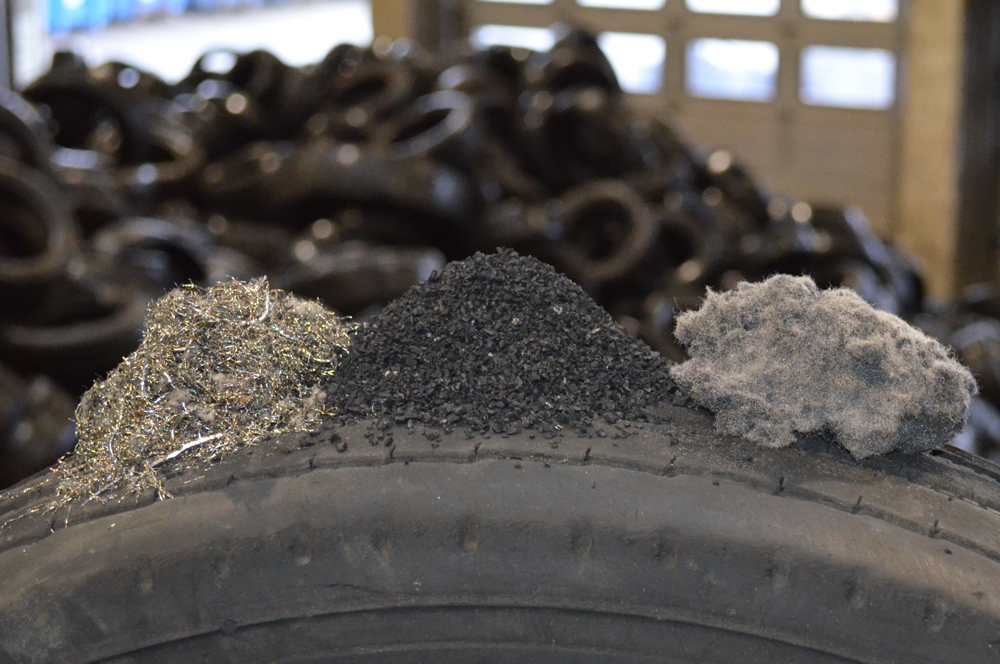
The material composition of a single ELT determines what can be recovered:
- 45% natural and synthetic rubber (recoverable as crumb rubber, devulcanised rubber, or pyrolysis feedstock)
- 28% carbon black (recoverable as rCB via pyrolysis)
- 14% steel (recoverable as scrap metal)
- 5 to 6% polyester and textile fibres
- Remainder: chemical additives including processing oils, antiozonants, and accelerators
Source
https://finance.yahoo.com/news/19-24-billion-tire-recycling-182300672.html
https://gradeall.com/tire-recycling-industry-statistics-global-market/
https://www.tyre-trends.com/materials/ustma-finds-79-of-end-of-life-tyres-now-being-consumed-by-end-use-markets
https://www.rematec.com/news/process-and-technology/rubber-tyre-recycling-and-the-circular-economy
Sustainability Strategy and Goals
Tyre recycling strategy operates across three levels: regulatory frameworks that mandate collection and processing responsibilities, technological pathways that determine what value is recovered from ELTs, and market development that creates demand for recycled outputs. No single lever works in isolation. The U.S. demonstrates what three decades of aligned policy and market development achieves. India illustrates what happens when EPR frameworks are introduced into a market with 60% informal ELT handling.
Global Recycling Rates and Regional Benchmarks
- The U.S. recycling rate rose from 11% in 1990 to 79% in 2023, an improvement of 68 percentage points over 33 years of sustained policy and infrastructure development.
- Illegal and abandoned tyre stockpiles in the U.S. declined from more than 1 billion units in 1990 to fewer than 48 million in 2023, a greater than 95% reduction.
- The EU maintains a 95% collection rate for ELTs, processing 3.6 million tonnes annually: 55% through material recycling (1.98 million tonnes), 40% through energy recovery (1.44 million tonnes), 4% through reuse and retreading (144,000 tonnes), and 1% through other applications.
- The UK processes approximately 52 million ELTs annually, equivalent to roughly 480,000 tonnes, generating £234.5 million in market revenue in 2024 and projected to reach £301.1 million by 2030 at a CAGR of 4.4%.
- China recycles over 330 million tyres annually, the highest absolute volume globally. India follows, recycling approximately 120 million tyres annually, though 60% of India’s ELT handling still flows through informal, unregistered channels.
Source
https://www.ustires.org/tire-recycling
https://gradeall.com/tire-recycling-industry-statistics-global-market/
https://finance.yahoo.com/news/19-24-billion-tire-recycling-182300672.html
https://sortconsultancy.com/blogs/tyre-waste-epr-framework-challenges-opportunities
Extended Producer Responsibility Frameworks
EPR is the primary regulatory mechanism for closing the ELT collection gap globally. It places legal and financial responsibility for ELT management on the producers and importers who place tyres on the market, rather than on waste management authorities or consumers.
- India’s MoEF&CC introduced EPR for waste tyres under Amendment Rules 2022, requiring manufacturers and importers to meet escalating recycling targets: 35% of 2020-21 production in Year 1 (2022-23), 70% in Year 2 (2023-24), and 100% in Year 3 (2024-25).
- India’s Environmental Compensation (EC) guidelines, updated in September 2024, introduced financial penalties for EPR non-compliance, with EPR credit prices ranging from INR 2 to INR 15 per kg depending on recycling method (retreading, crumb rubber, pyrolysis).
- The EU’s End-of-Life Vehicles Regulation (ELV) and national tyre EPR schemes across France, Germany, and Spain mandate take-back and recycling through producer responsibility organisations (PROs), achieving the EU’s 95% collection rate.
- New India regulations tightening ELT import restrictions have the potential to raise EU recycling costs by reducing export flow options, a development first flagged in 2022 and increasingly relevant as India’s domestic processing capacity scales.
Source
https://ssrana.in/articles/amendment-rules-extended-producer-responsibility-waste-tyre/
https://www.drishtiias.com/daily-updates/daily-news-analysis/new-guidelines-for-waste-tyre-management
https://sortconsultancy.com/blogs/tyre-waste-epr-framework-challenges-opportunities
https://www.european-rubber-journal.com/article/2090648/new-india-waste-tire-regs-could-drive-up-eu-recycling-costs
End-Use Markets for Recycled Tyre Material
The sustainability credibility of tyre recycling depends on where recovered materials go. Energy recovery, the dominant pathway in several regions, delays the problem rather than solving it by consuming the material as fuel and emitting CO2 without producing a circular material output. The priority hierarchy from most to least circular is:
- Retreading and reuse (extends tyre life directly, lowest environmental cost per km)
- Tyre-to-tyre recycling (rCB, devulcanised rubber back into new tyre production)
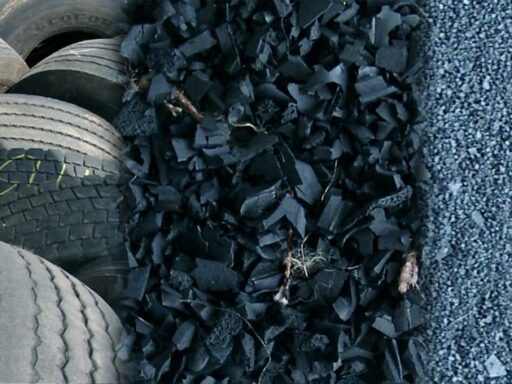
- High-value material recovery (crumb rubber, steel, recovered carbon black for non-tyre industrial use)
- Construction and infrastructure applications (rubberised asphalt, playground surfaces, rail underlay)
- Tire-derived fuel (TDF) and energy recovery (least circular, highest emissions)
- Crumb rubber demand is growing across construction, sports surfaces, rubberised asphalt, and moulded rubber products, with the global crumb rubber market expanding in tandem with ELT recycling infrastructure investment.
- Rubberised asphalt using crumb rubber extends road surface life by up to 50%, reduces road noise by 3 to 5 dB, and improves skid resistance, creating a durable non-tyre end market with quantified performance benefits.
- The pyrolysis segment is projected to grow at a CAGR of 4.8% between 2025 and 2034, the fastest-growing process segment in the tire recycling market, driven by the rising commercial value of recovered carbon black (rCB) and pyrolysis oil.
- Asia-Pacific holds 39% of the global tire recycling market share, driven by China and India’s volume scale, and is the largest single regional market. Europe is projected to grow at the fastest CAGR through 2034.
Source
https://ecogreenequipment.com/the-future-of-end-of-life-tire-recycling-in-2025-and-beyond/
https://www.linkedin.com/pulse/end-of-life-tire-recycling-market-reporting-vgqac
https://www.precedenceresearch.com/tire-recycling-market
https://gradeall.com/tire-recycling-industry-statistics-global-market/
Progress vs. Target Tracker
Source
https://www.ustires.org/tire-recycling
https://gradeall.com/tire-recycling-industry-statistics-global-market/
https://ssrana.in/articles/amendment-rules-extended-producer-responsibility-waste-tyre/
https://www.tiretechnologyinternational.com/news/sustainability/tire-industry-project-releases-end-of-life-tire-toolkit-2-0
Key Sustainability Innovations and Technologies
Five technologies are actively reshaping tyre recycling from linear material recovery toward full circular inputs:
- Pyrolysis and rCB recovery: High-temperature thermal decomposition of ELTs in the absence of oxygen generates pyrolysis oil (a refinery feedstock or fuel), recovered carbon black (rCB), and combustible gas. Leading processors now achieve greater than 85% material recovery rates. Pirelli deployed circular carbon black from ELT pyrolysis into P Zero mass production for Range Rover in July 2025, confirming commercial viability at scale.
- Devulcanisation for tyre-to-tyre rubber reuse: Devulcanisation breaks the sulfur crosslinks in vulcanised rubber, restoring processability for new tyre compounding. Evonik’s vinyl silane-based devulcanisation process, advanced in 2024, demonstrated up to 20% recycled rubber content in new tyre blends, four times the previous technical threshold of approximately 5%. Industrial-scale qualification trials are ongoing as of March 2026.
- Mechanical shredding and crumb rubber production: Ambient and cryogenic shredding of ELTs produces crumb rubber in particle sizes from 10 mesh to 40 mesh, enabling downstream use in rubberised asphalt, sports turf infill, moulded rubber products, and construction materials. The refurbishing segment holds 47% of the global tire recycling market by process, confirming it as the current dominant pathway.
- Chemical recycling and solvolysis: Solvolysis uses solvents at elevated temperature and pressure to depolymerise rubber into chemical monomers recoverable for new rubber synthesis, offering higher-purity outputs than pyrolysis but at higher processing cost. Research published in 2025 confirmed that combined shredding and solvolysis improves process efficiency and output quality versus standalone thermal methods.
- TIP End-of-Life Tire Toolkit 2.0: Released March 2026, this tool provides regulators, producers, and recyclers with standardised frameworks for collection system design, EPR policy structure, and recycling pathway evaluation across markets with fragmented or absent ELT infrastructure. It is the first industry-wide tool to address the full collection-to-recovery chain in a single, accessible framework.
Source
https://www.tiretechnologyinternational.com/features/rcb-black-gold-from-end-of-life-tires.html
https://weibold.com/evoniks-improved-devulcanization-process-should-accelerate-tire-recycling
https://pubs.rsc.org/en/content/articlehtml/2025/ma/d5ma00463b
https://ecogreenequipment.com/the-future-of-end-of-life-tire-recycling-in-2025-and-beyond/
https://www.tiretechnologyinternational.com/news/sustainability/tire-industry-project-releases-end-of-life-tire-toolkit-2-0
Measurable Impacts
The economic and environmental value locked in ELTs is substantial. Recycling one passenger tyre saves approximately 7 gallons of oil equivalent in raw material and energy inputs, and tyre recycling in the U.S. alone prevents an estimated 19 million tonnes of CO2 emissions annually. Global tyre recycling market revenues reflect this value: USD 13.92 billion in 2024, growing toward USD 19.24 billion by 2033.
- The U.S. tire recycling rate improved from 11% in 1990 to 79% in 2023, the result of a 33-year investment in EPR policy, stockpile remediation, and end-use market development.
- rCB use in new tyres reduces CO2 emissions by approximately 80% per unit compared to virgin carbon black production, making every tonne of rCB substituted for virgin material an 80% upstream emissions reduction.
- Rubberised asphalt using crumb rubber extends road surface life by up to 50%, representing a measurable infrastructure durability and whole-life cost benefit beyond the immediate recycling value.
- China’s 330 million tyres recycled annually and India’s 120 million units per year together represent the largest volume recycling markets globally, though India’s 60% informal processing rate means actual sustainability outcomes are significantly lower than volume figures suggest.
- Asia-Pacific holds 39% of global tire recycling market share in 2024, with Europe projected to grow at the fastest CAGR through 2034 driven by EPR tightening and circular economy legislation.
Source
https://gradeall.com/tyre-waste-environmental-impact-global-statistics/
https://gradeall.com/tire-recycling-industry-statistics-global-market/
https://www.ustires.org/tire-recycling
https://www.tiretechnologyinternational.com/features/rcb-black-gold-from-end-of-life-tires.html
Challenges and Areas for Improvement
The 21% gap between the U.S.’s 79% ELT utilisation rate and 100% circularity represents approximately 55 to 60 million tyres per year entering landfill, illegal dumping, or lower-value disposal routes in a single country. At the global level, the 4 billion ELT stockpile growing toward 5 billion by 2030 is the most visible expression of the system’s incompleteness.
Tire-derived fuel (TDF) remains the dominant recovery pathway in several regions, including parts of the EU where 40% of collected ELTs go to energy recovery. While TDF avoids landfilling, it consumes the material permanently, preventing re-entry into circular production and emitting CO2 equivalent to fossil fuel combustion. The priority gap between TDF and tyre-to-tyre circular recycling pathways is the most significant quality challenge in the sector.
India’s EPR framework requires 100% recycling responsibility from producers as of fiscal year 2024-25, but informal sector dominance means 60% of actual ELT handling bypasses registered recyclers entirely. EPR credit trading at INR 2 to INR 15 per kg provides insufficient financial incentive to formalise the informal sector at the speed the regulatory timeline requires. The gap between legislative ambition and operational infrastructure is India’s primary recycling challenge through 2030.
Source
https://www.ustires.org/newsroom/ustma-reports-progress-tire-recycling
https://gradeall.com/tire-recycling-industry-statistics-global-market/
https://sortconsultancy.com/blogs/tyre-waste-epr-framework-challenges-opportunities
Future Plans and Long-Term Goals
The global tire recycling market is forecast to reach USD 9.11 billion by 2032 at a CAGR of 3.46%. The most significant structural shift over the next decade is the transition from energy recovery and crumb rubber as primary ELT outputs toward tyre-to-tyre circular production, enabled by scaled pyrolysis rCB, qualified devulcanised rubber, and circular polyester recovery.
Long-range goals across manufacturers and industry bodies align on three outcomes: zero ELT stockpile accumulation globally (requiring collection infrastructure in all markets), 100% of collected ELTs entering circular material recovery rather than TDF or landfill, and technical qualification of recycled rubber, rCB, and recovered fibre for safety-critical tyre applications without performance compromise. The EV transition creates additional urgency: EV tyres wear 20 to 50% faster than ICE tyres, meaning annual ELT volumes will increase proportionally as global EV adoption accelerates through 2030 and beyond.
Source
https://www.marketsandata.com/industry-reports/tire-recycling-market
https://pubs.rsc.org/en/content/articlehtml/2025/ma/d5ma00463b
https://www.tyre-trends.com/news/global-tire-recycling-market-to-hit-usd-8-9-bln-by-2029-on-sustainability-push-marketsandmarkets
Comparisons to Industry Competitors
Regional market reports:
https://www.ustires.org/tire-recycling
https://gradeall.com/tire-recycling-industry-statistics-global-market/
https://www.grandviewresearch.com/horizon/outlook/tire-recycling-market/india
https://finance.yahoo.com/news/19-24-billion-tire-recycling-182300672.html
What to Watch: 12 to 18 Month Indicators
Three developments through mid-2027 will determine whether the tire recycling sector transitions from incremental improvement toward genuine circular material recovery:
- rCB qualification for passenger car tyre tread compounds: Continental and Pyrum Innovations confirmed rCB use in commercial forklift tyres in 2025 and are actively qualifying the material for passenger car tyre tread applications. A confirmed qualification would enable the world’s largest volume tyre segment to draw on ELT-derived carbon black at scale, directly reducing demand for virgin petrochemical carbon black across an input that constitutes 28% of every tyre’s mass. This is the highest-value single technical milestone in the ELT circular economy.
- India EPR compliance rate disclosure for fiscal year 2024-25: India’s EPR framework required 100% recycling responsibility from producers in fiscal year 2024-25. A formal compliance rate disclosure from MoEFCC or CPCB in 2026 will reveal whether the formal sector has grown sufficiently to absorb India’s 120 million annual ELT volume, or whether the 60% informal handling rate has persisted despite legislative escalation. India’s compliance trajectory directly affects global rCB and crumb rubber supply volumes and European recycling cost structures.
- Evonik devulcanisation at industrial scale: Evonik’s vinyl silane devulcanisation process demonstrated a 20% recycled rubber blend in new tyre compounds at laboratory scale in 2024, four times the previous 5% technical limit. Industrial-scale validation and a commercial supply agreement with a major tyre manufacturer in 2026 to 2027 would open the rubber fraction of every ELT to tyre-to-tyre circular recovery, closing the largest single remaining material loop in the ELT system.
Source
https://www.tiretechnologyinternational.com/features/rcb-black-gold-from-end-of-life-tires.html
https://www.drishtiias.com/daily-updates/daily-news-analysis/new-guidelines-for-waste-tyre-management
https://weibold.com/evoniks-improved-devulcanization-process-should-accelerate-tire-recycling
Tire recycling is the most operationally mature sustainability discipline in the tyre industry, and also the most uneven. The U.S. has demonstrated over 33 years what sustained EPR policy, market development, and industry investment can achieve: a 79% utilisation rate and a 95% reduction in stockpiles. The EU has proven 95% collection is achievable at continental scale. What neither system has yet achieved is 100% circularity or the transition from energy recovery and crumb rubber dominance toward tyre-to-tyre material reuse at scale.
The technologies to close that gap exist at the demonstration or early commercial stage. Evonik’s devulcanisation breakthrough, Continental-Pyrum’s rCB programme, and Pirelli’s P Zero mass production with circular carbon black are not research projects. They are industrial programmes that will reach commercial validation within the 12 to 24 months. The constraint is no longer technical feasibility. It is supply chain investment, regulatory incentive alignment, and the willingness of tyre manufacturers to build procurement commitments around recycled input materials that are currently 2 to 3 times costlier than virgin equivalents.
Three strategic takeaways for practitioners:
- Measure your Scope 3 ELT exposure by volume, not rate: A 79% recycling rate sounds strong. At 280 million annual U.S. ELTs, it still means roughly 58 million tyres per year entering lower-value or non-circular pathways. Fleet operators and tyre retailers with corporate net-zero commitments must quantify ELTs generated annually, track what percentage enters certified circular pathways, and set annual targets for improvement as part of Scope 3 waste accounting.
- Treat TDF as a transition pathway, not a sustainability solution: In markets where circular material recovery infrastructure is not yet available, TDF provides a landfill alternative with economic return. In markets with functional rCB and crumb rubber capacity, continuing to route ELTs to energy recovery is a circularity regression that sustainability procurement teams should flag and manage out of supply chains within a three to five-year horizon.
- Engage India’s formal recycling sector proactively: India’s 120 million annual ELT volume, 60% informal handling rate, and 100% EPR target for 2024-25 create a high-uncertainty operating environment for any multinational with Indian tyre procurement, fleet operations, or manufacturing. Establishing direct relationships with CPCB-registered Indian recyclers and EPR credit traders now builds the supply chain visibility and compliance infrastructure that will be required as Indian enforcement tightens through 2026 and 2027.