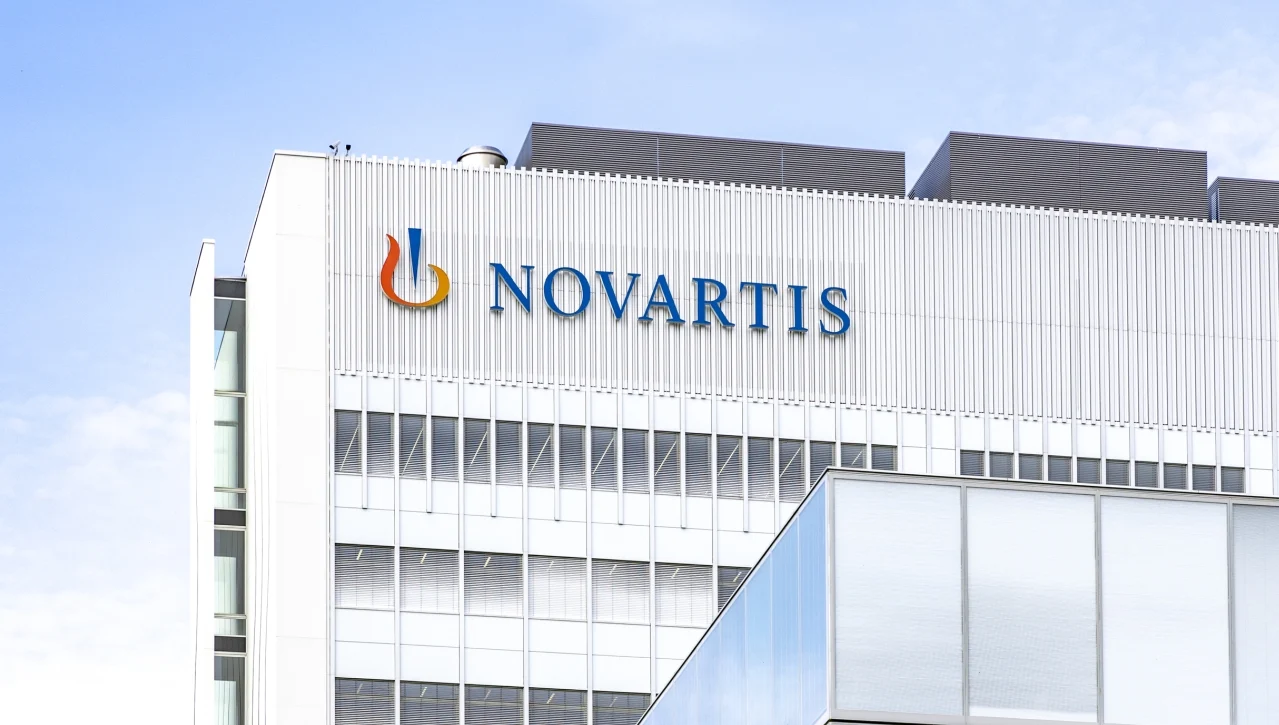

Novartis positions sustainability as a strategic lever for being a focused, innovative medicines company rather than a side program. Its integrated reporting combines financial, social, and environmental performance, with environmental sustainability, access to medicines, and governance embedded into the core business narrative. The Novartis in Society Integrated Report has become the central non-financial disclosure, with independent assurance over selected ESG indicators and alignment to TCFD, GRI, and SASB frameworks. Novartis is also recognized externally: in 2024, it ranked first in the Access to Medicine Index, and its 2040 net-zero pathway is validated by the Science Based Targets initiative (SBTi).
- In 2024, Novartis reports its medicines reached about 296 million patients, up from 284 million in 2023.
- The 2024 Access to Medicine Index ranks Novartis 1st of 20 pharma companies with a score of 3.78.
- Total greenhouse gas emissions (Scopes 1–3) declined from 5.36 MtCO₂e (2022) to 4.87 MtCO₂e (2023) and 4.59 MtCO₂e (2024).
- Combined Scope 1 and 2 emissions have fallen by roughly 63% vs 2016, indicating strong operational decarbonization.
Sustainability Strategy and Goals
Novartis structures its sustainability roadmap under three pillars: Planet, Patients, and People & Policy, supported by an Environmental Sustainability Strategy and a broader ESG framework. The company targets net-zero across the value chain by 2040, in line with the SBTi Corporate Net-Zero Standard, and integrates ESG into Board oversight, executive incentives, and enterprise risk management. Reporting is mapped to UN SDGs, TCFD, GRI, SASB, and (increasingly) EU ESRS, reflecting a mature, multi-framework governance approach.
Within that, Novartis addresses the key thematic areas:
- Net zero and carbon emissions
- SBTi-aligned pathway to reduce Scope 1 and 2 emissions by 90% and Scope 3 by 42% by 2030 (vs 2022), and to reach 90% absolute reductions across all scopes by 2040, with limited remaining removals.
- Internal carbon price of USD 100/tCO₂e is used to evaluate major investments and prioritize low-carbon options.
- Water stewardship
- Commitment to become water neutral at all sites by 2030, with a focus on high and very high water-stress basins.
- Water consumption reduced by around 50% vs 2016 by 2023, while maintaining 97% compliance with internal water quality standards at manufacturing sites.
- Regenerative agriculture/nature
- As a pharma player, Novartis focuses nature efforts on water, pollution, waste, land use and raw-material sourcing, with a nature strategy aligned to emerging TNFD guidance and global “nature-positive” goals.
- Deforestation and biodiversity
- TNFD-style assessments are applied to sites near sensitive ecosystems, with site-specific plans where material nature risks are identified.
- Packaging and circular economy
- Sustainable Product Design Guidance for all new products by 2030, plus a plan to eliminate PVC in packaging by 2025 and reduce waste sent for disposal by 50% vs 2016 by 2025, and a further 30% vs 2022 by 2030.
- Human rights and responsible sourcing
- A refreshed Human Rights Commitment Statement and enhancements driven by EU CSDDD, embedding environmental and human rights expectations in supplier codes, contracts, and audits.
- Nutrition and health
- Focus on serious non-communicable and infectious diseases (cardiovascular, oncology, immunology, malaria, leprosy, sickle cell disease) with access and affordability integrated into R&D and commercial strategy, especially in LMICs.
- Community and social impact
- Access programs, local health partnerships, and community projects (e.g., water and watershed initiatives in India) aim to improve health equity and resilience in underserved communities.
- Governance and transparency
- ESG performance is overseen by the Board and executive committees, with external assurance and transparent mapping to major reporting frameworks and rating agencies.
- Technology and innovation
- AI, advanced analytics, and life-cycle tools are used to optimize R&D, clinical trials, operations and climate risk management, including climate scenario analysis and LCAs.
- Global partnerships and advocacy
- Participation in RE100, EV100, The Climate Pledge, Race to Zero, WBCSD, PSCI, PEG LCA Consortium and the SMI Health Systems Taskforce positions Novartis as an active climate and access advocate.
Additional cross-strategy stats:
- Contracts with environmental criteria covered 57% of supplier emissions (Scope 3) in 2023, up from 46% in 2022, with a goal of full coverage by 2025.
- The proportion of new products meeting sustainable design criteria rose from 38% (2021) to 46% (2022) and 51% (2023).
- 28 sites in high or very high water-stress areas account for about 16% of total water consumption, giving a clear prioritization map.
Key Sustainability Innovations and Technologies
Novartis mixes hard decarbonization levers with data-driven tools and sector-level collaboration. For a high-waste, high-compliance industry like pharma, its blend of internal carbon pricing, renewable PPAs, sustainable product design, and AI-enabled population health is a useful reference model.
Major innovation themes include:
- Carbon pricing and renewable energy
- Internal carbon price of USD 100/tCO₂e to steer capex and opex choices towards low-carbon solutions.
- Large-scale VPPAs and renewable contracts mean 92% of purchased electricity was renewable in 2023, with 100% renewables already achieved in the US, Canada and EU operations.
- Product life-cycle design and LCAs
- Sustainable Product Design Guidance integrated into R&D and product governance, with LCAs completed for two BREEZHALER® inhaler products to identify high-impact levers such as propellants, materials, and logistics.
- Supplier decarbonization and transparency tools
- The Environmental Sustainability Supplier Playbook and contract criteria give suppliers concrete guidance on emissions, water, and waste, and link to collaborative platforms like Partnership for Carbon Transparency and the Energize renewables program.
- AI and advanced analytics for health and ESG
- The AI4HealthyCities initiative, active in cities such as New York, Singapore, Helsinki, Basel, and Lisbon, uses AI to integrate clinical, environmental, and social data to target cardiovascular risk and inform public-health and urban planning decisions.
Selected innovation metrics:
- Scope 1 and 2 emissions fell from 369.8 ktCO₂e (2022) to 295.2 ktCO₂e (2023) and 237.0 ktCO₂e (2024).
- Purchased renewable energy increased from 2.5 million GJ (2022) to 2.6 million GJ (2023) and an estimated 3.0 million GJ (2024).
- Supplier environmental criteria now cover over half of Scope 3 emissions, with a near-term trajectory to full coverage.
Measurable Impacts
Recent ESG disclosures show a pattern of absolute reductions in operational emissions and waste, gradual improvement in Scope 3, and sustained growth in access and patient reach. For a pharma company with energy-intensive R&D and manufacturing, these shifts are meaningful, even if the absolute footprint remains large.
Key environmental and social KPIs (2022–2024):
- Energy and emissions
- Total energy use declined from 6.8 million GJ (2022) to 6.3 million GJ (2023) and 5.8 million GJ (2024).
- Scope 1 emissions dropped from 263.2 ktCO₂e (2022) to 251.1 ktCO₂e (2023) and 207.0 ktCO₂e (2024).
- Market-based Scope 2 emissions fell from 106.6 ktCO₂e (2022) to 44.1 ktCO₂e (2023) and 30.0 ktCO₂e (2024), reflecting the rapid ramp-up of renewables.
- Scope 3 emissions decreased from 4,994.0 ktCO₂e (2022) to 4,573.7 ktCO₂e (2023) and 4,350.3 ktCO₂e (2024) – around a 13% reduction vs 2022.
- Water and nature
- Total water withdrawals hovered around 31–33 million m³ annually across 2022–2024, but water consumption (net) reduced significantly, enabling the company to report a 50% cut vs 2016 by 2023.
- 97% of manufacturing sites met internal water quality standards in 2022 and 2023; high-risk suppliers assessed against water quality standards increased from 26% (2022) to 88% (2023).
- Watershed projects near Hyderabad added around 65,000 m³ of water storage capacity, combining nature and community benefits.
- Waste and packaging
- Operational waste fell from 44.0 kt (2022) to 35.5 kt (2023) and 31.1 kt (2024), a 29% reduction in two years.
- Non-recycled waste decreased from 20.0 kt (2022) to 18.6 kt (2023) and 15.5 kt (2024), although total recycled waste also dropped as prevention efforts reduced waste generation.
- Around 78% of sites had eliminated PVC in packaging as of 2023, with additional sites coming into scope and a full phase-out target by 2025.
- Access and social impact
- Novartis medicines reached 284 million patients in 2023, including 33.2 million through access initiatives, rising to about 296 million patients in 2024.
- The company’s 1st-place ranking in the 2024 Access to Medicine Index underscores strong performance on access planning, licensing, and affordability.
Challenges and Areas for Improvement
Novartis is open about several structural challenges: Scope 3 dominance, packaging and pharmaceutical waste, water-stress exposure, and human rights and due diligence complexity. Many of these are systemic to pharma, but the scale of the footprint means that incremental process efficiency will not be enough; deeper product and supply-chain transformation will be required.
Key pressure points:
- Scope 3 dominance and data quality
- Scope 3 emissions of 4,350.3 ktCO₂e in 2024 account for roughly 95% of the total footprint, compared with 237.0 ktCO₂e for Scopes 1 and 2 combined.
- Around 3,372.5 ktCO₂e of this comes from purchased goods and services, reflecting the energy intensity of upstream chemicals and materials.
- Novartis notes that more than 84% of Scope 3 emissions are still estimated using spend-based or proxy data, with a multi-year effort needed to shift to primary supplier data.
- Packaging and pharmaceutical waste
- Even with progress, 15.5 kt of waste remained non-recycled in 2024; achieving the 2025 and 2030 waste-reduction targets will require process redesign, design-for-recycling, and collaboration on downstream infrastructure and treatment.
- PVC phase-out is incomplete and constrained by regulatory and performance needs in primary packaging and devices, making the 2025 target operationally challenging.
- Water and nature risk
- The 28 high-stress water sites (16% of total consumption) are particularly exposed to climate, regulatory, and community pressures; water neutrality by 2030 will demand more aggressive local reuse, recharge, and watershed restoration investments.
- Human rights and supply chain due diligence
- Aligning fully with EU CSDDD and similar regulations across a vast supplier base will require robust mapping, prioritization, and remediation, and could surface trade-offs between speed, cost, and resilience of supply.
Future Plans and Long-Term Goals
Forward-looking, Novartis is focused on executing its climate transition plan, scaling nature- and water-related goals, and deepening its access and equity agenda. The climate plan is tied to governance, financing, and internal incentives and is supported by sustainability-linked financing instruments.
Key commitment horizons:
- By 2025
- Achieve carbon neutrality in Scope 1 and 2 operations and apply environmental criteria across 100% of supplier contracts, from ~57% of supplier emissions covered in 2023.
- Reach 100% renewable electricity globally and complete PVC phase-out for packaging.
- Reduce waste sent for disposal by 50% vs 2016.
- By 2030
- Deliver 90% absolute reduction in Scope 1 and 2 emissions and 42% reduction in Scope 3 from 2022, maintaining the 90% operational reductions through 2040.
- Achieve water neutrality at all sites, with “no water quality impacts” from manufacturing and high-risk suppliers, and extend controls to labs and API suppliers.
- Scale sustainable sourcing programs targeting raw-material and nature impacts.
- By 2040
- Reach net-zero GHG emissions with 90% absolute reductions across all scopes, using removals only for a small, hard-to-abate residual footprint, consistent with SBTi expectations.
- Contribute to broader nature-positive outcomes by halting and reversing nature loss by 2030 and supporting recovery by 2050.
Ambition vs trajectory:
- With >60% Scope 1 and 2 reductions already achieved vs 2016, and ~36% vs 2022, the 2030 90% target is demanding but credible if renewables, electrification, and process innovation continue to scale.
- Scope 3 must fall from 4,350.3 ktCO₂e (2024) to around 2,800 ktCO₂e by 2030, requiring aggressive supplier engagement, product re-design, and potentially demand-side and portfolio shifts.
Comparisons to Industry Competitors
Compared with large pharma peers, Novartis blends strong access leadership with a competitive climate trajectory. AstraZeneca and GSK have particularly aggressive near-term emissions reduction plans; Pfizer has similar net-zero timing. On access, however, Novartis now leads the field.
Competitor snapshots:
- AstraZeneca
- Through Ambition Zero Carbon, AstraZeneca targets 98% Scope 1 and 2 reduction by 2026 (vs 2015) and 50% Scope 3 reduction by 2030, heading towards 90%+ reductions and net-zero by 2045, with carbon-negative ambitions for residuals by 2030.
- Ranks 5th in the 2024 Access to Medicine Index, solid but behind Novartis.
- GSK
- GSK plans an 80% emissions reduction across all scopes by 2030, moving to net-zero by 2045 with at least 90% reductions and high-quality removals for the rest.
- Ranks 2nd in the 2024 Access to Medicine Index with a score of 3.72, slightly below Novartis’ 3.78.
- Pfizer
- Pfizer targets net-zero by 2040, with 95% Scope 1 and 2 reductions and 90% Scope 3 reductions from a 2019 baseline, and a 2030 interim goal of 46% cuts in Scope 1 and 2.
- Ranks 4th in the 2024 Access to Medicine Index, reflecting strong but not leading access performance relative to Novartis and GSK.
Overall positioning:
- On timing, Novartis’ 2040 net-zero aligns with Pfizer and is ahead of GSK (2045), but AstraZeneca’s trajectory is more aggressive.
- On access, Novartis’ 1st-place ranking and integration of access into R&D and launch strategies is a clear differentiator and a core element of its ESG identity.
Our Thoughts
From a sustainable innovation lens, Novartis is a high-performing but still evolving leader. It has moved beyond box-ticking ESG into a model where net-zero, access, and governance shape strategy, capital allocation, supplier engagement, and product design. Top ranking in the Access to Medicine Index, a validated net-zero pathway, and the deployment of AI for population health all point to substantive action, not just narrative.
Yet the scale of the remaining work is significant:
- Scope 3 emissions dominate, and transforming upstream chemical, packaging, and logistics systems will require deep collaboration, stronger data, and potentially tougher procurement levers.
- Packaging and device waste remain challenging in a sector with tight regulatory constraints and complex cold chains; innovation in materials, refill and reuse models, and end-of-life solutions will be critical.
- Nature-positive goals are directionally strong but still need more granular, outcome-based metrics to match the sophistication of the climate plan.
For other companies, especially in high-waste and high-compliance industries, Novartis shows how to:
- Anchor climate strategy in science, finance, and product design simultaneously.
- Treat access, climate, and nature as interconnected systems, not siloed pillars.
- Move from supplier “requirements” to supplier enablement, using playbooks, joint programs, and shared data platforms.
Key sources
Pfizer: https://www.pfizer.com/about/responsibility/environmental-sustainability
Novartis in Society / Integrated reporting hub
https://www.novartis.com/us-en/esg/corporate-responsibility/novartis-society-integrated-report
https://reporting.novartis.com
https://prod1.novartis.com/sites/novartis_com/files/novartis-integrated-report-2024.pdf
https://www.novartis.com/sites/novartiscom/files/novartis-integrated-report-2023.pdf
Environmental sustainability and climate strategy
https://www.novartis.com/esg/environmental-sustainability/climate
https://www.novartis.com/sites/novartis_com/files/novartis-environmental-sustainability-strategy.pdf
https://www.novartis.com/sites/novartiscom/files/2024-12-novartis-impact-sustainability.pdf
Water, nature, and human rights
https://www.novartis.com/sites/novartis_com/files/novartis-human-rights-commitment-statement.pdf
Access to Medicine Index and external ratings
https://accesstomedicinefoundation.org/sectors-and-research/index-ranking
https://www.novartis.com/investors/reporting-and-transparency-hub/esg-rating-performance
Population health / AI4HealthyCities
https://www.novartisfoundation.org/transforming-population-health/ai4healthycities
Competitor sustainability information
AstraZeneca: https://www.astrazeneca.com/sustainability/environmental-protection/ambition-zero-carbon.html
GSK: https://www.gsk.com/media/iyrmzve1/pathway-to-a-net-zero-impact-on-climate.pdf