


Michelin is the world’s largest tyre manufacturer by revenue, operating 68 production sites across 18 countries and employing approximately 132,000 people globally. The company published its first Corporate Sustainability Report in 2024 compliant with the EU’s Corporate Sustainability Reporting Directive (CSRD), applying double materiality methodology that assesses both how sustainability issues affect financial performance and how the company’s operations affect society and the environment. Michelin’s overarching sustainability framework, called the “All-Sustainable” approach, organises all ESG commitments across three pillars: People, Profit, and Planet, launched as part of the Michelin in Motion strategic plan in 2021.
Michelin is included in leading Socially Responsible Investment (SRI) indices and has been assessed by non-financial rating agencies since 2003. The company received an ‘A’ rating from the Carbon Disclosure Project (CDP) in 2025, the highest score achievable for climate strategy and actions, and its Scope 1 and 2 targets are validated by the Science Based Targets initiative (SBTi) in alignment with the 1.5°C warming scenario.
Source
https://www.michelin.com/en/sustainability/company
https://www.michelin.com/en/sustainability/company/planet/climate-action
https://www.ainvest.com/news/michelin-strategic-transition-sustainable-mobility-long-term-creation-innovation-esg-alignment-2510
Sustainability Strategy and Goals
Michelin’s formal sustainability strategy aligns with all 17 UN SDGs, with the deepest operational linkages to SDG 7 (affordable and clean energy), SDG 9 (industry innovation), SDG 12 (responsible consumption), SDG 13 (climate action), SDG 15 (life on land), and SDG 17 (partnerships). Its SBTi-validated decarbonisation plan covers Scopes 1, 2, and 3, with the Race to Zero commitment formalised in July 2021 setting the framework for net-zero by 2050 across all direct and indirect activities excluding product use phase.
Net Zero and Carbon Emissions
Michelin targets a 50% reduction in Scope 1 and 2 CO2 emissions by 2030 from a 2010 baseline and a 90% reduction in both Scope 1 and 2 and Scope 3 emissions by 2050 from a 2019 baseline. Net-zero emissions by 2050, combined with carbon capture for residual emissions, forms the final target state.
- Michelin achieved a 37% reduction in Scope 1 and 2 emissions in 2024 versus its 2019 baseline, a trajectory validated by SBTi.
- Total GHG emissions in 2024 were approximately 117.1 billion kg CO2e, comprising 960 million kg CO2e from Scope 1, 1.07 billion kg CO2e from Scope 2, and the substantial remainder from Scope 3.
- SBTi-validated targets require Michelin to reduce absolute Scope 1 and 2 GHG emissions by 38% by 2030 from a 2010 base year and reduce specified Scope 3 categories by 15% by 2030 from a 2018 base year.
- The curing stage represents one-quarter of all manufacturing energy consumed, and Michelin is accelerating deployment of electric curing presses as a primary decarbonisation lever.
- Michelin invests EUR 1.2 billion annually in R&D, with sustainable innovation as a core allocation priority.
Water Stewardship
Michelin manages water use across its 68 production sites with a focus on reducing freshwater withdrawal, improving wastewater treatment, and maintaining zero non-compliance with local discharge regulations.
- Michelin’s natural rubber processing facilities in Brazil and Indonesia operate with anaerobic and aerated lagoon effluent treatment systems with water recycling capacity, reporting full compliance with national and local wastewater regulations.
- TIP member data, which includes Michelin, confirms the group achieved a 14% reduction in total water withdrawals between 2021 and 2024.
- Electric curing press deployment reduces steam and water demand per tyre produced, creating a co-benefit across carbon and water reduction targets simultaneously.
Regenerative Agriculture
Michelin is one of the world’s largest buyers of natural rubber and has built a regenerative agriculture strategy specifically around Hevea brasiliensis plantations in Southeast Asia and Brazil, focused on soil health, zero pesticide application, biodiversity corridor maintenance, and smallholder income improvement.
- Michelin committed in 2022 to reduce pesticide use per hectare on Group-operated and joint venture rubber plantations by 70% by 2030 versus a 2019 baseline, with an interim 50% reduction milestone set for 2025.
- By 2030, Michelin targets that 80% of its natural rubber volumes will be assessed for compliance with environmental and social sustainability standards.
- Michelin commits to evaluating 100% of the natural rubber used globally by 2030, with zero herbicide use on 50% of planted areas as an additional milestone.
Deforestation and Biodiversity
Michelin made a public zero-deforestation commitment in 2016, one of the first in the tyre industry, and was the first tyre manufacturer to support the inclusion of natural rubber in the EU Deforestation Regulation (EUDR) in 2022. Its flagship biodiversity initiative is the PT Royal Lestari Utama (RLU) project in Indonesia, where Michelin is the sole shareholder as of 2022.
- RLU has allocated 28,000 hectares for biodiversity conservation within its concession area.
- Standing forest and newly planted areas within RLU absorbed more than 1.3 million metric tonnes of carbon emissions as of 2021.
- Mongabay analysis published in May 2024 questioned the robustness of Michelin’s no-deforestation claims in Indonesia, noting that the verification methodology used in RLU’s 2022 report may not fully account for indirect deforestation effects, representing a credibility risk for Michelin’s biodiversity commitments.
- Michelin aligns its biodiversity commitments with the Kunming-Montreal Global Biodiversity Framework targets, which require halting species loss and restoring 30% of degraded ecosystems by 2030.
Packaging and Circular Economy
Michelin’s circular economy strategy centres on three material transitions: reaching 40% recycled and renewable tyre material content by 2030, 100% by 2050, and building tyre-to-tyre circularity through rCB recovery, bio-silica, and devulcanised rubber reintegration.
- Michelin’s recycled and renewable material share grew from 28% in 2021 to 31% in 2024.
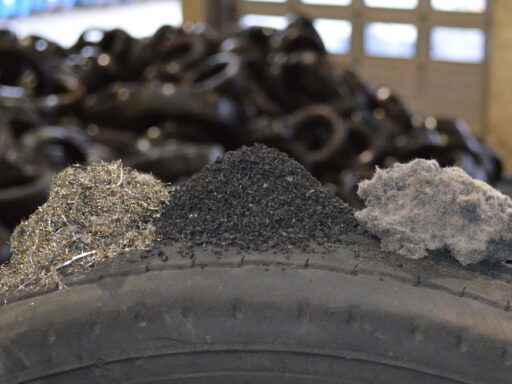
- Michelin presented a 45% sustainable material car tyre prototype, approved for road use, in 2022, incorporating recycled steel, rCB from ELTs, and rice husk silica.
- A racing tyre prototype for the Porsche GT4 ePerformance reached 53% biosourced and recycled materials, demonstrating sustainable compound performance under extreme racing conditions.
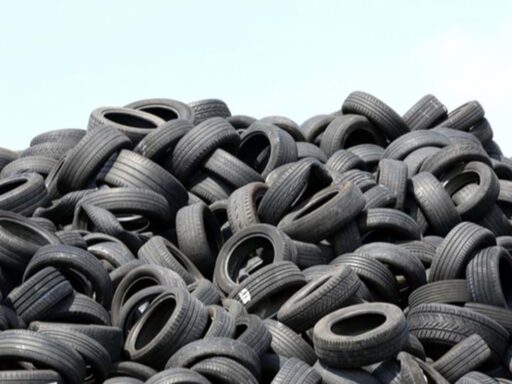
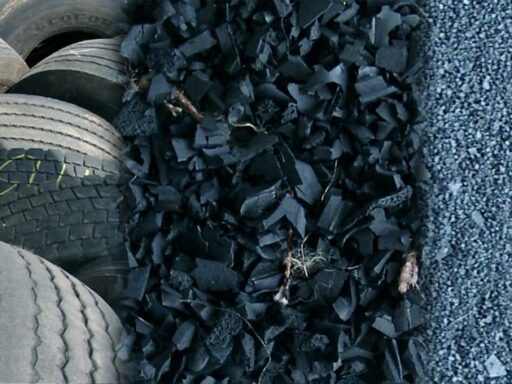
- Michelin partnered with Enviro and Antin Infrastructure Partners to build a tyre recycling plant in Sweden, extracting raw materials from ELTs for re-entry into new tyre manufacturing.
- Michelin’s rCB-standard collaboration with Bridgestone cuts CO2 emissions by 20% per tyre compared to conventional virgin carbon black production methods.
Human Rights and Responsible Sourcing
Michelin published its Duty of Care Plan in 2024, which maps human rights risks across its value chain in alignment with the French Duty of Vigilance Law and the EU Corporate Sustainability Due Diligence Directive (CSDDD). Its natural rubber supply chain covers thousands of smallholder farms, making supply chain human rights verification a systemic operational challenge.
- Michelin’s Sustainable Natural Rubber Policy aligns with the Global Platform for Sustainable Natural Rubber (GPSNR) policy components, covering both environmental and social compliance requirements.
- By 2022, 100% of plantations in which Michelin holds a shareholder stake were required to comply with the Michelin Sustainable Natural Rubber Policy.
- Michelin committed that 70% of its suppliers by emissions covering purchased goods and services would have science-based targets by 2024.
Community and Social Impact
Michelin’s community impact is concentrated in manufacturing communities across France, the U.S., Brazil, Indonesia, and Asia-Pacific. The People pillar of the All-Sustainable strategy targets 85% employee engagement, 35% women in leadership, and continuous improvement in social cohesion metrics by 2030.
- Michelin North America maintains 11 Business Resource Groups (BRGs) and 13 Diversity and Inclusion councils providing employee representation and community engagement across all operating sites.
- Michelin’s DE&I strategy focuses on three pillars: Enriching Teams, Cultivating a Culture of Belonging, and Impacting Society.
- Michelin’s RLU rubber project in Indonesia provides direct employment and income support to smallholder rubber farming communities within the concession area.
Governance and Transparency
Michelin’s governance structure includes a Supervisory Board-level CSR Committee active since 2020, a Group Management Committee that certifies sustainability guidance across environmental, human rights, health and safety, and sustainable finance domains, and a Stakeholder Committee that engages external voices to track evolving societal expectations.
- Michelin published its 2024 Sustainability Statement compliant with EU CSRD, representing the company’s first report using double materiality methodology covering the full value chain.
- The company has conducted an annual Governance Roadshow led by the Chair since 2022, engaging investors and stakeholders on governance structures, board diversity, and ESG performance.
- Board diversity policy includes measurable targets and a detailed expertise matrix, with two employee-elected members serving on the Supervisory Board.
Technology and Innovation
Michelin invests EUR 1.2 billion annually in R&D, with sustainable material science, TRWP measurement, electric curing, and tyre lifecycle optimisation as priority domains.
- Michelin’s SAMPLE (Small pArticle Measurement and anaLysis by optical Emission) system, presented at Tire Technology Expo 2024, captures, sorts, counts, and characterises particles generated close to tyres with precision and reproducibility not previously available in the industry, opening the pathway to tyres with wear particles fully bio-assimilable by the environment.
- SAMPLE’s methodology was validated by scientific peer review and adopted by ETRMA as a reference testing standard for the European industry, earning two industry awards in 2024.
- Michelin presented its latest TRWP research at Tire Technology Expo 2026, sharing findings from nearly a decade of investigation covering particle composition, environmental transport, and bio-assimilation pathways.
- The Michelin e.Primacy All-Season tyre, launched in February 2025, is up to 25% more energy-efficient than competitors and extends EV range by up to 32 km per charge, while lasting up to 21,000 km longer than conventional alternatives.
Global Partnerships and Advocacy
Michelin is a founding participant in the Tire Industry Project (TIP) and plays a leading role in ETRMA, the European tyre and rubber industry association, and the Global Platform for Sustainable Natural Rubber (GPSNR).
- Michelin was the first tyre manufacturer to advocate for including natural rubber under EU Deforestation Regulation (EUDR) in 2022.
- Michelin’s SAMPLE methodology is now used by ETRMA as a reference standard for industry-wide TRWP measurement, enabling cross-manufacturer comparability for the first time.
- Michelin co-published a joint rCB technical white paper with Bridgestone in 2023, proposing global grades, specifications, and quality guidelines to unlock tyre-to-tyre circular carbon black supply chains.
- Michelin participates in the “Race to Zero – Business Ambition for 1.5°C” initiative under UNFCCC, formalising its science-aligned net-zero commitment within the global climate governance framework.
Source
https://www.michelin.com/en/sustainability/company/planet/climate-action
https://ditchcarbon.com/organizations/michelin
https://www.automotiveworld.com/news-releases/michelins-co2-reduction-targets-approved-by-sbti/
https://www.michelin.com/en/sustainability/entreprise/planet/biodiversity-protection
https://act4nature.com/wp-content/uploads/2024/05/MICHELIN-VA-2024.pdf
https://news.mongabay.com/2024/05/analysis-michelins-no-deforestation-claims-in-indonesia-rubber-plantation-a-stretch/
https://natural-rubber.michelin.com/natural-rubber-by-michelin/challenges
https://www.michelin.in/why-michelin/sustainability
https://weibold.com/michelins-sustainable-tire-goals-fewer-tires-for-evs-more-innovation/
https://scraptirenews.com/2024/04/04/michelin-introduces-new-particle-analysis-system/
https://tiretechnology-expo.com/ttx26c-tire-technology-expo-conference/michelin-research-on-trwparound-the-tire-inside-the-parti
https://tireindustryproject.org/
https://www.yushengmax.com/bridgestone-michelin-set-standards-to-expand-recycled-carbon-black.html
https://www.linkedin.com/posts/michelin_sustainability-esg-csrd-activity-7322605721013895170-jofG
https://jobs.michelinman.com/about-us/diversity-equity-inclusion
https://www.spott.org/natural-rubber/michelin/
https://tireindustryproject.org/news/latest-kpi-report-demonstrates-significant-progress-made-by-tire-industry-project-member-co
Progress vs. Target Tracker
Source
https://www.michelin.com/en/sustainability/company/planet/climate-action
https://ditchcarbon.com/organizations/michelin
https://www.michelin.in/why-michelin/sustainability
https://act4nature.com/wp-content/uploads/2024/05/MICHELIN-VA-2024.pdf
https://www.automotiveworld.com/news-releases/michelins-co2-reduction-targets-approved-by-sbti/
Key Sustainability Innovations and Technologies
- SAMPLE particle analysis system: Michelin’s Small pArticle Measurement and anaLysis by optical Emission system is the first industry-grade tool capable of capturing, sorting, counting, and characterising tyre wear particles close to the source with scientific reproducibility. Validated by peer review and adopted by ETRMA as a reference standard in 2024, it earned two industry awards. It positions Michelin as the technical leader in TRWP science and forms the foundation for developing tyres with bio-assimilable wear particles, a concept with no commercial parallel in the industry as of March 2026.
- Electric curing press technology: The curing stage consumes one-quarter of all manufacturing energy and has traditionally depended on steam from fossil-fuel boilers. Michelin is accelerating deployment of electric curing presses across its 68 production sites, directly reducing both Scope 1 emissions and water use in manufacturing. This is the most capital-intensive single decarbonisation lever in Michelin’s manufacturing network.
- Bio-butadiene from biomass: Michelin produces bio-butadiene from ethanol derived from biomass as a direct SBR feedstock substitute, replacing the fossil carbon origin of one of the tyre’s largest synthetic rubber inputs without altering performance specifications. This is one of a small number of industrially active bio-based synthetic rubber pathways globally.
- Enviro recycling plant (Sweden): Michelin partnered with Enviro and Antin Infrastructure Partners to build a commercial pyrolysis facility in Sweden extracting raw materials from ELTs for re-entry into new tyre production. This is Michelin’s direct investment in tyre-to-tyre circular manufacturing infrastructure, beyond the rCB standards work conducted jointly with Bridgestone.
- e.Primacy and Pilot Sport EV range: Michelin’s EV-specific product line, including the e.Primacy All-Season (launched February 2025) with 25% greater energy efficiency and 32 km range extension, and the Pilot Sport EV with GreenPower Compound and Piano Acoustic Technology, demonstrates that low rolling resistance, sustainable material content, and noise management can be combined in a single commercial product.
Source
https://scraptirenews.com/2024/04/04/michelin-introduces-new-particle-analysis-system/
https://www.michelin.com/en/publications/group/tire-technology-expo-2024-michelin-innovates-to-push-forward-knowledge-on-tire-an
https://tiretechnology-expo.com/ttx26c-tire-technology-expo-conference/michelin-research-on-trwparound-the-tire-inside-the-parti
https://weibold.com/michelins-sustainable-tire-goals-fewer-tires-for-evs-more-innovation/
https://www.michelin.com/en/sustainability/company/planet/climate-action
https://www.ainvest.com/news/michelin-strategic-transition-sustainable-mobility-long-term-creation-innovation-esg-alignment-2510
https://www.marketsandmarkets.com/ResearchInsight/electric-vehicle-tires-market.asp
Measurable Impacts
Michelin’s most verified impact is on carbon emissions, where the 37% Scope 1 and 2 reduction against a 2019 baseline is the most publicly confirmed and externally validated figure in the company’s ESG portfolio. The company’s CDP A rating in 2025 provides independent third-party confirmation of the credibility and governance of these claims.
- Recycled and renewable material share rose from 28% in 2021 to 31% in 2024, representing 3 percentage points gained over three years against a 9 percentage point gap remaining to the 40% target for 2030.
- RLU Indonesia absorbed more than 1.3 million metric tonnes of CO2 in standing and newly planted forest as of 2021, and conserves 28,000 hectares of biodiversity area.
- The SAMPLE methodology, adopted by ETRMA as the European reference standard, enables the first cross-manufacturer TRWP measurement comparability framework where none previously existed.
- Michelin’s rCB-standard collaboration with Bridgestone delivers approximately 20% CO2 reduction per tyre compared to conventional carbon black production, establishing a measurable circular economy impact metric tied to a specific supply chain intervention.
- Michelin participates in the TIP member group where total renewable electricity use increased by 121% and water withdrawals fell by 14% between 2021 and 2024.
Source
https://www.ainvest.com/news/michelin-strategic-transition-sustainable-mobility-long-term-creation-innovation-esg-alignment-2510
https://weibold.com/michelins-sustainable-tire-goals-fewer-tires-for-evs-more-innovation/
https://news.mongabay.com/2024/05/analysis-michelins-no-deforestation-claims-in-indonesia-rubber-plantation-a-stretch/
https://www.michelin.com/en/publications/group/bridgestone-and-michelin-to-present-findings-from-year-long-effort-on-recovered-c
https://tireindustryproject.org/news/latest-kpi-report-demonstrates-significant-progress-made-by-tire-industry-project-member-co
Challenges and Areas for Improvement
Scope 3 emissions are Michelin’s most significant unresolved challenge. Total GHG in 2024 was approximately 117.1 billion kg CO2e, with Scope 1 at 960 million kg and Scope 2 at 1.07 billion kg, meaning Scope 3 accounts for the overwhelming majority of Michelin’s climate footprint. The 15% Scope 3 reduction target by 2030 covers only selected upstream and downstream categories, not the full Scope 3 spectrum, which includes raw material extraction, product use emissions, and full ELT processing.
The deforestation credibility gap is material. Mongabay’s May 2024 analysis questioned whether Michelin’s no-deforestation claims for the RLU Indonesia project accurately represent indirect deforestation effects from smallholder expansion adjacent to the concession. Michelin’s zero-deforestation commitment dates to 2016, and its NR assessment target of 80% compliance review by 2030 leaves a 20% unassessed supply volume that creates ongoing EUDR exposure. The 2025 pesticide reduction interim milestone performance has not been publicly disclosed as of March 2026.
The pace of recycled material content growth requires acceleration. Growing from 28% to 31% over three years means the current linear trajectory reaches only 37 to 38% by 2030, short of the 40% target. Michelin will need to add approximately 3 percentage points over the final two years of the decade, requiring commercial-scale deployment of at least one new category of recycled or bio-based input beyond current rCB and bio-silica programmes.
Source
https://ditchcarbon.com/organizations/michelin
https://news.mongabay.com/2024/05/analysis-michelins-no-deforestation-claims-in-indonesia-rubber-plantation-a-stretch/
https://weibold.com/michelins-sustainable-tire-goals-fewer-tires-for-evs-more-innovation/
https://www.automotiveworld.com/news-releases/michelins-co2-reduction-targets-approved-by-sbti/
Future Plans and Long-Term Goals
Michelin’s 2050 vision calls for net-zero emissions across all scopes (excluding use phase), 100% sustainable material content in all tyres, zero ELT stockpile contribution, and no biodiversity net loss from its operations or supply chain. The 2030 milestones serve as the first commercial verification of whether these ambitions are tracking operationally: 40% recycled/renewable material, 50% Scope 1 and 2 CO2 reduction, 80% NR supply assessed for sustainability, and 35% women in leadership.
On the product side, Michelin’s long-term roadmap targets tyres with wear particles that are fully bio-assimilable by the environment, a concept with no commercial equivalent anywhere in the industry. The SAMPLE system is the first step in this research trajectory, and Michelin’s presentations at Tire Technology Expo 2026 confirm that the bio-assimilable particle programme is active and advancing with published results being shared with the scientific community.
Source
https://www.michelin.com/en/sustainability/company/planet/climate-action
https://www.michelin.in/why-michelin/sustainability
https://tiretechnology-expo.com/ttx26c-tire-technology-expo-conference/michelin-research-on-trwparound-the-tire-inside-the-parti
Comparisons to Industry Competitors
Source
https://www.bridgestone.com/responsibilities/esgdata/
https://corporate.goodyear.com/content/dam/goodyear-corp/documents/responsibility/goodyear-crr-2024-final.pdf
https://news.europawire.eu/continental-named-among-worlds-top-sustainable-companies-sets-ambitious-carbon-neutral-goals-for-2050
What to Watch: 12 to 18 Month Indicators
Three specific signals through mid-2027 will determine whether Michelin’s sustainability standing strengthens, holds, or comes under scrutiny:
- Recycled material content trajectory in the 2025 sustainability report (due mid-2026): Michelin grew from 28% to 31% over three years (2021 to 2024), adding 1 percentage point per year on average. Reaching 40% by 2030 requires approximately 1.5 percentage points per year from 2024 onward, with acceleration needed from new input categories beyond current rCB and rice husk silica. The 2025 data point will confirm whether the pace has accelerated toward the required trajectory or whether the 2030 target is drifting to At Risk status.
- Enviro Sweden recycling plant commercial output: Michelin’s investment with Enviro and Antin in a Swedish ELT pyrolysis plant is its most direct contribution to tyre-to-tyre circular manufacturing. A commercial output volume announcement, with confirmed rCB grade qualification for passenger car tyre applications, would represent a structural milestone in Michelin’s circular economy strategy, converting from buyer of external rCB supply to investor in verified production capacity.
- TRWP bio-assimilation research milestone: Michelin presented TRWP research progress at Tire Technology Expo 2026 and has been conducting near-decade-long investigation into wear particle composition and environmental transport. Publication of a peer-reviewed pathway toward bio-assimilable tyre wear particles in 2026 to 2027 would be a globally unique scientific advancement with regulatory, reputational, and commercial implications far beyond Michelin’s own ESG reporting, establishing the first credible technical route out of the TRWP problem that no other manufacturer has defined.
Source
https://weibold.com/michelins-sustainable-tire-goals-fewer-tires-for-evs-more-innovation/
https://www.ainvest.com/news/michelin-strategic-transition-sustainable-mobility-long-term-creation-innovation-esg-alignment-2510
https://tiretechnology-expo.com/ttx26c-tire-technology-expo-conference/michelin-research-on-trwparound-the-tire-inside-the-parti
Michelin is the most strategically coherent sustainability actor in the tyre industry. Its CDP A rating, SBTi-validated Scope 1 and 2 targets, first CSRD-compliant sustainability report in the sector, and nine years of TRWP research culminating in the ETRMA-adopted SAMPLE standard represent a depth of commitment that is not replicated by any competitor. The 37% Scope 1 and 2 reduction in 2024 is credible, externally validated, and on a trajectory that reaches the 38% 2030 target from a 2010 base.
The gaps are real and should not be minimised. Scope 3 covers the vast majority of Michelin’s 117.1 billion kg CO2e total emissions, and the 15% reduction target for selected Scope 3 categories by 2030 addresses only a fraction of that exposure. The NR deforestation credibility challenge raised by Mongabay in May 2024 requires a more rigorous third-party verification response than Michelin has published to date. The material content growth trajectory, at 1 percentage point per year from 2021 to 2024, needs to accelerate meaningfully to reach 40% by 2030.
Three strategic takeaways for practitioners benchmarking or replicating Michelin’s approach:
- Use Michelin’s SAMPLE methodology as a TRWP baseline for your own fleet assessments: No other manufacturer has developed an externally validated TRWP measurement system adopted as an industry reference standard. Fleet operators and logistics companies who want credible TRWP data should reference the SAMPLE standard in supplier sustainability assessments and request tyre-specific particle emission rate data as it becomes commercially available.
- Treat Michelin’s 40% material target as the 2030 procurement floor, not a benchmark: Michelin targets 40% by 2030 across all tyre lines, and Bridgestone already has commercial products at 55 to 70%. Tyre procurement contracts renewing between 2026 and 2030 should write 40% ISCC PLUS certified recycled and renewable material content as the minimum specification, consistent with what Michelin itself has committed to delivering.
- Monitor the Enviro Sweden plant as a circular economy infrastructure signal: Michelin’s investment in physical ELT recovery capacity, rather than relying solely on external rCB supply, is the model that closes the tyre material loop structurally. Practitioners designing circular economy programmes should track the Enviro plant’s commissioning, output volumes, and rCB grade qualifications as a benchmark for what integrated tyre manufacturer circular infrastructure looks like in practice.
Source
https://www.michelin.com/en/sustainability/company/planet/climate-action
https://weibold.com/michelins-sustainable-tire-goals-fewer-tires-for-evs-more-innovation/
https://news.mongabay.com/2024/05/analysis-michelins-no-deforestation-claims-in-indonesia-rubber-plantation-a-stretch/
https://scraptirenews.com/2024/04/04/michelin-introduces-new-particle-analysis-system/