


Bridgestone Corporation is the world’s largest tyre and rubber company by revenue, headquartered in Tokyo, Japan, operating 134 manufacturing facilities across 25 countries and employing approximately 69,000 people globally as of FY2024. The company publishes its sustainability performance annually through the Bridgestone 3.0 Journey Integrated Report, which has combined annual and sustainability reporting since 2022, with FY2024 data externally assured by LRQA against GRI Standards. Bridgestone’s overarching sustainability framework is the E8 Commitment, a set of eight values covering Energy, Ecology, Efficiency, Extension, Economy, Emotion, Ease, and Empowerment, which organises all ESG commitments within the Bridgestone Sustainability Business Model.
Bridgestone received CDP’s highest score for transparency on climate change in 2023, and in the same year obtained SBTi certification for its medium-term CO2 reduction target for 2030 covering Scope 1, 2, and Scope 3, making it one of a small number of tyre manufacturers with all-scope SBTi validation. The company’s Mid Term Business Plan (24MBP) for 2024 to 2026 formally integrates carbon neutrality and circular economy targets into financial and business planning.
Source
https://www.bridgestone.com/responsibilities/library/
https://press.bridgestone-emea.com/en-in/bridgestone-releases-its-bridgestone-30-journey-2024–integrated-report/
https://www.autocarpro.in/news/bridgestone-receives-recognition-for-climate-change-initiatives-119453
https://ditchcarbon.com/organizations/bridgestone
Sustainability Strategy and Goals
Bridgestone’s sustainability strategy operates through three integrated levers: decarbonisation of manufacturing and value chain operations, circular economy development covering end-of-life tyre (ELT) recovery and recycled material reintegration, and nature positivity ensuring biodiversity protection and responsible natural rubber sourcing. All targets align with SBTi guidelines, the Paris Agreement 1.5°C pathway, and the Kunming-Montreal Global Biodiversity Framework. The Bridgestone 3.0 Journey frames these levers within a business model that advances from “produce and sell” toward “renewal” of tyres to raw materials throughout the value chain.
Net Zero and Carbon Emissions
Bridgestone targets carbon neutrality by 2050 and has set SBTi-validated interim targets for Scope 1, 2, and Scope 3 emissions at 2030. Its Scope 1 and 2 reduction trajectory has already exceeded its own interim targets ahead of schedule.
- Bridgestone achieved a 62% reduction in Scope 1 and 2 CO2 emissions in 2024 compared to a 2011 baseline, exceeding both the 50% interim target set for 2026 and the 50% milestone target for 2030 six years ahead of schedule.
- Total GHG emissions in 2024 were approximately 93.1 billion kg CO2e, comprising 1,439,000,000 kg CO2e from Scope 1, 244,000,000 kg CO2e from Scope 2, and the remainder from Scope 3.
- SBTi-validated targets require a 28% reduction in absolute Scope 1 and 2 GHG emissions by 2030 from a 2019 baseline, with Scope 3 targets covering selected upstream and downstream categories.
- Non-renewable energy consumption fell from 39,879 thousand GJ in FY2020 to 27,119 thousand GJ in FY2024, a reduction of 31.9% over four years.
- Renewable energy consumption grew from 1,767 thousand GJ in FY2020 to 11,866 thousand GJ in FY2024, a 571% increase over four years, driven primarily by renewable electricity procurement expansion.
- Bridgestone India’s Pune plant received LRQA-verified carbon neutral status in 2023, with 2,974 tonnes of CO2 offset through Verified Carbon Standard credits.
Water Stewardship
Bridgestone’s Water Stewardship Policy, published as part of the Bridgestone 3.0 framework, requires all manufacturing sites located in water stress areas to develop and implement site-specific water stewardship plans by 2030.
- All 17 manufacturing sites in scope for water stress area planning completed their site-specific water stewardship plans in 2024.
- Total water withdrawal at production sites in water stress areas was 2,341,000 m3 in 2024, a decrease of 5.4% from the previous year (2,712,000 m3 in FY2023).
- Total Group water withdrawal across all sites was 63,990 thousand m3 in FY2024, and freshwater consumption (excluding seawater and recycled flows) was 27,058 thousand m3, down from 28,437 thousand m3 in FY2023.
- Recycled water volume across all sites was 286,007 thousand m3 in FY2024, demonstrating active water circularity at scale across manufacturing operations.
Regenerative Agriculture
Bridgestone is one of the world’s top three buyers of natural rubber globally, sourcing from its own plantations and smallholder networks across Thailand, Indonesia, and other Southeast Asian countries. Its regenerative approach targets productive yield improvement, smallholder income enhancement, and biodiversity preservation simultaneously.
- Bridgestone targets supporting 12,000 smallholders of natural rubber by 2026 and supported 6,047 smallholders in 2024 through agricultural technology transfer, training, and supply chain integration programmes.
- In 2024, the Sanggabuana Conservation project planted 100 trees on Sanggabuana Mountain in Indonesia, supporting water sources, local wildlife food supply, and community livelihoods.
- Bridgestone Natural Rubber (Thailand) carried out a canal clean-up activity in 2024 with 82 participants including employees, local community members, and government representatives, restoring a 2,000-metre stretch of biodiversity-supporting waterway.
- Bridgestone’s guayule cultivation programme in Eloy, Arizona, requires as little as half the water of conventional crops such as cotton or alfalfa, making it a regenerative agricultural model for arid-land rubber production.
Deforestation and Biodiversity
Bridgestone’s Sustainable Natural Rubber Policy aligns with the GPSNR Policy Components, with the company committing to source no natural rubber from areas deforested after April 1, 2019, the GPSNR-adopted cutoff date. Biodiversity protection is embedded in the Nature Contribution target within the E8 Commitment framework.
- Bridgestone’s deforestation cutoff date of April 1, 2019 is formally adopted from GPSNR and publicly documented in its sustainable procurement policy.
- The Sanggabuana Conservation project in Indonesia supported the voluntary surrender of protected wildlife that had been held by households in the community in 2024, combining biodiversity recovery with community engagement.
- Bridgestone aims to achieve “In balance with nature (Contribution greater than Footprint)” as a long-term nature positivity target by 2050, requiring net positive biodiversity impact across all operations and supply chains.
- Bridgestone’s guayule research programme in Arizona, which includes partnerships with U.S. Department of Agriculture and Native American tribes, reforests and diversifies agricultural land use in regions facing severe climate stress.
Packaging and Circular Economy
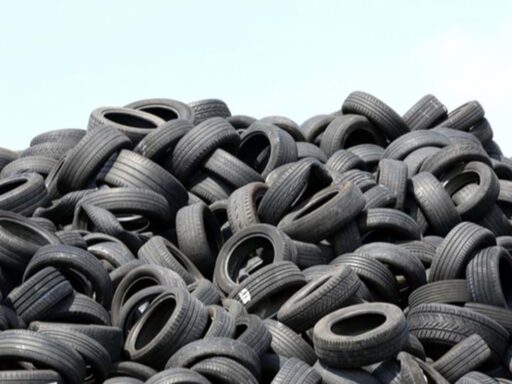
Bridgestone’s circular economy ambition is to renew 100% of tyres to raw materials by 2050, closing the loop between ELT generation and new tyre production. Its FY2024 recycled and renewable material ratio of 39.9% across all tyre production is the highest published figure among all major global tyre manufacturers, with individual product lines reaching 55% (Potenza Sport A) and 70% (M870 commercial tyre).
- The ratio of recycled and renewable materials improved from 37.0% in FY2020 to 39.9% in FY2024, comprising a renewable material ratio of 26.3% and recycled material ratio of 13.6% in FY2024.
- Bridgestone launched the M870 commercial tyre at WasteExpo in May 2025, the first commercially available tyre at 70% recycled and renewable material content, with ISCC PLUS certification, designed for urban waste collection fleets.
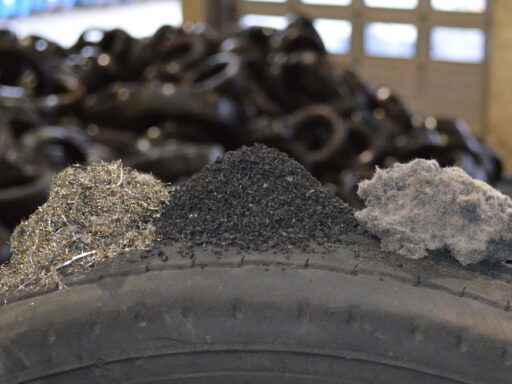
- For the 2025 Bridgestone World Solar Challenge, Bridgestone applied recovered carbon black and steel from ELT pyrolysis to ENLITEN technology tyres for the first time, in co-creation with ENEOS Corporation.
- Resource productivity improved from 722 million JPY per thousand tonnes in FY2020 to 1,196 million JPY per thousand tonnes in FY2024, a 65.7% improvement, confirming that Bridgestone is decoupling material throughput from revenue growth.
- Reclaimed product rate across all tyre products was 66.0% in FY2024, meaning two-thirds of Bridgestone’s tyre products enter some form of beneficial use recovery pathway.
Human Rights and Responsible Sourcing
Bridgestone issued its Global Human Rights Policy in 2018 and revised it in 2022 to explicitly add “equity” to diversity and inclusion language, reflecting the UN Guiding Principles on Business and Human Rights and the evolving CSDDD framework. Human rights due diligence is led by the Global EXCO, chaired by the Global CEO, with operational oversight through the Global Sustainability Committee.
- Bridgestone targets 92% of its suppliers by emissions to have science-based targets by 2026, a supplier engagement ambition that covers the majority of Scope 3 category 1 (purchased goods and services).
- Bridgestone conducts human rights due diligence through a PDCA cycle in partnership with external human rights experts, SBU leaders, and local employees globally, with enhancements made to the system in 2022 and 2024.
- Bridgestone’s guayule commercialisation programme in Arizona includes formal partnerships with Native American tribes for land cultivation, embedding community land rights and equitable economic participation into a sustainable material supply chain.
Community and Social Impact
Bridgestone’s social impact extends from its manufacturing communities in Japan, the U.S., Europe, and Southeast Asia to smallholder rubber farming communities in Thailand and Indonesia. The Americas business specifically integrates diversity, equity, and inclusion as a formal accountability framework.
- Bridgestone Americas operates formal human rights and diversity commitments prohibiting discrimination based on gender, race, religion, or sexual orientation across all employment, procurement, and community operations.
- The DE&I programme at Bridgestone Americas is accelerating succession management and retention strategies in 2025 and beyond to grow a broader talent pipeline of future leaders.
- The Bridgestone E8 Commitment specifically includes Empowerment as one of its eight values, defined as contributing to a society that ensures accessibility and dignity for all people.
Governance and Transparency
Bridgestone’s governance structure includes a Global Sustainability Committee (GSC) chaired jointly by the Global CAO and Global CSO, reporting to the Global EXCO chaired by the Global CEO. ESG data is published annually under GRI Standards with LRQA external assurance for all starred (key) indicators.
- Bridgestone has received CDP’s highest score for transparency on climate change, confirming the credibility and completeness of its climate governance and data infrastructure.
- ESG data assurance by LRQA covers all key environmental, social, and governance metrics published in the annual Integrated Report, providing third-party verification of all headline sustainability claims.
- Bridgestone’s Mid Term Business Plan (24MBP) for 2024 to 2026 formally integrates sustainability targets into financial planning and investor reporting, embedding ESG into corporate governance at the board and investor relations level.
Technology and Innovation
Bridgestone invests in ENLITEN technology, guayule rubber commercialisation, bio-butadiene synthesis from plant-based bioethanol, recovered carbon black via pyrolysis, and devulcanised rubber reintegration as its five core sustainable innovation pillars.
- ENLITEN technology reduces raw material consumption and lowers carbon emissions during both production and use, and was exhibited at Bharat Mobility Global EXPO 2025, demonstrating India market deployment aligned with India’s green mobility agenda.
- Bridgestone, in collaboration with two partners, is accelerating bio-butadiene production from plant-based bioethanol for use in synthetic rubber and then in tyre production, targeting demonstration tires in 2028 and commercial production of bio-based tyres in the first half of the 2030s.
- Bridgestone implemented a commercial breeding pipeline for rapid genetic improvement of guayule rubber content and yield in 2024, following adoption of guayule-derived natural rubber in IndyCar race tyre sidewalls in 2022.
- For the 2025 World Solar Challenge, Bridgestone integrated rCB and recycled steel from ELT pyrolysis into ENLITEN tyres in a co-creation programme with ENEOS Corporation, marking the first application of circular material inputs in the ENLITEN technology range.
Global Partnerships and Advocacy
Bridgestone is a founding member of the Tire Industry Project (TIP) and participates in the Global Platform for Sustainable Natural Rubber (GPSNR) and World Business Council for Sustainable Development (WBCSD). Its industry collaboration on rCB standards with Michelin represents the most significant pre-competitive partnership in the tyre sustainability sector.
- Bridgestone co-published a joint technical white paper with Michelin in 2023 on recovered carbon black, proposing global grades, specifications, and quality guidelines to unlock tyre-to-tyre circular carbon black supply chains from a base of fewer than 1% of all carbon black currently sourced from recycled ELTs.
- Bridgestone’s guayule commercialisation programme operates in formal partnership with the U.S. Department of Agriculture, which entered into a field-testing agreement with Bridgestone in 2013 and has supported the programme through a decade of scaling.
- Bridgestone supports the Bridgestone World Solar Challenge as principal sponsor and technology partner, using it as a live demonstration platform for sustainable tyre materials and low rolling resistance technology.
Source
https://www.bridgestone.com/responsibilities/esgdata/
https://www.bridgestone.com/responsibilities/environment/reduce_co2/operations/
https://www.bridgestone.com/responsibilities/environment/nature/footprint/
https://www.bridgestone.com/responsibilities/environment/nature/contribution/
https://tyre-trends.com/materials/bridgestone-unveils-industry-first-tyre-with-70-recycled-materials
https://www.supplychaindive.com/news/bridgestone-ramps-up-investment-in-us-rubber-source-with-42m/631820/
https://www.bridgestone.com/responsibilities/environment/resources/action03/
https://www.bridgestone.com/responsibilities/social/human_rights/
https://www.bridgestone.com/responsibilities/social/human_rights/diversity/
https://press.bridgestone-emea.com/en-in/bridgestone-india-exhibits-enliten-technology-products-at-bharat-mobility-global-expo-2
https://www.yushengmax.com/bridgestone-pushing-research-into-bio-based-tire-rubber-1.html
https://www.tyreandrubberrecycling.com/articles/news/bridgestone-supports-the-2025-bridgestone-world-solar-challenge/
https://www.lrqa.com/en/latest-news/lrqa-verifies-bridgestone/
Progress vs. Target Tracker
Source
https://www.bridgestone.com/responsibilities/esgdata/
https://www.bridgestone.com/responsibilities/environment/reduce_co2/operations/
https://www.bridgestone.com/responsibilities/environment/nature/footprint/
https://ditchcarbon.com/organizations/bridgestone
https://www.autocarpro.in/news/bridgestone-receives-recognition-for-climate-change-initiatives-119453
Key Sustainability Innovations and Technologies
- ENLITEN technology: Bridgestone’s proprietary lightweight tyre architecture reduces raw material consumption per tyre by optimising compound distribution and carcass structure, lowering carbon emissions in both production and use phases. ENLITEN was demonstrated with rCB and recycled steel from ELT pyrolysis for the first time in the 2025 World Solar Challenge tyres, marking the convergence of its two primary sustainability innovations into a single product.
- Guayule rubber commercialisation: Bridgestone has invested more than USD 42 million in commercial guayule cultivation since 2022, operating a 281-acre farm in Eloy, Arizona, and building a commercial breeding pipeline for rapid genetic improvement of rubber content and yield in 2024. Guayule requires half the water of conventional crops, can be farmed with standard row-crop equipment, and produces hypoallergenic latex, making it a multi-benefit alternative to Hevea-sourced natural rubber.
- Bio-butadiene from plant bioethanol: Bridgestone, in collaboration with ENEOS Corporation and a third partner, is building the supply chain and synthesis pathway for bio-butadiene from plant-based bioethanol, targeting demonstration tyres in 2028 and commercial bio-based tyre production in the first half of the 2030s. This programme creates a domestic synthetic rubber pathway decoupled from both petrochemical feedstocks and Southeast Asian Hevea dependency.
- Recovered carbon black and recycled steel from ELT pyrolysis: Bridgestone’s co-creation programme with ENEOS has yielded commercially applied rCB and recycled steel, first used in ENLITEN Solar Challenge tyres in 2025. The Potenza Sport A and M870 incorporate rCB from ELT pyrolysis at 55% and 70% sustainable material content respectively, demonstrating scalable circular material deployment across both passenger and commercial tyre categories.
- Smallholder technology transfer at scale: Bridgestone’s agricultural knowledge transfer programme supports 6,047 NR smallholders (as of 2024) with rubber yield optimisation, disease control against South American Leaf Blight, and sustainable land management. This positions Bridgestone as one of the most operationally active tyre manufacturers in regenerative smallholder agriculture, a supply chain resilience intervention with direct Scope 3 biodiversity impact.
Source
https://press.bridgestone-emea.com/en-in/bridgestone-india-exhibits-enliten-technology-products-at-bharat-mobility-global-expo-2
https://www.supplychaindive.com/news/bridgestone-ramps-up-investment-in-us-rubber-source-with-42m/631820/
https://www.bridgestone.com/responsibilities/environment/resources/action03/
https://www.yushengmax.com/bridgestone-pushing-research-into-bio-based-tire-rubber-1.html
https://www.tyreandrubberrecycling.com/articles/news/bridgestone-supports-the-2025-bridgestone-world-solar-challenge/
https://tyre-trends.com/materials/bridgestone-unveils-industry-first-tyre-with-70-recycled-materials
Measurable Impacts
Bridgestone’s most significant measurable sustainability achievement is its Scope 1 and 2 emissions trajectory, which has delivered a 62% reduction from 2011 to 2024, exceeding its own 2030 milestone by six years. At the material level, its 39.9% recycled and renewable material ratio is the highest sustained group-wide figure among all major global tyre manufacturers, confirmed across five consecutive years of GRI-assured data from FY2020 to FY2024.
- Renewable energy consumption grew from 1,767 thousand GJ in FY2020 to 11,866 thousand GJ in FY2024, a 571% increase over four years, accounting for 30.4% of total energy consumption in FY2024 versus 4.6% in FY2020.
- Non-renewable energy fell from 39,879 thousand GJ (FY2020) to 27,119 thousand GJ (FY2024), a reduction of 12,760 thousand GJ and 31.9% in absolute terms over the same period.
- Resource productivity improved by 128% from a 2005 baseline to FY2024, confirming consistent multi-decade decoupling of revenue from raw material input.
- Total water withdrawal from manufacturing sites in water stress areas fell from 3,208 thousand m3 (FY2020) to 2,493 thousand m3 (FY2024), a 22.3% reduction over four years.
- The M870 commercial tyre at 70% recycled and renewable material content with ISCC PLUS certification is the highest sustainable material content commercially available tyre produced by any major tyre manufacturer as of March 2026.
Source
https://www.bridgestone.com/responsibilities/esgdata/
https://www.bridgestone.com/responsibilities/environment/reduce_co2/operations/
https://www.bridgestone.com/responsibilities/environment/nature/footprint/
https://tyre-trends.com/materials/bridgestone-unveils-industry-first-tyre-with-70-recycled-materials
https://ditchcarbon.com/organizations/bridgestone
Challenges and Areas for Improvement
Scope 3 emissions represent Bridgestone’s most structurally challenging gap. Total GHG in 2024 was approximately 93.1 billion kg CO2e, with Scope 1 at 1.439 billion kg and Scope 2 at 244 million kg, meaning Scope 3 accounts for approximately 98.5% of total emissions. Despite SBTi certification for Scope 3 targets, the scale of the gap between current performance and a net-zero supply chain is not fully quantified in publicly available disclosures reviewed as of March 2026.
The smallholder support target is at risk. Bridgestone supported 6,047 of its 12,000 target smallholders in 2024, reaching 50.4% of its 2026 goal with two years remaining. Doubling smallholder engagement in two years requires a pace of programme deployment that has not been demonstrated in the FY2020 to FY2024 data series. The shortfall matters not only for social impact but for Scope 3 agricultural emissions and deforestation-risk natural rubber supply chain exposure.
Guayule commercial production remains at risk relative to its end-of-decade ambition. Bridgestone operates a single 281-acre farm in Arizona, implemented a commercial breeding pipeline in 2024, and has not yet confirmed a supply volume, off-take contract, or commercial production milestone date. The USD 42 million investment committed in 2022 was described as an initial tranche, with additional investment planned, but no commercial announcement has confirmed scale-up toward the 25,000-acre target. The 2028 bio-butadiene demonstration tyre timeline remains on schedule but depends on supply chain construction and partner alignment that has not been independently verified.
Source
https://ditchcarbon.com/organizations/bridgestone
https://www.bridgestone.com/responsibilities/environment/nature/footprint/
https://www.supplychaindive.com/news/bridgestone-ramps-up-investment-in-us-rubber-source-with-42m/631820/
https://www.bridgestone.com/responsibilities/environment/resources/action03/
Future Plans and Long-Term Goals
Bridgestone’s 2050 vision consists of three converging goals: carbon neutrality across the full value chain, 100% recycled and renewable material content in all tyres, and net positive biodiversity contribution (In balance with nature: Contribution greater than Footprint). These three targets are mutually reinforcing: 100% sustainable material content reduces both upstream Scope 3 carbon and deforestation-linked biodiversity loss simultaneously.
The 2028 bio-butadiene demonstration tyre and the first-half-of-2030s commercial bio-based tyre programme establish the longest-dated confirmed milestone in Bridgestone’s sustainability roadmap. Together with the guayule end-of-decade commercialisation target, they define a domestic, deforestation-free, fossil-free rubber supply ambition for the U.S. market with structural significance for global natural rubber supply chains. Bridgestone’s 24MBP (2024 to 2026) will be the first formal business plan cycle in which these long-range targets must deliver measurable commercial progress.
Source
https://www.bridgestone.com/responsibilities/environment/reduce_co2/
https://www.bridgestone.com/responsibilities/library/
https://www.yushengmax.com/bridgestone-pushing-research-into-bio-based-tire-rubber-1.html
Comparisons to Industry Competitors
Competitor reports:
https://www.michelin.com/en/sustainability/company/planet/climate-action
https://corporate.goodyear.com/content/dam/goodyear-corp/documents/responsibility/goodyear-crr-2024-final.pdf
https://news.europawire.eu/continental-named-among-worlds-top-sustainable-companies-sets-ambitious-carbon-neutral-goals-for-2050
What to Watch: 12 to 18 Month Indicators
Three developments through mid-2027 will determine whether Bridgestone’s sustainability leadership position strengthens or whether critical gaps become rating risks:
- Smallholder programme reaching 12,000 target by end of 2026: Bridgestone supported 6,047 NR smallholders in 2024 against a 12,000 target for 2026, meaning it must nearly double its engagement in the final two years of the programme. The FY2025 ESG data, due for publication in mid-2026, will confirm whether the pace of smallholder onboarding has accelerated. Falling short of the 12,000 target would signal a Scope 3 agricultural emissions gap, a deforestation risk management weakness, and a social performance shortfall simultaneously, making it the single most consequential near-term milestone in Bridgestone’s sustainability portfolio.
- Guayule commercial supply volume or off-take announcement: Bridgestone has invested USD 42 million in guayule, implemented a commercial breeding pipeline in 2024, and targets commercial production by end of decade. A confirmed supply volume, commercial land partnership at or approaching the 25,000-acre target, or an OEM off-take agreement in 2026 to 2027 would confirm the programme is on schedule. No confirmation by mid-2027 would place Bridgestone’s domestic rubber supply ambition in risk territory, with implications for the broader industry’s assessment of guayule as a credible Hevea alternative.
- Supplier SBT adoption rate disclosure for the 92% by 2026 target: Bridgestone committed that 92% of its suppliers by emissions would have science-based targets by 2026, one of the most ambitious supplier engagement targets in the tyre industry. The FY2025 ESG data publication will be the first with a supplier SBT compliance rate that either confirms or challenges this target. Given that Scope 3 accounts for approximately 98.5% of Bridgestone’s total emissions, supplier decarbonisation is not a peripheral metric but the defining variable in whether Bridgestone’s 2050 carbon neutrality commitment is achievable.
Source
https://www.bridgestone.com/responsibilities/environment/nature/footprint/
https://www.bridgestone.com/responsibilities/environment/resources/action03/
https://ditchcarbon.com/organizations/bridgestone
Bridgestone is the most quantitatively advanced sustainability performer among major tyre manufacturers on the metrics that are independently verified and GRI-assured. A 62% Scope 1 and 2 reduction from its 2011 baseline, achieved six years ahead of its own milestone; a 39.9% recycled and renewable material ratio across all tyre production; a 571% increase in renewable energy consumption from FY2020 to FY2024; and SBTi certification for all-scope targets combine to form the strongest externally validated ESG data set in the global tyre industry.
The material risks are concentrated in Scope 3, smallholder programme pace, and alternative rubber commercialisation. Scope 3 represents approximately 98.5% of total emissions, and the supplier SBT adoption target of 92% by 2026 has not yet been independently confirmed. The smallholder programme at 50.4% of its 2026 target requires doubling in two years. Guayule is a decade-long investment with no commercial supply confirmation yet. These are not fatal gaps but they are the three areas where Bridgestone’s 2030 and 2050 ambitions are most exposed to execution risk.
Three strategic takeaways for practitioners benchmarking or replicating Bridgestone’s approach:
- Use Bridgestone’s FY2020 to FY2024 ESG data series as a baseline benchmark for tyre supplier scoring: No other tyre manufacturer offers five consecutive years of GRI-assured, LRQA-verified environmental data at the level of granularity Bridgestone publishes. Procurement teams, ESG analysts, and sustainability auditors should use this data series as the reference standard when building tyre supplier scorecards, setting it as the minimum transparency and assurance expectation for any Tier 1 tyre supplier relationship.
- Treat the 92% supplier SBT target as the most important Scope 3 signal in the tyre industry: Bridgestone’s commitment to 92% supplier SBT coverage by 2026 is structurally more important than any individual product’s material content figure. If achieved, it would mean the upstream supply chain responsible for the majority of the tyre industry’s climate footprint is operating under science-aligned decarbonisation plans. Practitioners managing Scope 3 in fleet, logistics, or manufacturing should monitor Bridgestone’s supplier compliance disclosure as the first empirical test of whether tyre supply chain Scope 3 decarbonisation is operational.
- Benchmark the M870 at 70% sustainable materials as the 2025 commercial standard: Bridgestone’s M870 urban waste collection fleet tyre at 70% ISCC PLUS certified recycled and renewable content is the highest sustainable material content commercially available tyre from any major manufacturer as of March 2026. Fleet sustainability managers operating urban service vehicles should include the M870 as an immediate procurement benchmark and request equivalent ISCC PLUS documentation from all commercial tyre suppliers for vehicles on renewal in 2026 and 2027.
Source
https://www.bridgestone.com/responsibilities/esgdata/
https://www.bridgestone.com/responsibilities/environment/reduce_co2/operations/
https://ditchcarbon.com/organizations/bridgestone
https://tyre-trends.com/materials/bridgestone-unveils-industry-first-tyre-with-70-recycled-materials