
- Why Material Transformation Is Necessary
- Sustainability Strategy and Goals
- ISCC PLUS Certification: The Credibility Framework
- Recovered Carbon Black: The Highest-Volume Circular Input
- Bio-Based and Alternative Natural Rubber
- Green Silica from Agricultural Waste
- Recycled Polyester and Textile Reinforcement
- Progress vs. Target Tracker
- Key Sustainability Innovations and Technologies
- Measurable Impacts
- Challenges and Areas for Improvement
- Future Plans and Long-Term Goals
- Comparisons to Industry Competitors
- What to Watch: 12 to 18 Month Indicators
The shift toward bio-based and recycled inputs in tyre manufacturing is the most commercially active transformation in the rubber industry today. The total tyre materials market grew from USD 80.77 billion in 2024 to USD 86 billion in 2025 at a CAGR of 6.41%, while the bio-based rubber tyre segment specifically reached USD 801 million in 2025 and is projected to grow to USD 3.038 billion by 2032 at a CAGR of 20.3%. Every major manufacturer has committed to 40 to 100% sustainable material content between 2030 and 2050, creating one of the most concentrated periods of material innovation in the tyre industry’s history.
Why Material Transformation Is Necessary
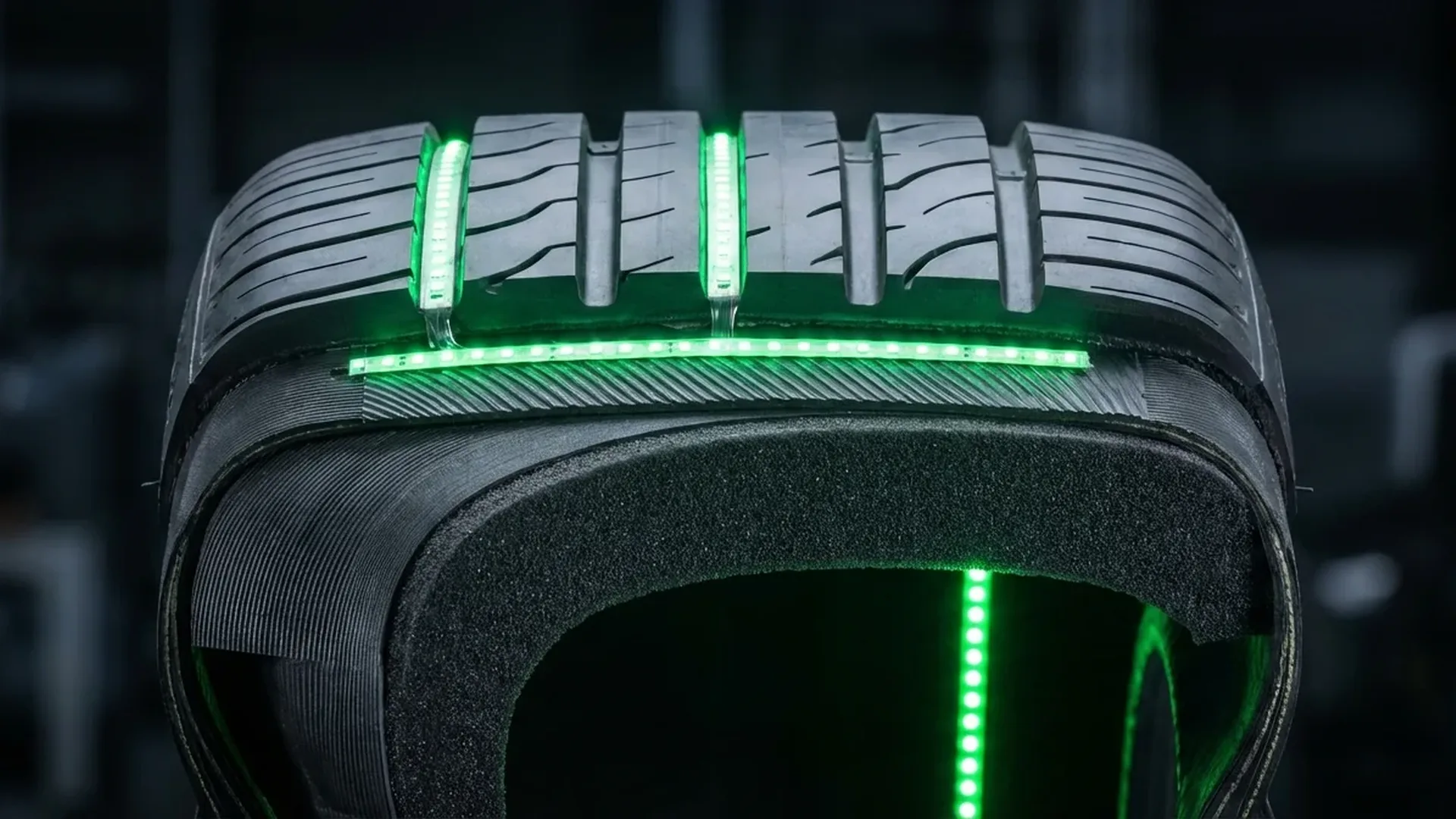
A conventional tyre’s composition reveals why the shift is urgent. The six primary input categories by mass are synthetic rubber (27%), carbon black (28%), natural rubber (14%), steel (14%), textile fibres (5 to 6%), and chemical additives including antiozonants and processing oils. All of these originate predominantly from fossil or high-deforestation-risk sources, exposing manufacturers to EUDR compliance requirements, REACH microplastics regulation, and EU Euro 7 abrasion limits simultaneously.
Bio-based and recycled materials target each category with a distinct supply chain and technology pathway:
- Synthetic rubber replacement: bio-butadiene from biomass, guayule latex, dandelion-derived poly(cis-1,4-isoprene)
- Carbon black replacement: recovered carbon black (rCB) from ELT pyrolysis and circular bio-based carbon black
- Silica filler replacement: rice husk ash silica, bamboo leaf silica, bagasse silica
- Processing oil replacement: modified soybean oil, palm oil, cardanol, coconut shell extract
- Textile cord replacement: recycled PET polyester (rPET) from post-consumer bottles and industrial fibre
- Steel reinforcement replacement: recycled steel from ELT wire recovery
Source
https://finance.yahoo.com/news/tire-materials-market-trends-companies-094800357.html
https://winmarketresearch.com/home/goods/detail/id/4338640.html
https://www.rematec.com/news/process-and-technology/rubber-tyre-recycling-and-the-circular-economy
https://pubs.rsc.org/en/content/articlehtml/2025/su/d5su00177c
Sustainability Strategy and Goals
The industry’s material strategy is organised around three interlocking pillars: ISCC PLUS supply chain certification to validate sustainability claims, the mass balance accounting method to integrate recycled and bio-based materials into mixed production environments, and technology investment in rCB, devulcanisation, and alternative rubber cultivation to build the supply base that 2030 targets require.
ISCC PLUS Certification: The Credibility Framework
ISCC PLUS is the primary certification standard governing sustainable material claims in tyre manufacturing. It validates that alternative feedstocks meet sustainability criteria through the full supply chain, using a mass balance approach that tracks certified material quantities in mixed-production environments through verifiable bookkeeping rather than physical segregation.
- Continental obtained ISCC PLUS certification across all European tyre production plants between 2023 and 2025, added the Hefei (China) plant in 2025, and certified its Mount Vernon, Illinois, U.S. plant in late 2025, making it Continental’s first North American ISCC PLUS-certified site.
- JK Tyre launched India’s first passenger car radial tyre with ISCC PLUS-certified materials in April 2024, the UX Royale Green, incorporating 80% bio, bio-circular, and circular materials sourced through the mass balance approach.
- The UX Royale Green was developed in August 2023 and entered production in April 2024 after rigorous performance testing, establishing a certified sustainable tyre benchmark for the Indian market.
- Bridgestone and Goodyear both deploy ISCC PLUS certification on flagship sustainable product lines including the Potenza Sport A, M870, and ElectricDrive EDS tyre, creating a competitive standard expectation among OEM procurement teams.
Source
https://www.continental.com/en/press/press-releases/20250626-all-european-plants/
https://rubberworld.com/continentals-largest-us-tire-plant-earns-iscc-plus-sustainability-certification/
https://jktyre.com/press-release/jk-tyre-rolls-out-india-s-first-passenger-car-tyre-with-iscc-plus-certified-material
https://www.iscc-system.org/certification/iscc-certification-schemes/iscc-plus/
Recovered Carbon Black: The Highest-Volume Circular Input
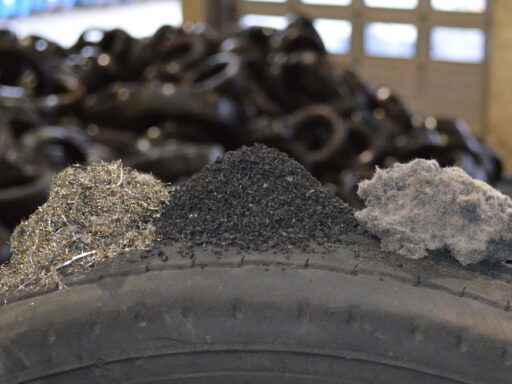
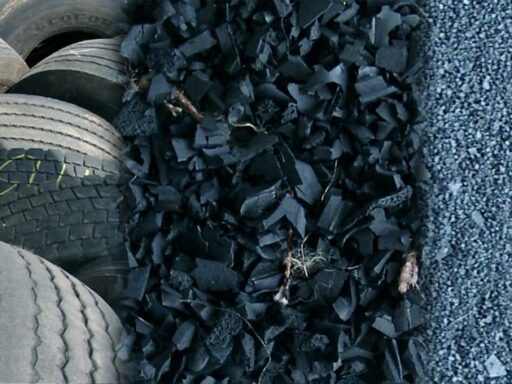
Carbon black is the single largest petrochemical input by mass in a tyre, at 28% of total weight. rCB recovered from ELT pyrolysis can replace up to 25% of virgin carbon black in new tyre manufacturing, and rCB use reduces upstream CO2 emissions by approximately 80% per tonne compared to virgin carbon black produced from fossil fuel combustion.
- Fewer than 1% of all carbon black used globally in new tyre production currently comes from recycled end-of-life tyres, due to a fragmented and sub-optimal rCB supply chain.
- Bridgestone and Michelin published a joint technical white paper in 2023 proposing global rCB standards including grades, specifications, and quality guidelines, to catalyse supply chain development for tyre-grade recovered carbon black.
- Pirelli deployed circular carbon black derived from ELT pyrolysis oil in P Zero mass production for Range Rover in July 2025, confirming industrial-scale commercial use.
- Continental’s partnership with Pyrum Innovations is progressing toward qualifying rCB for passenger car tyre tread and sidewall compounds, currently used in forklift tyres and pending safety-critical qualification.
- Schwalbe integrates rCB from end-of-life bicycle tyres into 70% of its product range since 2023, achieving approximately 80% CO2 reduction per unit relative to virgin carbon black.
Source
https://www.tiretechnologyinternational.com/features/rcb-black-gold-from-end-of-life-tires.html
https://www.michelin.com/en/publications/group/bridgestone-and-michelin-to-present-findings-from-year-long-effort-on-recovered-c
https://www.yushengmax.com/bridgestone-michelin-set-standards-to-expand-recycled-carbon-black.html
Bio-Based and Alternative Natural Rubber
Natural rubber (NR) from Hevea brasiliensis accounts for approximately 14% of a conventional tyre’s mass and remains concentrated in a narrow geographic belt across Thailand, Indonesia, and Vietnam. Supply vulnerability from South American Leaf Blight, land-use constraints, EUDR deforestation compliance, and geopolitical exposure are driving commercial investment in three alternative rubber sources.
- Russian dandelion (Taraxacum kok-saghyz) produces poly(cis-1,4-isoprene) chemically comparable to Hevea rubber, with Bridgestone, Continental, Goodyear, and Apollo Vredestein all having active dandelion rubber R&D programmes or pilot tyre production.
- Guayule, a native desert shrub of the U.S.-Mexico border region, produces hypoallergenic latex with higher polymer strength than known standard polymers, allowing increased filler loading without compromising properties. Bridgestone has produced guayule rubber race tyres for the IndyCar series, and Apollo Vredestein produced prototype road tyres within the EU-PEARLS European project.
- The U.S. Air Force Research Laboratory, BioMADE, and Goodyear have entered a collaborative programme to develop a domestic U.S. rubber supply from dandelion cultivation, addressing both sustainability and national supply chain security objectives.
- Bio-butadiene, produced from ethanol derived from biomass, enables substitution of petrochemical styrene-butadiene rubber (SBR) feedstocks without performance compromise. The global bio-butadiene market was valued at USD 64.86 million in 2025 and is growing steadily as tyre manufacturers scale bio-SBR commitments.
Source
https://interestingengineering.com/innovation/tech-turns-dandelion-weed-into-rubber-tires
https://www.plasticstoday.com/plastics-processing/green-matter-another-rubber-revolution-in-the-making-
https://www.vinachem.com.vn/articles/technological-breakthroughs/green-materials-for-tires-how-the-global-tire-industry-is-changing/
https://www.fortunebusinessinsights.com/bio-butadiene-market-111754
Green Silica from Agricultural Waste
Conventional precipitated silica, which replaced carbon black as the primary performance-enhancing filler in tyre tread compounds beginning in the 1990s, consumes 1,194 to 1,955 kg of coal per tonne during production and emits 10 to 18 tonnes of CO2 equivalent per tonne output. Rice husk silica reduces coal consumption by 80% to 238 kg per tonne and CO2 emissions by 92% to 0.85 tonnes per tonne, while simultaneously improving silica dispersion in rubber compounds, reinforcement index, and Mooney viscosity performance.
- Continental confirmed in July 2025 that it is using rice husk silica manufactured by Solvay across its entire tyre portfolio, sourcing husks from Asian agricultural production and Italian risotto rice processing.
- Michelin showcased a 45% sustainable material tyre prototype in 2024, incorporating recycled steel, rCB from ELTs, and rice husk silica, with production scheduled to begin in 2025.
- Additional bio-silica sources under active characterisation include bamboo leaves, bagasse (sugarcane residue), and corn stalks, all of which are available at scale in South and Southeast Asia where tyre manufacturing concentration is highest.
- Bio-silica from alternative agricultural sources also reduces hazardous waste generation from the conventional sodium silicate process, making it an environmental benefit at both the input and the waste management stages of production.
Source
https://www.continental.com/en/press/press-releases/20250708-more-sustainable-fillers/
https://weibold.com/michelins-sustainable-tire-goals-fewer-tires-for-evs-more-innovation/
https://www.vinachem.com.vn/articles/technological-breakthroughs/green-materials-for-tires-how-the-global-tire-industry-is-changing/
Recycled Polyester and Textile Reinforcement
Polyester cords, which reinforce the tyre carcass, currently originate predominantly from virgin PET, a petrochemical-derived thermoplastic. The recycled PET (rPET) pathway uses post-consumer bottles, industrial fibre waste, and end-of-life textile streams as feedstock, reducing both fossil input and waste stream burden.
- Continental announced in 2024 the transition of all new car and light truck tyre production to high-performance polyester fibres made entirely from sustainable PET by 2030, covering all European and progressively global production sites.
- JLR committed in July 2025 to introduce tyres across its entire new vehicle range with more than 70% recycled and renewable materials, incorporating recycled polyester, rCB, and rice husk silica as the three primary sustainable input categories.
- Bridgestone’s M870 commercial tyre, launched at WasteExpo in May 2025, achieved 70% recycled and renewable material content, incorporating ISCC PLUS-certified rPET, rCB, and natural rubber with verified mass balance documentation.
- The solution styrene-butadiene rubber (S-SBR) market used in tyre tread compounds is transitioning toward bio-based variants, with the overall S-SBR market growing from USD 14.0 billion in 2025 to a projected USD 21.8 billion by 2035 at a CAGR of 4.5%.
Source
https://www.tyre-trends.com/news/continental-boosts-sustainability-in-tyre-production-with-recycled-materials
https://media.jaguarlandrover.com/news/2025/07/jlr-makes-industry-first-commitment-introduce-tyres-made-renewable-materials-its
https://tyre-trends.com/materials/bridgestone-unveils-industry-first-tyre-with-70-recycled-materials
https://www.futuremarketinsights.com/reports/solution-styrene-butadiene-rubber-s-sbr-market
Progress vs. Target Tracker
| Commitment | Target | Current Status | Assessment |
|---|
Source
https://www.michelin.com/en/sustainability/entreprise/planet/natural-resources-preservation
https://www.bridgestone.com/responsibilities/environment/resources/
https://www.continental.com/en/press/press-releases/20250626-all-european-plants/
https://tyre-trends.com/materials/bridgestone-unveils-industry-first-tyre-with-70-recycled-materials
https://jktyre.com/press-release/jk-tyre-rolls-out-india-s-first-passenger-car-tyre-with-iscc-plus-certified-material
Key Sustainability Innovations and Technologies
- Devulcanisation for rubber circularity: Evonik’s improved vinyl silane-based devulcanisation process, advanced in 2024, demonstrated up to 20% recycled rubber content in new tyre blends, four times the previous technical threshold of approximately 5%. Industrial-scale qualification trials are ongoing as of March 2026, and a commercial validation would open the 45% rubber fraction of every ELT to tyre-to-tyre recovery at meaningful quality levels.
- Graphene-enhanced silica compounds: Research published in 2025 confirmed that zinc-free coupling agents (ZFCs) and ZFC-functionalised graphene integrated with silica in tyre rubber formulations improve interfacial adhesion between filler and rubber matrix, reducing wear particle generation rates and potentially addressing TRWP emissions at the material level.
- Bio-oil plasticiser systems: Modified soybean oil at 6% loading, palm oil, cardanol from cashew nut shells, and coconut shell extract have all been validated as functional replacements for DAE processing oil in specific tyre compound formulations, improving crosslink density, aging resistance, and reducing PAH contamination risk.
- Chemical recycling via solvolysis: Solvolysis depolymerises vulcanised rubber at elevated temperature and pressure, recovering chemical monomers suitable for new rubber synthesis at higher purity than pyrolysis outputs. Combined with mechanical shredding pre-treatment, solvolysis efficiency and output quality both improve materially, and 2025 research confirmed the process is viable at industrial scale.
- Bio-isoprene and synthetic rubber from biomass: Bridgestone has produced polyisoprene synthetic rubber from isoprene derived from biomass feedstock, establishing the first production pathway for bio-based synthetic natural rubber equivalent without Hevea dependency. Michelin is producing bio-butadiene from biomass-derived ethanol, replacing the fossil carbon origin of SBR without altering performance specifications.
Source
https://weibold.com/evoniks-improved-devulcanization-process-should-accelerate-tire-recycling
https://pubs.rsc.org/en/content/articlehtml/2025/su/d5su00177c
https://www.vinachem.com.vn/articles/technological-breakthroughs/green-materials-for-tires-how-the-global-tire-industry-is-changing/
https://pubs.rsc.org/en/content/articlehtml/2025/ma/d5ma00463b
Measurable Impacts
The shift from fossil-derived to bio-based and recycled inputs generates upstream emissions reductions that dwarf manufacturing process improvements. Rice husk silica reduces CO2 emissions by 92% per tonne compared to quartz-derived silica, rCB reduces CO2 by approximately 80% per tonne versus virgin carbon black, and bio-butadiene eliminates fossil carbon from SBR production without performance compromise.
- Bridgestone’s recycled and renewable material ratio rose from 37.0% in FY2020 to 39.9% in FY2024 across all production, with the Potenza Sport A at 55%, the Turanza EV at approximately 50%, and the M870 at 70% as product-level leading benchmarks.
- Michelin grew its recycled and renewable share from 28% in 2021 to 31% in 2024, requiring a 9 percentage point acceleration over six years to meet its 40% target by 2030.
- Continental expects to add 2 to 3 percentage points per year from its 26% base in 2024, projecting 32 to 38% by 2028 and requiring pace acceleration for the final 2 to 8 percentage points to reach 40% by 2030.
- Global bio-based rubber tyre production reached approximately 3,377 thousand units in 2024 at an average market price of USD 184 per unit, establishing a commercial baseline that the CAGR of 20.3% will compound from 2026 to 2032.
- Fewer than 1% of all carbon black used globally in new tyre production comes from recycled ELT sources, meaning the rCB transition pathway has 27 percentage points of virgin carbon black displacement potential before it reaches even the 28% theoretical maximum from existing tyre compositions.
Source
https://www.bridgestone.com/responsibilities/esgdata/
https://weibold.com/michelins-sustainable-tire-goals-fewer-tires-for-evs-more-innovation/
https://www.continental.com/en/press/press-releases/20250708-more-sustainable-fillers/
https://winmarketresearch.com/home/goods/detail/id/4338640.html
https://www.yushengmax.com/bridgestone-michelin-set-standards-to-expand-recycled-carbon-black.html
Challenges and Areas for Improvement
The cost premium for sustainable alternatives remains the most structurally persistent barrier to volume deployment. Bio-based silica and alternative rubbers are currently 2 to 3 times costlier than conventional inputs, and until commercial-scale supply agreements bring these costs within 20 to 30% of fossil equivalents, mass-market tyre producers serving fleet, commercial, and emerging-market segments face an affordability constraint that premium OEM partnerships alone cannot resolve.
The mass balance certification methodology, while accepted under ISCC PLUS, is contested by some standards bodies as an imprecise product-level sustainability representation. Mass balance tracks certified material quantities across a supply chain through bookkeeping rather than physical segregation, meaning a tyre carrying an ISCC PLUS mass balance claim may not physically contain the stated proportion of bio-based or recycled material in every unit produced. This creates a credibility risk as downstream OEM customers and regulators develop more granular sustainability disclosure requirements.
Synthetic rubber replacement is the most technically underdeveloped area. Synthetic rubber constitutes 27% of a tyre’s mass and is dominated by SBR and polybutadiene rubber (BR) produced from fossil butadiene and styrene. Bio-butadiene at USD 64.86 million market scale in 2025 is a nascent industry relative to a petrochemical SBR market projected to reach USD 21.8 billion by 2035. The scale gap is not closeable through R&D investment alone and requires policy-level bio-feedstock incentives comparable to those supporting biofuels in the energy sector.
Source
https://conference.ase.ro/papers/2025/25025.pdf
https://www.continental-tires.com/us/en/about-us/newsroom/truck-and-bus/Continentals-Largest-US-Tire-Plant-Sustainability-Certif
https://tyre-trends.com/spotlight/are-bio-based-materials-a-growing-trend-within-the-tyre-industry
https://www.futuremarketinsights.com/reports/solution-styrene-butadiene-rubber-s-sbr-market
Future Plans and Long-Term Goals
The tyre materials market is projected to reach USD 122.75 billion by 2030 at a CAGR of 5.6%, with sustainable material specifications increasingly written into OEM procurement contracts as EUDR and Euro 7 compliance requirements create binding product-level thresholds. All major manufacturers’ 2050 roadmaps converge on 100% sustainable material content, with the 2030 milestones serving as the first commercial test of whether this ambition is operational.
Long-term, three material transitions define the pathway from current state to 100% sustainable content: scaling alternative natural rubber (dandelion and guayule) to a point where Hevea represents less than 50% of NR supply; qualifying rCB for all safety-critical tyre applications including tread compounds for passenger and commercial vehicles; and commercialising bio-butadiene and bio-styrene at volumes sufficient to replace petrochemical SBR at competitive cost. Each transition requires between USD hundreds of millions and USD billions in upstream agricultural, chemical, and processing infrastructure investment that no single manufacturer can fund unilaterally.
Source
https://www.researchandmarkets.com/report/tire-material
https://www.michelin.com/en/sustainability/entreprise/planet/natural-resources-preservation
https://www.bridgestone.com/responsibilities/environment/resources/
https://pubs.rsc.org/en/content/articlehtml/2025/ma/d5ma00463b
Comparisons to Industry Competitors
Source
Competitor reports:
https://www.michelin.com/en/sustainability/entreprise/planet/natural-resources-preservation
https://www.bridgestone.com/responsibilities/environment/resources/
https://www.continental.com/en/press/press-releases/20250626-all-european-plants/
https://jktyre.com/press-release/jk-tyre-rolls-out-india-s-first-passenger-car-tyre-with-iscc-plus-certified-material
What to Watch: 12 to 18 Month Indicators
Three developments through mid-2027 will determine whether the bio-based and recycled materials sector closes the gap between premium demonstration and volume manufacturing:
- Bridgestone and Michelin rCB global standard adoption: Fewer than 1% of all carbon black in global new tyre production currently comes from recycled ELTs, despite the Bridgestone-Michelin joint white paper proposing global rCB grades and specifications in 2023. Whether a formal industry or ISO-level standard is ratified in 2026 to 2027, and whether pyrolysis processors align to it, will determine the pace at which rCB can displace virgin carbon black at scale. A ratified standard removes the primary procurement barrier for tyre manufacturers not yet willing to accept quality variance in unstandarised rCB grades.
- Continental and Goodyear accelerated material percentage reporting: Continental stands at 26% in 2024 with a 40% target by 2030, adding approximately 2 to 3 percentage points per year. Goodyear has an EDS prototype with ISCC certification but no disclosed commercial production volume. Both manufacturers’ 2025 sustainability reports, due in mid-2026, will confirm whether the trajectory is accelerating to meet 2030 targets or flattening, which would flag At Risk status across the industry’s leading commitments.
- First commercial-scale dandelion rubber supply agreement: Bridgestone, Continental, Goodyear, and Apollo Vredestein all have active dandelion rubber research programmes, and prototype road tyres have been produced within the EU-PEARLS project. The first confirmed commercial supply agreement at volume, covering cultivation, extraction, and compounding at scale, will signal that the timeline for reducing Hevea dependency has moved from research into industrial planning, and will trigger repricing of long-term Hevea NR procurement contracts across the industry.
Source
https://www.yushengmax.com/bridgestone-michelin-set-standards-to-expand-recycled-carbon-black.html
https://www.continental.com/en/press/press-releases/20250626-all-european-plants/
https://www.plasticstoday.com/plastics-processing/green-matter-another-rubber-revolution-in-the-making-
The bio-based and recycled materials transition in tyre manufacturing has crossed the prototype threshold. Bridgestone’s 70% M870 commercial tyre, Pirelli’s P Zero in mass production, Continental’s full European ISCC PLUS certification network, and JK Tyre’s 80% bio/circular UX Royale Green in production in India are not concept vehicles. They are commercially available or commercially manufactured products that mark the beginning of a mass-market transition, not its conclusion.
The most significant gap is not technical feasibility but supply infrastructure. Fewer than 1% of global carbon black comes from rCB. Bio-butadiene is a USD 64.86 million market in a USD 14 billion SBR sector. Dandelion rubber is in prototype roads tyres, not in production contracts. The raw materials to build 100% sustainable tyres at scale exist in research, in pilot plants, and in small-batch production. Building the agricultural, chemical, and processing infrastructure to supply 3 billion tyres annually requires investment coordination across governments, tyre manufacturers, chemical companies, and agricultural producers at a scale the industry has not yet organised.
Three strategic takeaways for practitioners:
- Require ISCC PLUS mass balance certification as a minimum procurement standard in 2026: Continental has certified every European plant and Mount Vernon, U.S. JK Tyre has certified in India. Bridgestone and Goodyear have ISCC-certified product lines. Any tyre procurement agreement signed in 2026 without ISCC PLUS certification as a minimum requirement is behind the current commercial norm, not ahead of regulatory requirements.
- Map rCB supply chain exposure in parallel with demand growth: Every percentage point shift from virgin carbon black to rCB represents approximately 80% CO2 savings at the input level. Procurement teams managing large tyre volumes should identify which portion of their current supply uses rCB, set an annual rCB percentage floor, and build contractual escalation clauses tied to the Bridgestone-Michelin rCB standard ratification timeline.
- Treat bio-based synthetic rubber timelines as Scope 3 planning data, not R&D news: Michelin is producing bio-butadiene from biomass. Bridgestone has demonstrated bio-isoprene from biomass feedstock. These are not distant future projects. They are active commercial development programmes that will affect the fossil content of tyres within the 2030 planning horizon. Scope 3 emissions accounting that assumes SBR will remain fossil-derived through 2030 is likely to require revision within 24 to 36 months.
Source
https://tyre-trends.com/materials/bridgestone-unveils-industry-first-tyre-with-70-recycled-materials
https://www.tiretechnologyinternational.com/features/rcb-black-gold-from-end-of-life-tires.html
https://www.continental.com/en/press/press-releases/20250626-all-european-plants/
https://jktyre.com/press-release/jk-tyre-rolls-out-india-s-first-passenger-car-tyre-with-iscc-plus-certified-material