
- What Are TRWP?
- Sustainability Strategy and Goals
- Scale of the Problem
- Environmental Pathways
- 6PPD-Quinone: The Chemical Dimension
- Human Health Risks
- Progress vs. Target Tracker
- Key Sustainability Innovations and Technologies
- Measurable Impacts
- Challenges and Areas for Improvement
- Future Plans and Long-Term Goals
- Comparisons to Industry Competitors
- What to Watch: 12 to 18 Month Indicators
Tyres are the single largest source of microplastic pollution globally, releasing an estimated 6 million tonnes of tyre wear particles (TWPs) into the environment every year. Unlike exhaust emissions, which are declining as electrification accelerates, TRWP emissions are structural, produced every time a tyre contacts a road surface, and are set to increase as vehicles grow heavier.
What Are TRWP?
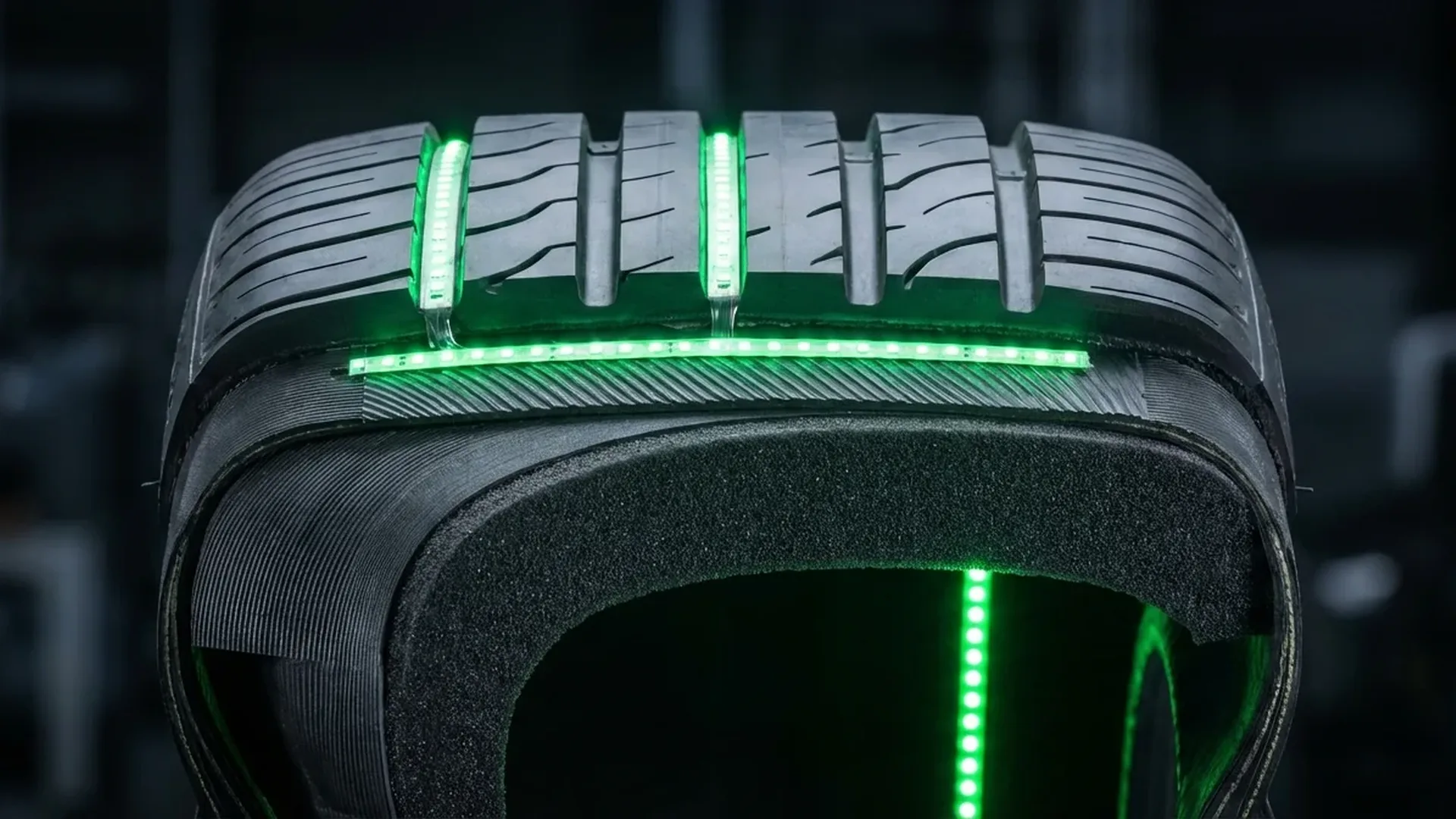
Tyre and road wear particles (TRWP) are heterogeneous fragments generated by the tribological interaction between a tyre and the road surface during driving. They contain a complex mix of synthetic and natural rubber polymers, carbon black, accelerators, antiozonants, plasticisers, and road material such as asphalt. Their density in the environment ranges from 1.20 to 1.70 g/cm³ due to agglomeration with high-density road-derived materials such as asphalt particles, which range from 2.3 to 2.5 g/cm³.
TRWP differ from simple microplastics because they carry a significant chemical payload. The rubber antiozonant 6PPD (N-(1,3-dimethylbutyl)-N’-phenyl-p-phenylenediamine), added to extend tyre life, reacts with ozone in the environment to produce 6PPD-quinone (6PPD-Q), a transformation product with confirmed acute aquatic toxicity. Studies classify TRWP particles into three overlapping categories:
- Tyre wear particles (TWPs): purely tyre-derived rubber fragments
- Road wear particles (RWPs): asphalt, aggregate, and road marking debris
- TRWP: the composite mixture of both, as found in actual road runoff and dust
Source
https://gradeall.com/tyre-waste-environmental-impact-global-statistics/
https://pubs.rsc.org/en/content/articlehtml/2025/su/d5su00177c
https://www.frontiersin.org/journals/marine-science/articles/10.3389/fmars.2025.1668826/full
https://pubmed.ncbi.nlm.nih.gov/32422457/
Sustainability Strategy and Goals
The industry’s response to TRWP sits across four domains: regulatory compliance, material innovation, vehicle and infrastructure design, and standardised testing. No single actor controls all levers. Effective TRWP reduction requires coordinated action across tyre manufacturers, vehicle OEMs, road designers, and governments.
Scale of the Problem
- Approximately 3 billion new tyres are produced annually, and 800 million reach end-of-life status each year.
- Around two-thirds of all microplastics in urban air originate from tyre abrasion, according to a March 2026 study led by Prof. Hartmut Herrmann of TROPOS.
- Between 880 and 2,900 tonnes of plastic particles are released into the air each year from tyre abrasion on roads in Utrecht (Netherlands) alone, based on 2022 to 2023 monitoring.
- Particulate concentrations from stop-and-go urban traffic are up to 5 times higher than those measured in city parks in the same study, and 3 times higher on highways.
- Tyre wear microplastics constitute an average of 0.45% of PM10 atmospheric particulate matter, a fraction projected to grow as exhaust emission controls tighten further.
Source
https://phys.org/news/2026-03-microplastics-nanoplastics-urban-air-abrasion.html
https://www.media.enea.it/en/press-releases-and-news/years-archive/year-2026/environment-enea-studies-concentrations-of-microplastics-from-tires-into-the-air
https://www.frontiersin.org/journals/marine-science/articles/10.3389/fmars.2025.1668826/full
Environmental Pathways
TRWP travel through air, water, and soil. Road runoff carries particles into storm drains, rivers, coastal zones, and ultimately the marine environment, with concentrations diminishing along transport paths but never disappearing. Mass flow analysis published in June 2025 confirmed that TWPs from highways expose surrounding soils and air, with TWPs and carbon black in water bodies acting as vectors for long-range contamination.
- Urban stormwater contributes an estimated 5 trillion tyre wear particles to the San Francisco Bay Area annually.
- TWPs outnumber traditional microplastics in river systems in terms of particle count, raising concerns that existing monitoring frameworks undercount true microplastic exposure.
- In ocean environments, newly released TWPs have sub-aqueous densities of 0.95 to 1.05 g/cm³, meaning they initially float, maximising contact with surface-feeding marine life before environmental agglomeration changes their density.
- The research bibliometric on TWPs grew from near zero in 1999 to a rapidly expanding publication base through 2024, confirming this as one of the fastest-growing fields in environmental science.
Source
https://www.sciencedirect.com/science/article/abs/pii/S1352231025001591
https://opc.ca.gov/wp-content/uploads/2025/07/Tire-Workshop-Summary-May-2025-508.pdf
https://www.frontiersin.org/journals/marine-science/articles/10.3389/fmars.2025.1668826/full
6PPD-Quinone: The Chemical Dimension
The chemical toxicity dimension of TRWP is separate from and additive to their physical particulate burden. 6PPD is present in tyre rubbers at 0.4 to 2% by mass and is near-ubiquitous across tyre formulations globally. Its ozone transformation product, 6PPD-Q, is the compound linked to Urban Runoff Mortality Syndrome (URMS) in coho salmon populations across the U.S. Pacific Northwest.
- The median lethal concentration (LC50) of 6PPD-Q for juvenile coho salmon is 0.79 μg/litre, and detections in peri-urban stormwater across the U.S. West Coast frequently match or exceed this threshold.
- Coho salmon exposed to stormwater containing 6PPD-Q exhibit surface swimming, loss of equilibrium, and death within 2 to 6 hours, with embryonic stages also vulnerable.
- 6PPD-Q has been detected in human urine, with pregnant women exhibiting higher concentrations of both 6PPD and 6PPD-Q, suggesting ingestion, absorption, or inhalation from ambient environments.
- In vitro pulmonary toxicity studies on TRWP published in August 2024 found that both ground tyre particles and actual TRWP trigger a concentration-dependent proinflammatory response as measured by TNF-α production in alveolar macrophages, with TRWP producing a slightly higher response than pure tyre particles.
Source
https://www.science.org/doi/10.1126/science.abd6951
https://pmc.ncbi.nlm.nih.gov/articles/PMC10399305/
https://www.trccompanies.com/insights/environmental-impacts-of-tire-wear-the-issue-of-6ppd-q/
https://pubmed.ncbi.nlm.nih.gov/39024828/
Human Health Risks
Human exposure to TRWP occurs through three primary routes: inhalation of airborne particles, ingestion via contaminated food and water, and dermal absorption. The TRWP fraction that enters the respiratory system as fine and ultrafine particles is the most clinically concerning, with research from 2025 confirming disruption of the respiratory epithelial barrier, translocation to cardiovascular and nervous systems, mitochondrial damage, and dose-dependent genotoxicity including DNA strand breaks.
- Respiratory exposure near stop-and-go traffic exceeds park-level exposure by 5x, placing urban commuters, cyclists, and pedestrians in the highest-risk exposure group.
- Children face elevated risk due to developmental sensitivity to neurotoxic and endocrine-disrupting chemical exposures, with synthetic polymer pollutants including TRWP-associated chemicals linked to neurotoxicity and reproductive toxicity.
- 6PPD-Q has been detected in human urine, and its oxidative stress mechanism parallels other quinone-class compounds known to cause hepatotoxicity at high doses in animal models.
- Current toxicological data for TRWP’s human health effects remain limited, with most available studies using ground tyre particles as proxies rather than actual TRWP, which carry additional chemical complexity from road wear inclusions.
Source
https://www.trccompanies.com/insights/environmental-impacts-of-tire-wear-the-issue-of-6ppd-q/
https://pubmed.ncbi.nlm.nih.gov/39024828/
https://www.nature.com/articles/s41390-024-03547-z
Progress vs. Target Tracker
Source
https://www.pew.org/en/about/news-room/press-releases-and-statements/2024/03/14/pew-applauds-eus-first-of-its-kind-legislation-to-tackle
https://www.coptis.com/resources/reach-restriction-microplastics/
https://www.plasticsengineering.org/2025/06/engineering-innovations-for-microplastic-prevention-and-control-009141/
https://www.tiretechnologyinternational.com/news/expo/tire-technology-expo-2025-a-showcase-of-innovation-sustainability-digitali
https://www.ustires.org/tire-and-road-wear-particles-trwp
Key Sustainability Innovations and Technologies
The mitigation landscape spans three layers: source reduction (tyre material reformulation), pathway interception (on-vehicle particle capture), and infrastructure adaptation (road surface design and stormwater filtration).
- High-silica tread compounds: Material scientists are reformulating tyre treads using high-silica content and durable elastomers that reduce abrasion rates while maintaining wet grip and rolling resistance performance. This is the most commercially advanced mitigation pathway and directly intersects with bio-based material development.
- On-vehicle particle capture devices: Prototype tyre wear particle capture systems, fitted to the wheel arch, intercept particles at the point of generation before they disperse into air and runoff. Several OEMs and tier-1 suppliers are developing proprietary versions, though no commercial deployment at scale has been published as of March 2026.
- 6PPD-Q alternatives research: Bridgestone, Michelin, and Goodyear are among the manufacturers in active R&D to identify antiozonant alternatives that protect tyre integrity without producing toxic transformation products. No binding replacement timeline has been published.
- Graphene and ZFC-enhanced compounds: Research published in 2025 demonstrated that zinc-free coupling agents (ZFCs) and ZFC-functionalised graphene integrated into silica tread formulations improve silica dispersion and interfacial adhesion, reducing rubber matrix degradation and therefore particle release rates.
- Road surface innovation: Research presented at Tire Technology Expo 2025 confirmed that up to 50% of tyre wear results from road surface interaction, making rubber-modified asphalt and smoother pavement profiles direct TRWP mitigation tools independent of tyre design.
Source
https://www.plasticsengineering.org/2025/06/engineering-innovations-for-microplastic-prevention-and-control-009141/
https://www.ustires.org/tire-and-road-wear-particles-trwp
https://www.trccompanies.com/insights/environmental-impacts-of-tire-wear-the-issue-of-6ppd-q/
https://pubs.rsc.org/en/content/articlehtml/2025/su/d5su00177c
Measurable Impacts
The EV transition, widely expected to reduce transport-related pollution, is likely to increase TRWP emissions in absolute terms. EV tyre wear is approximately 20 to 30% higher than that of equivalent internal combustion engine vehicles due to greater vehicle weight and instant torque delivery. This is a critical finding for ESG practitioners who assumed electrification would resolve the TRWP problem.
- In Utrecht (Netherlands), tyre abrasion releases between 880 and 2,900 tonnes of plastic particles into the air annually (2022 to 2023 monitoring period), and this figure is expected to rise with increased EV adoption.
- TRWP concentrations in soil diminish sharply with distance from roadways, but those in water bodies, particularly carbon black from TWPs, are recognised as vectors for long-range contamination across river and coastal systems.
- By 2050, estimates suggest that 90% of particulate emissions from road transport in Europe will originate from non-exhaust sources, predominantly tyres and brakes, up from a minority share in 2020.
- Recycling one passenger tyre saves approximately 7 gallons of oil equivalent in raw materials and energy, and tyre recycling in the U.S. prevents an estimated 19 million tonnes of CO2 emissions annually, illustrating the full lifecycle dimension of the TRWP problem.
Source
https://www.sciencedirect.com/science/article/abs/pii/S0269749125016999
https://www.media.enea.it/en/press-releases-and-news/years-archive/year-2026/environment-enea-studies-concentrations-of-microplastics-from-tires-into-the-air
https://www.pew.org/en/about/news-room/press-releases-and-statements/2024/03/14/pew-applauds-eus-first-of-its-kind-legislation-to-tackle
Challenges and Areas for Improvement
The most fundamental challenge is that TRWP emissions have no current binding global limit. As of March 2026, the EU is the only jurisdiction that has legislated a framework for abrasion limits under Euro 7, and binding thresholds for passenger cars are not confirmed until June 2026 at the earliest. Simulations presented at Tire Technology Expo 2025 raised doubts about whether the EU’s 30% microplastic reduction target is achievable with current tyre compound and testing parameters.
The 6PPD-Q problem has no resolved industry solution. The compound is present in essentially all commercially sold tyres and performs a necessary antiozonant function. Removing it without a tested, safe alternative risks tyre integrity failures that would generate other safety and sustainability consequences. No major manufacturer had published a commercial replacement timeline as of March 2026.
Data infrastructure for TRWP monitoring is fragmented. Current toxicological studies rely mainly on ground tyre particles rather than actual TRWP, making extrapolation to real-world human health effects uncertain. Stormwater monitoring in the U.S. is state-led rather than federal, with California’s programme the most advanced and others still at early development stages.
Source
https://www.tiretechnologyinternational.com/news/expo/tire-technology-expo-2025-a-showcase-of-innovation-sustainability-digitali
https://www.trccompanies.com/insights/environmental-impacts-of-tire-wear-the-issue-of-6ppd-q/
https://pubmed.ncbi.nlm.nih.gov/39024828/
https://opc.ca.gov/wp-content/uploads/2025/07/Tire-Workshop-Summary-May-2025-508.pdf
Future Plans and Long-Term Goals
The regulatory pipeline will force the industry’s hand within the next five years. The EU Euro 7 framework creates a legal mandate for abrasion limits by 2030 for all vehicle categories, and UNECE’s work through UN Regulation No. 117 is standardising testing methodology globally, which will enable national regulators outside Europe to adopt equivalent limits. Several material science roadmaps project that high-silica and bio-based tread formulations, currently at 31 to 40% of tyre material content among leading manufacturers, could reach 50 to 70% by 2030, materially reducing abrasion rates.
On the chemical toxicity front, the U.S. Environmental Protection Agency listed 6PPD-Q as a candidate for regulatory restriction in 2024, and California is advancing parallel stormwater management rules that would require mitigation at both the tyre and infrastructure level by the late 2020s. Long-range transport of TRWP-associated carbon black into remote ocean and freshwater systems will require international monitoring frameworks that do not yet exist.
Source
https://www.ustires.org/tire-and-road-wear-particles-trwp
https://pubs.rsc.org/en/content/articlehtml/2025/su/d5su00177c
https://opc.ca.gov/wp-content/uploads/2025/07/Tire-Workshop-Summary-May-2025-508.pdf
https://www.sciencedirect.com/science/article/abs/pii/S1352231025001591
Comparisons to Industry Competitors
No major tyre manufacturer had published a standalone TRWP or microplastics reduction target with quantified milestones as of March 2026. The following table reflects publicly verifiable data from corporate sustainability reporting.
Competitor sustainability reports:
https://www.michelin.com/en/sustainability/company
https://corporate.goodyear.com/content/dam/goodyear-corp/documents/responsibility/goodyear-crr-2024-final.pdf
https://www.bridgestone.com/responsibilities/esgdata/
https://www.wbcsd.org/resources/tire-road-wear-particles-trwp/
What to Watch: 12 to 18 Month Indicators
Three specific developments through mid-2027 will determine whether the TRWP space shifts from awareness to enforceable action:
- EU Euro 7 passenger car tyre abrasion limits confirmation (June 2026 deadline): The UNECE Task Force finalised a measurement methodology in 2024, and binding emission thresholds for passenger car tyres are targeted for agreement by June 2026. If this deadline is missed, the EU has authority to set its own limits for all vehicle types before end-2030. A confirmed threshold will trigger immediate reformulation programmes across every major tyre brand, making this the single most commercially impactful regulatory event in the TRWP space.
- Commercial deployment of 6PPD-Q alternatives: With 6PPD present at 0.4 to 2% by mass in essentially all tyres sold globally, any manufacturer that announces a tested commercial replacement before 2027 gains a first-mover regulatory and reputational advantage across the EU, U.S., and Canadian markets where 6PPD-Q is under active regulatory scrutiny. No such announcement had been made as of March 2026.
- California and EPA stormwater TRWP rules: California’s Ocean Protection Council held a dedicated TRWP solutions workshop in May 2025, confirming 5 trillion tyre particles enter San Francisco Bay annually. A formal California stormwater TRWP standard, expected to move through regulatory development in 2026 to 2027, would be the first in the U.S. and would set a precedent for federal EPA action. This would directly affect tyre manufacturers selling into the U.S. market and accelerate industry-wide reformulation timelines.
Source
https://www.pew.org/en/about/news-room/press-releases-and-statements/2024/03/14/pew-applauds-eus-first-of-its-kind-legislation-to-tackle
https://www.science.org/doi/10.1126/science.abd6951
https://opc.ca.gov/wp-content/uploads/2025/07/Tire-Workshop-Summary-May-2025-508.pdf
TRWP is the tyre industry’s unresolved liability. Unlike carbon emissions, where the industry has credible baselines, reduction trajectories, and board-level targets, TRWP has no equivalent structure. No major manufacturer has a published TRWP tonnage baseline, a quantified reduction target, or a disclosed timeline for replacing 6PPD. The regulatory clock is running, with EU abrasion limits due in June 2026, but the industry remains in a monitoring posture rather than a leading one.
The EV compounding effect is the most strategically underappreciated risk. Every sustainability narrative that positions electrification as the solution to transport pollution must now account for the fact that heavier EVs generate 20 to 30% more tyre wear than conventional vehicles. For ESG practitioners, this means tyre sustainability performance must be disaggregated from powertrain sustainability in fleet assessments and supplier scorecards.
Three strategic takeaways for practitioners:
- Add TRWP to supplier ESG scorecards now: No tyre manufacturer currently publishes a TRWP tonnage disclosure. Procurement teams should request baseline data on abrasion rates, 6PPD content, and TRWP reduction roadmaps as part of supplier ESG assessments. This creates data infrastructure before regulation makes it mandatory.
- Treat the 6PPD-Q problem as a material risk, not a research issue: 6PPD-Q is detected in human urine, in salmon at lethal concentrations, and in stormwater across the U.S. West Coast. Any corporate fleet, logistics operator, or tyre retailer operating in jurisdictions where TRWP regulation is advancing faces transition risk from tyre reformulation cost and product availability disruption. Begin supply chain scenario planning now.
- Invest in road infrastructure as a co-mitigation lever: Up to 50% of tyre wear originates from road surface interaction. Facility operators with private road networks, logistics parks, or distribution centres have an actionable lever in pavement specification that sits outside the tyre manufacturer’s control but directly reduces on-site TRWP generation.
Source
https://www.ustires.org/tire-and-road-wear-particles-trwp
https://www.sciencedirect.com/science/article/abs/pii/S0269749125016999
https://www.science.org/doi/10.1126/science.abd6951
https://www.tiretechnologyinternational.com/news/expo/tire-technology-expo-2025-a-showcase-of-innovation-sustainability-digitali