
- Sustainability Strategy and Goals
- Net Zero and Carbon Emissions
- Packaging and Circular Economy
- Regenerative Agriculture and Natural Rubber
- Technology and Innovation
- Progress vs. Target Tracker
- Key Sustainability Innovations and Technologies
- Measurable Impacts
- Challenges and Areas for Improvement
- Future Plans and Long-Term Goals
- Comparisons to Industry Competitors
- What to Watch: 12 to 18 Month Indicators
The global tire industry is undergoing a material shift toward sustainability, driven by net-zero commitments, circular-economy models, bio-based materials innovation, and end-of-life tire (ELT) management reform. The Tire Industry Project (TIP), a CEO-driven initiative representing ten of the world’s largest tire manufacturers, documented measurable gains between 2021 and 2024, including a 26% reduction in CO2 intensity and a 121% increase in renewable electricity use.
Sustainability Strategy and Goals
The industry’s sustainability frameworks broadly align with UN SDGs 9 and 12, supporting responsible production and circular material flows. Major manufacturers including Michelin, Bridgestone, Goodyear, and Continental have each submitted science-based targets (SBTi-aligned) with net-zero commitments anchored to 2050.
Net Zero and Carbon Emissions
- Michelin reduced Scopes 1 and 2 CO2 emissions by 37% in 2024 compared to a 2019 baseline.
- Goodyear achieved a 25.4% reduction in Scope 1 and Scope 2 GHG emissions vs. its 2019 baseline in 2024, and a 9.7% reduction in certain Scope 3 GHG emissions over the same period.
- Bridgestone’s renewable energy consumption rose from 1,767 thousand GJ in FY2020 to 11,866 thousand GJ in FY2024, reflecting a shift toward green production.
- Continental cut CO2 emissions by 31,000 tonnes in 2023 through energy-saving projects that reduced annual consumption by 150 GWh, equivalent to the energy needs of 12,500 homes.
Source
https://www.michelin.com/en/sustainability/company
https://corporate.goodyear.com/us/en/commitments.html
https://www.bridgestone.com/responsibilities/esgdata/
https://news.europawire.eu/continental-named-among-worlds-top-sustainable-companies-sets-ambitious-carbon-neutral-goals-for-2050
Packaging and Circular Economy
- The U.S. Tire Manufacturers Association (USTMA) reported in October 2024 that 79% of end-of-life tires were consumed by end-use markets, a 10.5% increase in overall utilization, outpacing recycling rates for metal, glass, aluminum, plastic, and paper.
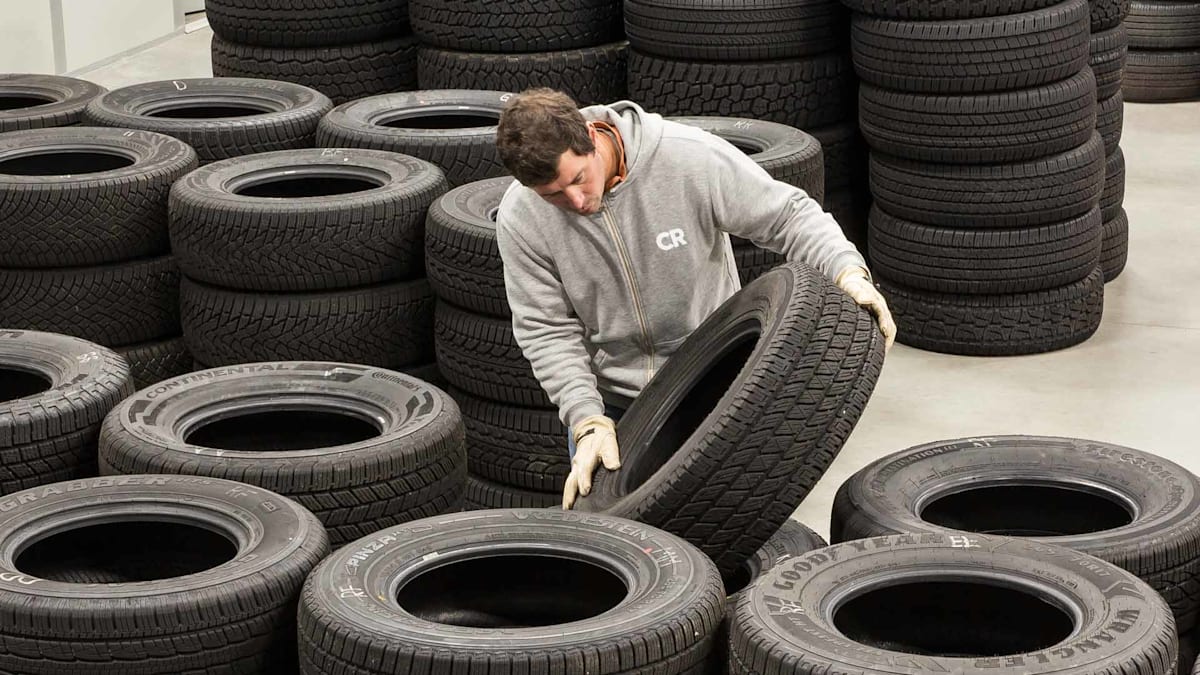
- More than one billion tires reach the end of their usable life each year globally, and the TIP released its End-of-Life Tire Toolkit 2.0 in March 2026 to standardize collection, recovery, and recycling practices across regions with fragmented systems.
- Bridgestone’s ratio of recycled and renewable material in tire products reached 39.9% in FY2024, up from 37.0% in FY2020.
- Continental is transitioning all new car and light truck tires to high-performance polyester fibres made entirely from sustainable PET by 2030.
Source
https://www.ustires.org/newsroom/ustma-reports-progress-tire-recycling
https://www.tiretechnologyinternational.com/news/sustainability/tire-industry-project-releases-end-of-life-tire-toolkit-2-0
https://www.bridgestone.com/responsibilities/esgdata/
Regenerative Agriculture and Natural Rubber
Natural rubber remains a core input in tire manufacturing and is a key focus for responsible sourcing. Bridgestone’s sustainability program specifically addresses smallholder natural rubber farmers, reinforcing support to reduce deforestation risk and improve traceability. TIP reports that 80% of its member companies have time-bound targets for responsible sourcing, up from earlier baseline years.
Source
https://press.bridgestone-emea.com/bridgestone-selected-to-continue-as-a-constituent-of-globally-recognized-esg-indexes/
https://tireindustryproject.org/news/latest-kpi-report-demonstrates-significant-progress-made-by-tire-industry-project-member-co
Technology and Innovation
- Goodyear developed the ElectricDrive Sustainable-Material (EDS) Tire, targeting a 100% sustainable material tire by 2030. Key inputs include methane-derived carbon black and rice husk silica.
- Michelin increased the proportion of renewable or recycled materials used in its tires to 31% in 2024.
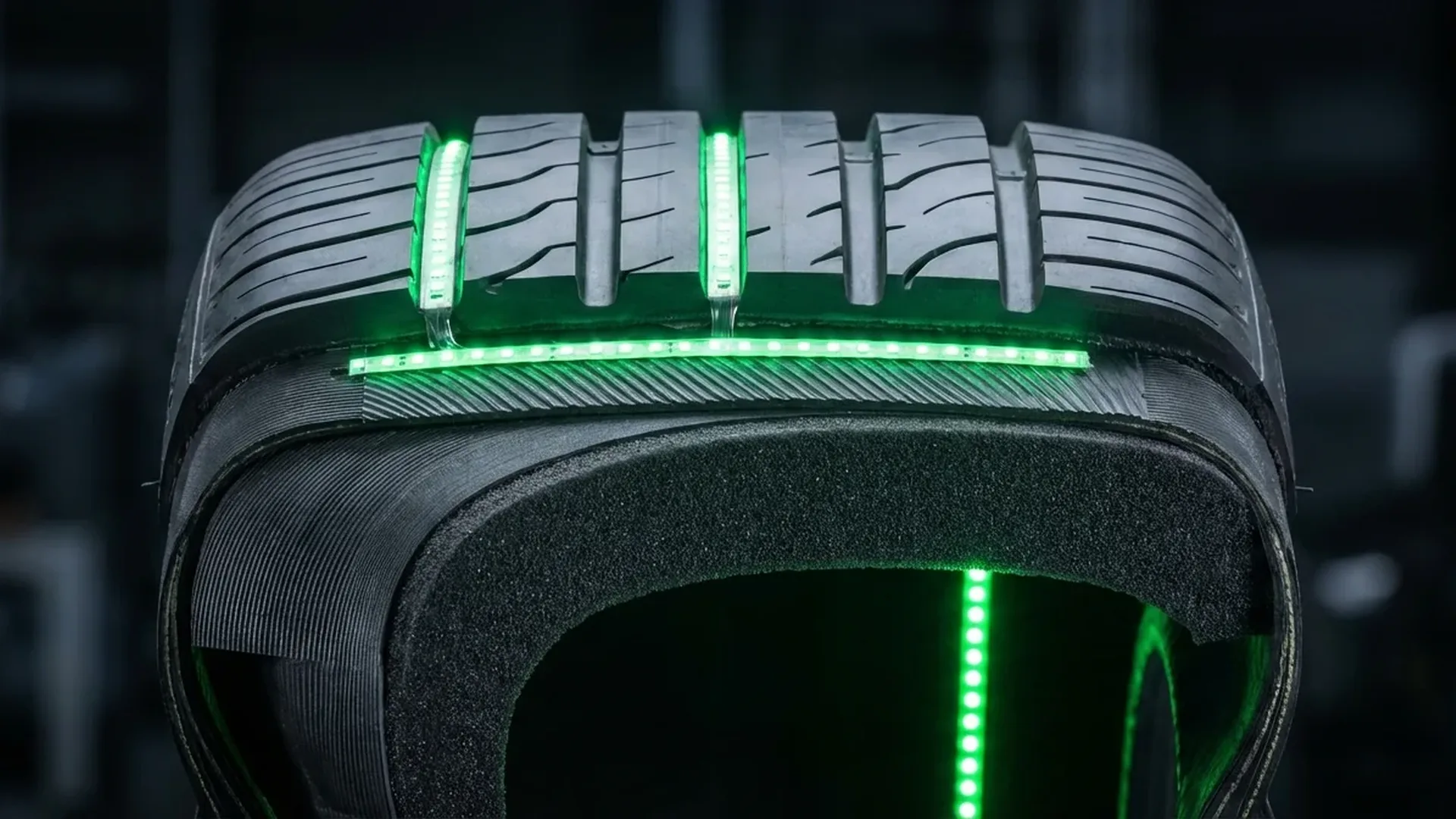
- The industry is adopting AI, lifecycle assessment (LCA), triboelectric tires, and 3D printing to reduce environmental footprints during design and manufacturing.
- Bio-based alternatives under active development include dandelion-derived rubber, soybean oil, plant-based oils, silica from agricultural waste, and bio-based polymers.
Source
https://manufacturingdigital.com/articles/goodyear-sustainable-tyres
https://pubs.rsc.org/en/content/articlehtml/2025/su/d5su00177c
Progress vs. Target Tracker
Source
https://sustainabilitymag.com/articles/how-michelin-tyres-can-reduce-vehicle-emissions
https://corporate.goodyear.com/us/en/commitments.html
https://www.bridgestone.com/responsibilities/esgdata/
https://news.europawire.eu/continental-named-among-worlds-top-sustainable-companies-sets-ambitious-carbon-neutral-goals-for-2050
https://www.ustires.org/newsroom/ustma-reports-progress-tire-recycling
Key Sustainability Innovations and Technologies
The sustainable tire market was valued at USD 12.36 billion in 2024 and is projected to reach USD 25.76 billion by 2033, driven by material innovation and regulatory pressure. The smaller specialty sustainable tire segment grew from USD 190.91 million in 2023 to USD 218.87 million in 2024 and is forecast to expand further at a compound annual growth rate through 2030.
Four areas are defining the innovation frontier:
- Bio-based inputs: Silica from rice husk ash, soybean oil, dandelion rubber, and bio-based polymers are replacing petrochemical inputs in production.
- Chemical recycling: The EU-funded BlackCycle project is developing circular ELT upcycling pathways that convert end-of-life tires into secondary raw materials suitable for new tire production.
- Smart manufacturing: AI-driven design, 3D printing, and lifecycle assessment tools are being deployed to reduce waste and material intensity.
- Renewable energy integration: Bridgestone’s renewable energy share in total consumption reached 11,866 thousand GJ in FY2024, up from 1,767 thousand GJ in FY2020, a 571% increase over four years.
Source
https://www.accio.com/business/tire_market_sustainability_trends
https://uk.finance.yahoo.com/news/sustainable-tire-market-forecast-report-160800133.html
https://cordis.europa.eu/project/id/869625/reporting
https://pubs.rsc.org/en/content/articlehtml/2025/su/d5su00177c
Measurable Impacts
Across the TIP member group (2021 to 2024 baseline reporting), total water withdrawals decreased by 14%, and renewable electricity use increased by 121%. These figures represent the combined performance of the ten largest global tire manufacturers, covering hundreds of production sites.
- Bridgestone total energy consumption from non-renewable sources declined from 39,879 thousand GJ in FY2021 to 27,119 thousand GJ in FY2024.
- Bridgestone resource productivity improved by 128% compared to the 2005 baseline, reaching 1,196 million JPY per thousand tonnes in FY2024 vs. 722 million JPY in FY2020.
- U.S. tire stockpiles declined by more than 95% over several decades of reform, with 79% of ELTs entering productive end-use markets in 2024.
- Continental’s Lousado plant in Portugal now produces tires with a verified carbon-neutral footprint, using electrically powered steam from solar and renewable grid energy.
Source
https://tireindustryproject.org/news/latest-kpi-report-demonstrates-significant-progress-made-by-tire-industry-project-member-co
https://www.bridgestone.com/responsibilities/esgdata/
https://www.ustires.org/newsroom/ustma-reports-progress-tire-recycling
Challenges and Areas for Improvement
Scope 3 emissions remain the most significant gap for the entire tire industry. Goodyear’s 9.7% Scope 3 reduction lags behind its Scope 1 and 2 performance of 25.4%, reflecting how difficult upstream supply chain and downstream product-use emissions are to control. Raw material supply chains for natural rubber, carbon black, and synthetic rubber involve thousands of smallholder farmers and chemical suppliers across Southeast Asia and Africa, making responsible sourcing alignment a persistent challenge.
End-of-life circularity faces structural fragmentation. Though the U.S. reached 79% ELT utilization in 2024, global coverage remains uneven, with collection, recovery, and recycling systems varying widely across regulatory environments. The TIP’s ELT Toolkit 2.0, released March 2026, acknowledges this directly: “collection, recovery and recycling remain fragmented, with outcomes varying significantly across regions.”
European fleet operators also report cost and complexity as barriers. In Goodyear’s 2024 Sustainable Reality Survey of over 1,700 European transport fleets, 63% cited high cost as a major obstacle to adopting sustainability solutions, and 43% found available solutions too complicated.
Source
https://corporate.goodyear.com/us/en/commitments.html
https://press.bridgestone-emea.com/bridgestone-selected-to-continue-as-a-constituent-of-globally-recognized-esg-indexes/
https://www.tiretechnologyinternational.com/news/sustainability/tire-industry-project-releases-end-of-life-tire-toolkit-2-0
https://news.goodyear.eu/goodyear-announces-results-of-2024-sustainable-reality-survey/
Future Plans and Long-Term Goals
All major manufacturers have anchored long-term strategies to 2030 and 2050 milestones. Michelin’s 2050 vision calls for tires with no impact on resources or biodiversity, manufactured in net-zero CO2 plants, covering the full lifecycle from raw material extraction through end-of-life collection. Continental targets fully sustainable tire production by 2050, with over 40% renewable and recycled material content by 2030.
Goodyear plans to eliminate all petroleum-derived oils from its products by 2040 and achieve 100% renewable electricity in manufacturing by 2030. Bridgestone’s ENLITEN technology platform is driving the shift toward regenerative business models, focusing on recycled and renewable material integration and green and smart production transitions at all manufacturing sites.
Source
https://www.michelin.com/en/sustainability/mobility
https://news.europawire.eu/continental-named-among-worlds-top-sustainable-companies-sets-ambitious-carbon-neutral-goals-for-2050
https://sustainabilitymag.com/articles/goodyears-net-zero-and-sustainable-materials-progress
https://press.bridgestone-emea.com/bridgestone-selected-to-continue-as-a-constituent-of-globally-recognized-esg-indexes/
Comparisons to Industry Competitors
Source
Competitor sustainability reports:
https://www.michelin.com/en/sustainability/company
https://corporate.goodyear.com/content/dam/goodyear-corp/documents/responsibility/goodyear-crr-2024-final.pdf
https://www.bridgestone.com/responsibilities/esgdata/
https://www.etyres.co.uk/blog/continental-tyres-ranks-among-top-500-most-sustainable-companies-by-time-magazine-and-statista/
What to Watch: 12 to 18 Month Indicators
Three signals will define the tire industry’s sustainability trajectory through late 2026 and into mid-2027:
- Goodyear’s 2030 renewable electricity milestone progress: Goodyear stood at 37% renewable electricity in manufacturing as of 2023 and needs to reach 100% by 2030. An updated figure in its 2025 Corporate Responsibility Report will indicate whether the rate of adoption is fast enough to close this gap. The company committed 400+ raw material suppliers to renewable electricity targets by December 2024, and the compliance rate from that engagement is yet to be fully disclosed.
- TIP ELT Toolkit 2.0 adoption rates: Released in March 2026, the toolkit targets systemic improvement in end-of-life tire management across markets where 1 billion-plus tires reach end-of-life annually. Uptake by regulators and manufacturers in Asia and Latin America, where ELT systems remain least developed, will signal whether the industry can close the gap from 79% to 100% ELT utilization.
- Bio-based and recycled material scale-up: Michelin is at 31% recycled or renewable material content and Bridgestone at 39.9%. Multiple manufacturers have 40%+ targets for 2030. The pace at which commercial-scale supply of alternatives to carbon black, synthetic rubber, and petroleum-based oils develops over the next 18 months will set whether 2030 material targets are achievable or become At Risk in the next round of ESG disclosures.
Source
https://sustainabilitymag.com/articles/goodyears-net-zero-and-sustainable-materials-progress
https://www.tiretechnologyinternational.com/news/sustainability/tire-industry-project-releases-end-of-life-tire-toolkit-2-0
https://www.ustires.org/newsroom/ustma-reports-progress-tire-recycling
The tire industry has moved from aspirational language to measurable, audited baselines. TIP’s 26% CO2 intensity reduction, Michelin’s 37% Scope 1 and 2 cut, and Bridgestone’s near-doubling of renewable energy from FY2020 to FY2024 are credible signals of directional progress.
The structural gap is Scope 3. No manufacturer reviewed here has published a Scope 3 reduction trajectory that is proportional to its Scope 1 and 2 ambitions. With natural rubber supply chains spanning millions of smallholder farms and product-use emissions embedded in billions of tires on roads globally, Scope 3 is where the industry’s credibility will ultimately be tested.
Three takeaways for practitioners benchmarking or replicating this approach:
- Material circularity is the most replicable lever: Shifting from virgin petrochemical inputs to rice husk silica, recycled polyester, and bio-based oils is commercially active now, not future-state. Bridgestone’s 39.9% recycled and renewable material ratio and Continental’s recycled PET cord transition are operational benchmarks.
- ELT management is a market-building problem, not just a compliance problem: Reaching 100% ELT circularity requires building downstream markets for crumb rubber, devulcanized rubber, and recovered carbon black. USTMA’s 79% utilization rate shows what is possible with three decades of market development in the U.S. Other markets need equivalent infrastructure investment.
- Supplier engagement programs are necessary but insufficient: Goodyear’s 400-supplier engagement program is a meaningful step, but its 9.7% Scope 3 reduction against a 25.4% Scope 1 and 2 reduction reveals a structural execution lag. Practitioners must build Scope 3 data requirements directly into procurement contracts, not treat them as supplementary reporting requests.
Source
https://tireindustryproject.org/news/latest-kpi-report-demonstrates-significant-progress-made-by-tire-industry-project-member-co
https://www.bridgestone.com/responsibilities/esgdata/
https://www.ustires.org/newsroom/ustma-reports-progress-tire-recycling
https://corporate.goodyear.com/us/en/commitments.html