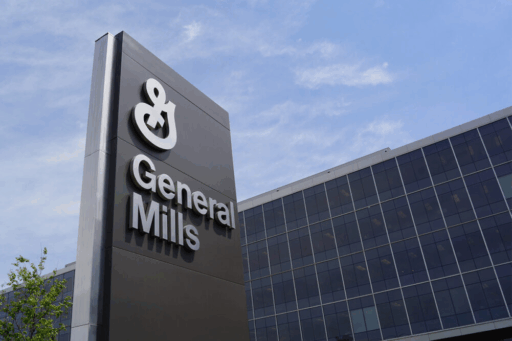

General Mills, headquartered in Minneapolis, Minnesota, is a global food company with fiscal 2024 net sales of $19.9 billion, producing beloved brands including Cheerios, Nature Valley, Blue Buffalo, Häagen-Dazs, Pillsbury, Betty Crocker, and Yoplait. The company has reported on its environmental and social impact for 55 consecutive years, making it one of the longest-running ESG reporters in the food industry. Its most recent publication, the 2025 Global Responsibility Report (covering fiscal year 2024, which ended May 26, 2024), organizes commitments under three pillars: Planet, People, and Food, all captured under the “Standing for Good” banner of its Accelerate business strategy.
Source
https://globalresponsibility.generalmills.com
https://joplinbusinessoutlook.com/2025/06/10/general-mills-releases-2025-global-responsibility-report/
Sustainability Strategy and Goals
General Mills’ formal sustainability strategy is structured around its Climate Transition Action Plan (CTAP), the first edition of which was released in April 2024 alongside the 2024 Global Responsibility Report. The CTAP establishes four climate levers: agriculture and ingredients, energy and manufacturing, transportation, and packaging, mirroring the company’s GHG hotspot map. General Mills reports against GRI standards, the Sustainable Accounting Standards Board (SASB) framework for food and beverage, and CDP Climate Change, and has SBTi-validated targets aligned with the Forest, Land and Agriculture (FLAG) guidance, updated in September 2024.
Net Zero and Carbon Emissions
General Mills targets a 30% reduction in total value chain GHG emissions by 2030 and net zero by 2050, both aligned with SBTi’s 1.5°C guidance and updated in September 2024 to incorporate FLAG guidance for land-based emissions.
- Fiscal 2024: Scope 1 and 2 emissions reduced by 56% compared to the 2020 baseline, already surpassing the 2030 SBTi Scope 1 and 2 target
- Fiscal 2024: Total value chain GHG emissions reduced by 19% compared to the 2020 baseline, against a 30% target by 2030
- Fiscal 2023 (prior year): Total value chain emissions down 7% and Scope 1 and 2 down 51% vs the 2020 baseline, confirming a consistent multi-year reduction trajectory
- Renewable electricity sourced for 99% of global operations in fiscal 2024, up from significantly lower levels before 2020
- The company received a Better Plants award from the U.S. Department of Energy in fiscal 2024 for efficiency improvements that reduced the annual carbon footprint with no upfront capital investment
Water Stewardship
General Mills’ water strategy focuses on manufacturing efficiency and supply chain risk, recognizing that over half of its GHG emissions originate upstream in agricultural production where water stress is a compounding factor.
- Fiscal 2024: A 64 million gallon reduction in annual water consumption driven by the Energy One program, a no-upfront-cost efficiency partnership with the U.S. Department of Energy
- Fiscal 2024: An 8.8 million kWh reduction in annual electricity and 88,000 MMBTU reduction in annual natural gas, directly linked to water heating and processing reductions at manufacturing sites
- General Mills reports to CDP Water Security annually and has identified agricultural commodity sourcing in water-stressed regions as its highest-priority water risk, covering oats, wheat, corn, and dairy
Regenerative Agriculture
Regenerative agriculture is the cornerstone of General Mills’ climate and biodiversity strategy, given that nearly half of the company’s GHG emissions are generated upstream in agriculture and ingredients.
- 2019 commitment: Advance regenerative agriculture on 1 million acres of farmland by 2030 to improve soil health, reduce GHG emissions, and build supply chain resilience
- Fiscal 2024: General Mills is nearing the 1 million acre commitment, with progress confirmed in the 2025 Global Responsibility Report summary
- 2020 baseline: Over 70,000 acres were enrolled in regenerative agriculture pilots at the start of the program, demonstrating the scale-up achieved between 2020 and 2024
- As You Sow filed a 2025 shareholder resolution requesting greater disclosure on pesticide use reduction in General Mills’ regenerative agriculture supplier network, citing a monitoring gap that creates greenwashing risk
- New 2024 partnerships: General Mills entered agreements with the American Farmland Trust ($80,000 grant for women-owned farms in California’s San Joaquin Valley) and the Rodale Institute for farmer-to-farmer mentorship in organic wheat, oat, and tomato sourcing regions
Deforestation and Biodiversity
General Mills published its first formal No Deforestation commitment in its 2024 Global Responsibility Report, covering key high-risk commodities in its supply chain.
- The No Deforestation commitment covers palm oil, soy, sugar, cocoa, and paper and pulp, all of which are sourced from regions with documented deforestation risk
- Palm oil: General Mills purchases RSPO Mass Balance palm oil and PalmTrace credits, works with Proforest for supplier engagement and supply chain traceability, and integrates a smallholder program with Musim Mas Group
- Cocoa: General Mills co-created the Cocoa Sustainability Initiative (CSI) with CARE International in Côte d’Ivoire and Ghana, partnering with PUR Projet and the World Cocoa Foundation to address child labor and deforestation at origin
Packaging and Circular Economy
General Mills’ packaging strategy targets 100% recyclable or reusable packaging across its global portfolio, treating packaging as a direct input to both waste reduction and Scope 3 emission reduction.
- Fiscal 2024: 93% of packaging is designed to be recyclable or reusable, up from lower prior-year levels, closing in on the 100% target
- The Climate Transition Action Plan identifies packaging as one of four GHG reduction levers, targeting reduced virgin material use, lighter materials, and closed-loop design
- General Mills works within the Consumer Goods Forum (CGF) plastic waste coalition and supports cross-industry extended producer responsibility (EPR) frameworks that enable closed-loop collection
- Box Tops for Education, the company’s school fundraising program, has generated nearly $1 billion for schools to date, now operating fully digitally with no additional packaging waste
Human Rights and Responsible Sourcing
General Mills’ human rights program follows the UN Guiding Principles on Business and Human Rights (UNGPs) and applies its Human Rights Policy, Workplace Standards and Ethical Sourcing Policy, and Supplier Code of Conduct across the entire value chain.
- A 2020 Shift risk assessment identified forced labor and child labor in agricultural supply chains as the highest-priority human rights risks for General Mills, directly informing cocoa and palm oil sourcing programs
- 100% of General Mills’ ten priority ingredients are sustainably sourced, a milestone reached in 2020 and maintained through fiscal 2024
- The Global Responsible Sourcing program includes third-party audits and supplier engagement covering Tier 1 and select Tier 2 suppliers in high-risk regions
Community and Social Impact
General Mills’ community strategy is anchored in food security, education, and local economic development in communities where it operates.
- The Box Tops for Education program has generated nearly $1 billion for K-12 schools across the United States since its launch
- General Mills is the leading provider of whole grains to Americans and aligned its K-12 school food portfolio with USDA nutritional standards ahead of regulatory deadlines
- The company channeled 7 billion meals through philanthropic partners and food donations during the COVID period, demonstrating crisis-response scale
- Community investment is built into General Mills’ supplier partnerships, including the $80,000 Rodale Institute grant and the American Farmland Trust program that directs support to underserved and women-owned farming operations
Governance and Transparency
General Mills has reported on its environmental and social performance for 55 consecutive years, making it one of the most consistent ESG reporters in the global food sector. The company reports against GRI, SASB, the Task Force on Climate-related Financial Disclosures (TCFD), and CDP Climate Change and Water Security, and is preparing for CSRD alignment as European operations fall within mandatory reporting scope. The Board of Directors oversees sustainability through its Public Responsibility Committee, which reviews climate, food safety, human rights, and social impact risks.
Technology and Innovation
General Mills’ Climate Transition Action Plan describes an integrated technology and process innovation approach to decarbonization.
- Energy One program: A no-upfront-investment efficiency platform developed in partnership with the U.S. Department of Energy that delivered 8.8 million kWh of electricity reduction, 88,000 MMBTU natural gas reduction, 64 million gallons water reduction, and $2.48 million annual cost savings in fiscal 2024, combining operational efficiency with measurable Scope 1 and 2 reduction
- Supplier GHG program: Launched in June 2024 with a first-ever supplier forum, General Mills is building a structured platform for Tier 1 and Tier 2 suppliers to measure, set targets, and report emissions reductions; year two of the program is complete as of fiscal 2025
- Regenerative agriculture technology deployment: General Mills works with the Rodale Institute on farmer-to-farmer mentorship for regenerative transitions in organic wheat, oat, and tomato supply chains
- SBTi FLAG integration: Updated in September 2024, General Mills’ SBTi targets now cover the Forest, Land and Agriculture guidance, making the GHG accounting framework one of the most comprehensive in the food sector
Global Partnerships and Advocacy
General Mills is a member of the Consumer Goods Forum, the World Cocoa Foundation, and the RSPO, and co-founded the Cocoa Sustainability Initiative with CARE International. The company works with the American Farmland Trust, Rodale Institute, PUR Projet, Musim Mas Group, and Proforest across multiple commodity supply chains. General Mills also collaborates with the USDA through the Better Plants program and publicly supports policies that incentivize regenerative agriculture and carbon accounting at the farm level.
Source
https://globalresponsibility.generalmills.com/general-mills-global-responsibility-report-2025-AccLinkVersion.pdf
https://www.generalmills.com/-/media/project/gmi/corporate/corporate-master/files/about-us/commitments/general-mills-climate-transition-action-plan.pdf
https://www.generalmills.com/news/press-releases/general-mills-stands-for-people-and-planet-in-2024-global-responsibility-report
https://www.generalmills.com/-/media/project/gmi/corporate/corporate-master/files/about-us/commitments/2025-grr-summary.pdf
https://www.generalmills.com/how-we-make-it/putting-people-first/human-rights
https://www.generalmills.com/-/media/project/gmi/corporate/corporate-master/files/how-we-make-it/planet/2024_cdp_corporate_questionnaire.pdf
https://www.asyousow.org/resolutions/2025/04/11-general-mills-regenerative-agriculture-outcomes
https://trellis.net/article/q2-roundup-major-food-players-regenerative-ag-slows-down-circular-economy-comes-back/
https://procurementmag.com/sustainable-sourcing/how-general-mills
https://www.profoodworld.com/sustainability/news/21403595/general-mills-highlights-advances-in-sustainability
Progress vs. Target Tracker
Source
https://www.generalmills.com/-/media/project/gmi/corporate/corporate-master/files/about-us/commitments/2025-grr-summary.pdf
https://www.generalmills.com/-/media/project/gmi/corporate/corporate-master/files/about-us/commitments/general-mills-climate-transition-action-plan.pdf
https://www.asyousow.org/resolutions/2025/04/11-general-mills-regenerative-agriculture-outcomes
Key Sustainability Innovations and Technologies
General Mills’ innovation portfolio is concentrated in three areas: manufacturing efficiency, supply chain decarbonization, and regenerative agricultural systems.
- Energy One manufacturing platform: Developed in partnership with the U.S. Department of Energy, this program operates on a no-upfront-cost basis and delivered 8.8 million kWh electricity reduction, 88,000 MMBTU natural gas reduction, and $2.48 million annual cost savings in fiscal 2024, combining operational efficiency with measurable Scope 1 and 2 reduction
- Supplier GHG measurement infrastructure: General Mills launched a formal supplier forum in June 2024 to build a data pipeline for Tier 1 and Tier 2 supplier emissions. This closes a long-standing gap in food sector Scope 3 reporting, where upstream agriculture data has historically relied on estimates rather than direct supplier disclosure
- Farmer-to-farmer regenerative mentorship (Rodale Institute): Rather than relying solely on agronomist-led technical assistance, General Mills is funding direct farmer-to-farmer mentorship in organic wheat, oat, and tomato sourcing regions, a model with higher adoption rates in peer-reviewed agriculture research
- SBTi FLAG integration: Updated in September 2024, this makes General Mills one of relatively few food companies to align its land-based emissions with the newest SBTi guidance, capturing deforestation and soil carbon in the same GHG accounting framework used for industrial emissions
- Women-led regenerative farming program (American Farmland Trust): A $80,000 grant in 2024 directed to underserved women-operated farms in California’s San Joaquin Valley provides a template for equity-linked regenerative supply chain development
Source
https://www.generalmills.com/-/media/project/gmi/corporate/corporate-master/files/about-us/commitments/general-mills-climate-transition-action-plan.pdf
https://trellis.net/article/q2-roundup-major-food-players-regenerative-ag-slows-down-circular-economy-comes-back/
https://trellis.net/article/case-study-how-food-giant-general-mills-turned-its-climate-goals-into-action/
Measurable Impacts
General Mills’ fiscal 2024 and fiscal 2023 data provide a two-year trajectory confirming consistent progress on emissions, energy, water, and packaging.
- Scope 1 and 2 GHG: Reduced 56% in fiscal 2024 vs the 2020 baseline, compared to 51% reduction in fiscal 2023; the target has been structurally met ahead of 2030
- Total value chain GHG: Reduced 19% in fiscal 2024 vs the 2020 baseline, compared to 7% in fiscal 2023; the 12-point jump in one year reflects early returns from the CTAP lever activation
- Renewable electricity: 99% of global operations powered by renewable sources in fiscal 2024
- Packaging: 93% recyclable or reusable in fiscal 2024, with 100% targeted by 2030
- Water: 64 million gallons reduction in annual water consumption in fiscal 2024 from the Energy One program alone
- Electricity: 8.8 million kWh reduction and natural gas: 88,000 MMBTU reduction in fiscal 2024
- Cost savings from efficiency: $2.48 million annually, demonstrating that sustainability and financial performance aligned in manufacturing operations
- Regenerative agriculture: Approaching 1 million acres engaged by close of fiscal 2024, from a 70,000-acre starting point in 2020
Source
https://www.generalmills.com/-/media/project/gmi/corporate/corporate-master/files/about-us/commitments/2025-grr-summary.pdf
https://www.generalmills.com/-/media/project/gmi/corporate/corporate-master/files/about-us/commitments/general-mills-climate-transition-action-plan.pdf
https://procurementmag.com/sustainable-sourcing/how-general-mills
Challenges and Areas for Improvement
Despite strong Scope 1 and 2 performance, General Mills faces structural challenges in its Scope 3 agricultural footprint, data disclosure, and the depth of its regenerative agriculture monitoring.
- Scope 3 value chain gap: A 19% total value chain reduction against a 30% target leaves 11 percentage points to close in six years, concentrated in agriculture and ingredients, a category where emission reductions depend on voluntary farmer adoption and are difficult to verify
- Pesticide monitoring in regenerative agriculture: As You Sow’s 2025 shareholder resolution identified that General Mills does not track or disclose pesticide use reduction among its regenerative agriculture supplier network, creating a monitoring gap that could undermine the credibility of soil health and biodiversity claims
- FLAG Scope 3 baseline transparency: The September 2024 SBTi FLAG update integrated land-use emissions into General Mills’ targets, but the company has not yet published a separate FLAG-specific baseline or annual tracking figure, making it impossible for external stakeholders to assess progress on land-related emissions independently
- Supplier GHG program depth: Year two of the supplier GHG program is complete, but General Mills has not yet published supplier-level coverage rates, average emissions intensity figures, or the proportion of Scope 3 agricultural emissions captured by the program, limiting third-party verification
- Packaging gap: At 93% recyclable or reusable, the remaining 7% of packaging involves complex multi-material formats in categories such as pet food, frozen food pouches, and snack wrappers where recyclable alternatives remain costly or technically limited at scale
Source
https://www.asyousow.org/resolutions/2025/04/11-general-mills-regenerative-agriculture-outcomes
https://www.generalmills.com/-/media/project/gmi/corporate/corporate-master/files/about-us/commitments/general-mills-climate-transition-action-plan.pdf
https://www.generalmills.com/-/media/project/gmi/corporate/corporate-master/files/about-us/commitments/2025-grr-summary.pdf
Future Plans and Long-Term Goals
General Mills’ forward roadmap runs to 2030 for interim targets and 2050 for net zero, with the CTAP providing a four-lever framework for how those targets will be met.
- By 2030: Reduce total value chain GHG emissions by 30% from the 2020 baseline, with the remaining 11 percentage point gap concentrated in agricultural and ingredients Scope 3
- By 2030: Achieve 100% recyclable or reusable packaging across the global portfolio
- By 2030: Advance regenerative agriculture on 1 million acres of farmland, a goal the company is now approaching, five years ahead of deadline
- By 2030: Complete the No Deforestation commitment across all key commodities: palm oil, soy, sugar, cocoa, and paper and pulp
- By 2030: Build a fully operational supplier GHG measurement and reduction platform covering all material Tier 1 and Tier 2 agricultural suppliers
- By 2050: Achieve net-zero GHG emissions across the entire value chain under SBTi 1.5°C and FLAG guidance
General Mills’ early achievement on Scope 1 and 2, reaching 56% reduction against a 2030 target, means its near-term focus will shift decisively to agricultural Scope 3, which accounts for approximately half of all company emissions and where the technical and commercial pathways are more complex than in direct operations.
Source
https://www.generalmills.com/-/media/project/gmi/corporate/corporate-master/files/about-us/commitments/general-mills-climate-transition-action-plan.pdf
https://www.generalmills.com/-/media/project/gmi/corporate/corporate-master/files/about-us/commitments/2025-grr-summary.pdf
https://joplinbusinessoutlook.com/2025/06/10/general-mills-releases-2025-global-responsibility-report/
Comparisons to Industry Competitors
General Mills competes directly with Nestlé and Unilever on sustainability, both of which operate in overlapping food categories with similar agricultural Scope 3 exposure.
General Mills leads its peer group on renewable electricity coverage (99% vs. Nestlé and Unilever still progressing toward targets) and holds the most specific regenerative agriculture commitment in the industry with a 1 million acre target and measurable progress. Unilever leads on long-term Scope 1 and 2 absolute reduction, having achieved 74% against a 2015 baseline, compared to General Mills’ 56% against a newer 2020 baseline.
Source
https://www.energymonitor.ai/features/the-road-to-net-zero-big-foods-emission-pledges/
https://www.generalmills.com/-/media/project/gmi/corporate/corporate-master/files/about-us/commitments/2025-grr-summary.pdf
What to Watch: 12 to 18 Month Indicators
Three specific developments will most significantly shift General Mills’ sustainability standing through late 2026.
Scope 3 agricultural FLAG progress disclosure: With Scope 3 representing approximately half of all General Mills emissions and the FLAG update integrated in September 2024, the fiscal 2025 Global Responsibility Report (expected mid-2026) will be the first opportunity for the company to publish a clearly structured FLAG baseline and annual progress figure. If this disclosure appears with independently verified data, it will signal that General Mills has closed the most significant transparency gap in its current ESG profile. Its absence would confirm that agricultural Scope 3 remains opaque despite target alignment.
Regenerative agriculture outcome monitoring response: As You Sow’s 2025 shareholder resolution directly challenged General Mills to disclose pesticide use reduction among its regenerative agriculture suppliers. A management response by the 2025 annual shareholder meeting and any resulting commitment to outcome monitoring will define whether General Mills’ 1 million acre claim is supported by verified soil and biodiversity data or remains an input-only commitment. The company’s response to the resolution is the single most important governance signal in the near term.
Supplier GHG program coverage and verified data publication: Year two of the supplier GHG program is complete. If the fiscal 2025 Global Responsibility Report discloses the proportion of Scope 3 agricultural emissions covered by the program, average supplier emission reduction commitments, and third-party audit coverage rates, it would confirm that General Mills has built the data infrastructure needed to credibly close the Scope 3 gap by 2030. A repeat of qualitative program descriptions without verified data would indicate structural risk to the 30% total value chain reduction target.
Source
https://www.generalmills.com/-/media/project/gmi/corporate/corporate-master/files/about-us/commitments/general-mills-climate-transition-action-plan.pdf
https://www.asyousow.org/resolutions/2025/04/11-general-mills-regenerative-agriculture-outcomes
General Mills has built one of the most credible near-term operational decarbonization records in the global food sector. A 56% Scope 1 and 2 reduction against a 2030 target, achieved four years early, combined with 99% renewable electricity and a near-complete 93% recyclable packaging rate, reflects genuine structural progress that outpaces many peers of comparable size. The regenerative agriculture commitment at 1 million acres, now approaching its target eight years after the 2019 launch, is the largest and most operationally specific regenerative agriculture program published by any branded food company.
The material risk sits entirely in Scope 3 agriculture. With 19% of a 30% target achieved and roughly half of all emissions upstream in agricultural supply chains, the company faces a technically and commercially hard final phase of decarbonization. The absence of outcome-based monitoring in the regenerative agriculture program (noted by As You Sow in their 2025 resolution) and the lack of verified FLAG-aligned Scope 3 data are the two weaknesses that independent analysts and regulators will focus on in 2025 and 2026 filings.
Three strategic takeaways for practitioners benchmarking or replicating General Mills’ approach:
- The Energy One program model, a no-upfront-investment manufacturing efficiency platform developed with a government agency, is directly replicable by any food manufacturer with HVAC, refrigeration, and thermal processing operations. The $2.48 million annual cost savings demonstrate that sustainability efficiency and financial performance are not in tension in manufacturing, and the government partnership model de-risks capital barriers.
- The FLAG SBTi integration, while still being operationalized in General Mills’ reporting, sets the most rigorous framework available for food companies trying to credibly account for land-use and agricultural emissions. Practitioners in the food, agriculture, and consumer goods sectors should align their Scope 3 accounting to FLAG guidance now, ahead of regulatory mandates that will make it standard.
- The shareholder resolution from As You Sow on pesticide monitoring reveals that regenerative agriculture commitments measured only by acreage enrollment are vulnerable to credibility challenges. Practitioners should design outcome monitoring frameworks (soil organic matter, water quality, pesticide load, biodiversity indices) into their regenerative sourcing programs from inception, not as a response to investor pressure.
Source
https://www.generalmills.com/-/media/project/gmi/corporate/corporate-master/files/about-us/commitments/2025-grr-summary.pdf
https://www.asyousow.org/resolutions/2025/04/11-general-mills-regenerative-agriculture-outcomes
https://trellis.net/article/case-study-how-food-giant-general-mills-turned-its-climate-goals-into-action/